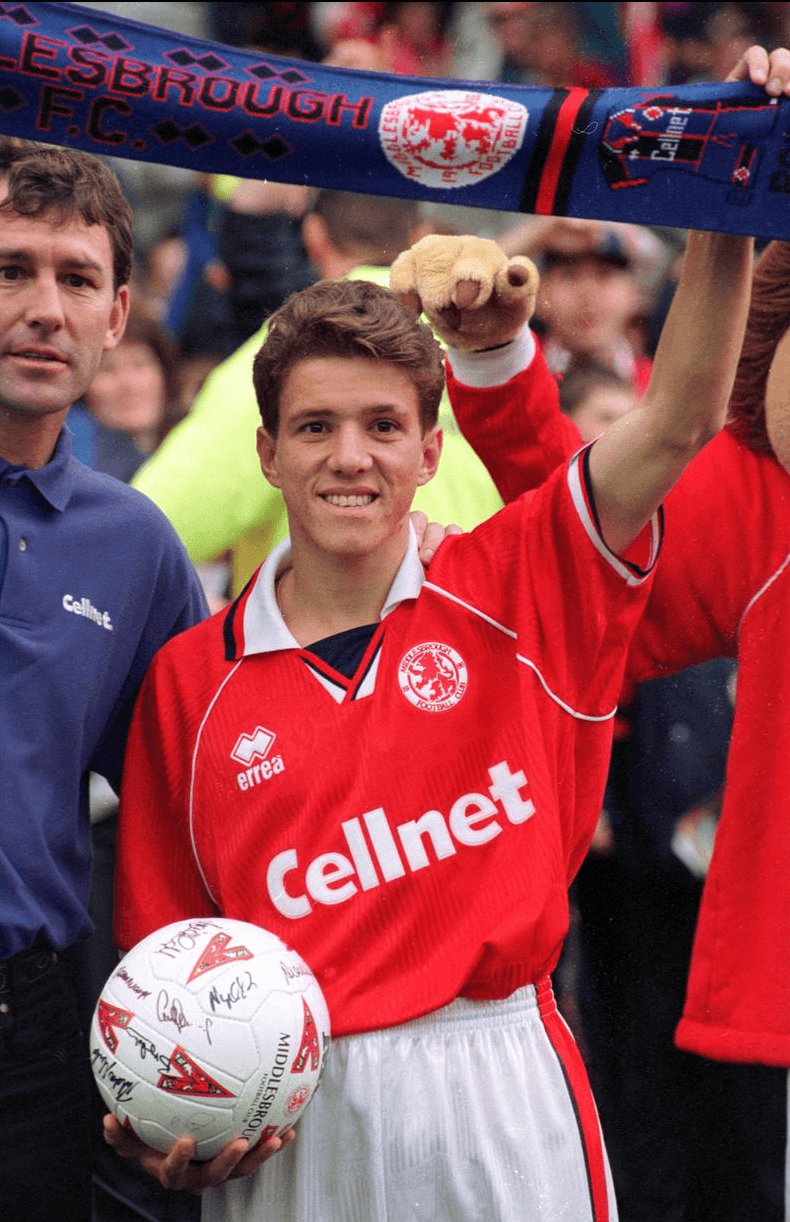
Some football brands announce themselves with superstars, enormous campaigns and shirts designed to be seen everywhere at once. Then there’s Erreà, who've spent nearly four decades doing the complete opposite. For anyone who grew up watching English football in the 1990s and 2000s, that little double-diamond logo has a strangely powerful pull. Juninho disappearing inside an oversized Middlesbrough shirt, Fabrizio Ravanelli pulling one over his head after scoring, Brighton in blue and white with Skint Records across the middle. It was everywhere, without ever really feeling like it was trying to be everywhere.
A family business from a small town outside Parma quietly became part of the furniture of European football, building relationships that lasted years rather than seasons and making shirts that generally looked like they belonged to the clubs wearing them. Nearly 40 years later, while plenty of its contemporaries have disappeared completely, Erreà is still here.
From Parma, with football
Erreà began in 1988 in San Polo di Torrile, a small town in the province of Parma. Founder Angelo Gandolfi had played football at amateur level and, when he could no longer play, wanted to find another way of staying close to the game. Making sportswear was the answer, although even Gandolfi probably wouldn’t have predicted quite where it would take him.
The timing helped. Football shirts were changing rapidly during the 1980s, with traditional materials giving way to polyester and manufacturers discovering what could be done with lighter fabrics, sublimated patterns and increasingly sophisticated production techniques. Replica shirts were becoming a serious business too. A football kit was no longer simply something 11 players wore on a Saturday afternoon, it was becoming a product in its own right.
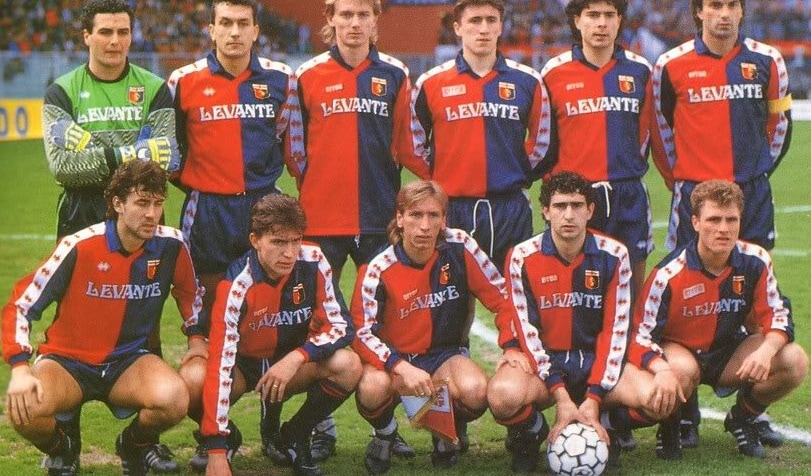
Erreà didn’t spend long knocking around the edges. Within a year of the company being founded, Genoa became its first major professional partner. The relationship would eventually last two decades, which tells you quite a lot about the company Erreà was becoming.
Genoa and the shirt that made Erreà
Erreà and Genoa stayed together until 2009, a 20-year relationship that feels almost impossible in modern football. It also established something that would become characteristic of the brand. Erreà didn’t tend to arrive at a club, produce three shirts, pose for the photographs and disappear two summers later. When it found the right partnership, it stuck around.
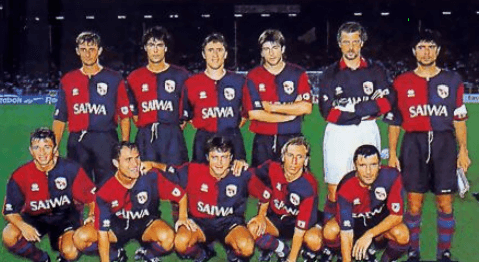
The defining Genoa shirt came in 1993, when Erreà produced a centenary kit built around the club’s famous red and blue halves. It was unmistakably Genoa but also wonderfully of its time, with the sort of collar, texture and detailing that makes early-90s Italian football such dangerous territory for anyone with an eBay account and poor impulse control. The shirt later won Guerin Sportivo’scompetition to find the “Shirt of the Century”. For a company only five years old, it wasn’t a bad calling card.
By then Erreà was spreading through Italian football, appearing on Cagliari, Bologna, Brescia and plenty of others. The logo was becoming familiar, but the move that really changed the company’s trajectory happened somewhere considerably less Mediterranean.
Middlesbrough.
Parma to Teesside
In 1994, Middlesbrough became Erreà’s first major move into English football. The partnership would last 15 years and coincided almost perfectly with the most extraordinary period in the club’s modern history. Bryan Robson had arrived as player-manager, the Riverside was about to open and Steve Gibson had ambitions that went considerably beyond simply staying in the Premier League.
First came Nick Barmby, then Juninho. Fabrizio Ravanelli and Emerson followed, giving Middlesbrough the sort of team that now looks like somebody has been playing Championship Manager with the difficulty settings flicked to Manchester City. Through it all, they wore Erreà.
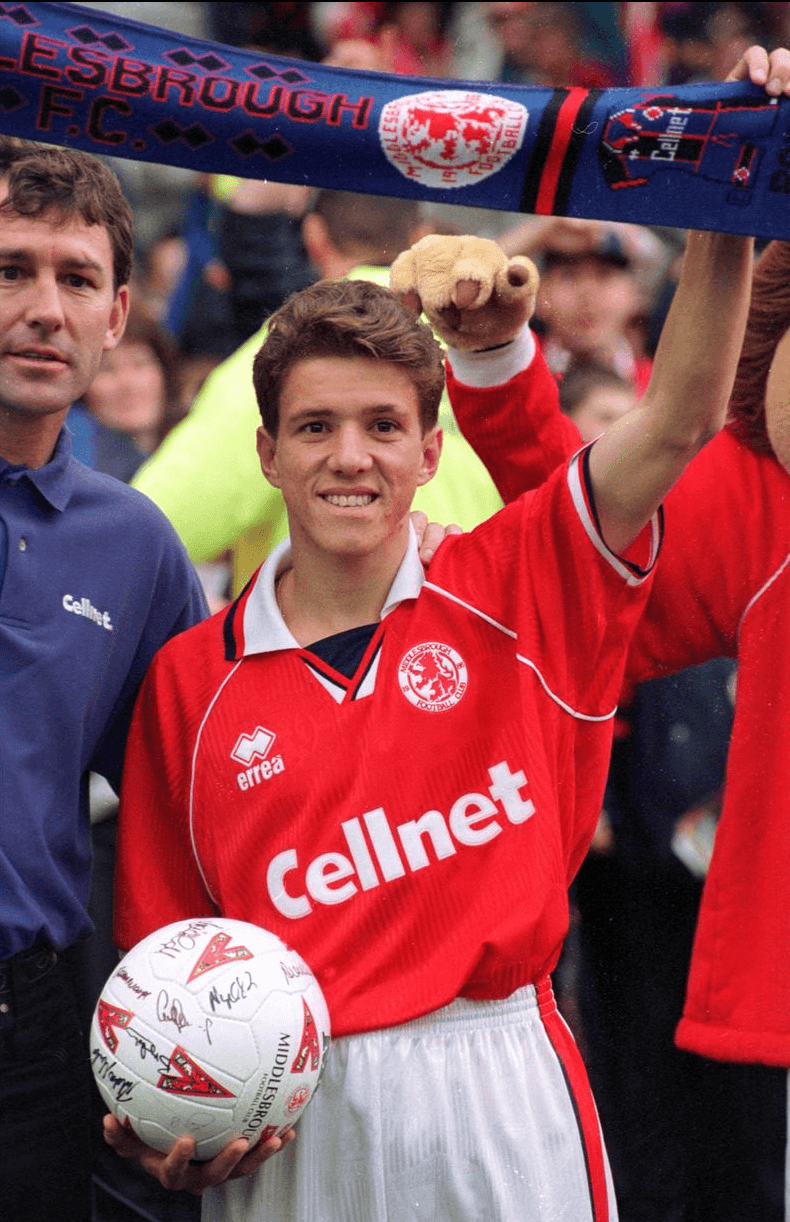
The combination feels perfect in hindsight even though, at the time, some Boro fans pinned for a blue chip manufacturer. Huge collars, enormous sleeves, deep reds, broad white bands and footballers who seemed to have arrived from another planet. Those shirts weren’t restrained and they weren’t designed with one eye on whether somebody might wear them with loafers 30 years later. They were gloriously, unmistakably mid-90s.
The 1996/97 season gave Erreà some of its most enduring images. Ravanelli scored a hat-trick on his Premier League debut against Liverpool and celebrated by pulling the shirt over his head. Juninho became one of the most loved players in Middlesbrough’s history, the club reached both domestic cup finals and somehow got relegated at the end of it all. If you were writing the season as fiction, an editor would probably tell you to calm down.
Crucially, Erreà stayed for what came next. Middlesbrough won the first major trophy in their history, the 2004 League Cup, wearing Erreà. Two years later, when they produced those ridiculous European comebacks against Basel and Steaua Bucharest before reaching the UEFA Cup final, Erreà was still there. When the companies reunited in 2022, plenty of the people involved in the original relationship were apparently still working for the manufacturer.
That sort of continuity is increasingly rare in football, but it’s central to the Erreà story. They were always long-term partners.
The Football League years
Middlesbrough opened the door to Britain and Erreà promptly wandered through it. By the end of the 1990s, the company was appearing throughout the Football League and below, supplying clubs including Cardiff City, Barnet, Cheltenham Town and Yeovil, while Brighton began what would become another 15-year relationship in 1999.
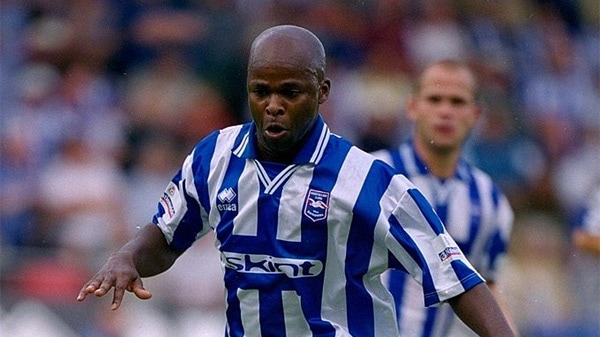
Brighton is another particularly good example of what Erreà did well. The partnership covered the club’s strange years at Withdean, promotions through the divisions and eventually the move to the Amex. The early Skint-sponsored shirts are especially good, a combination of slightly awkward late-90s design and one of the great football sponsors. They look completely of their time, which is increasingly one of the nicest things you can say about an old football shirt.
Burnley followed, as did Norwich City, Blackpool, Crystal Palace, Derby County, QPR, Bristol Rovers and plenty more. Cheltenham Town stayed with Erreà for more than two decades. At a certain point the logo became part of the visual language of the Football League, particularly for those of us who spent far too much of our childhood looking at kit manufacturers in sticker albums.
That mattered because Erreà offered something different from the biggest manufacturers. Nike and Adidas could give a club the reflected glamour of wearing the same brand as Brazil, Real Madrid or Manchester United. Erreà’s business was teamwear, and the club itself tended to remain the point. Sometimes that produced genuinely beautiful shirts, sometimes it produced extremely strange goalkeeper kits. This was the 1990s, after all. Both could be true at once.
Staying independent
Football built Erreà, but it didn’t remain exclusively a football company. Volleyball, basketball, rugby and other sports became important parts of the business, helping it grow without needing to win increasingly expensive battles for the biggest football clubs.
There was substance behind the shirts too. In 2007, Erreà became the first European teamwear company to receive OEKO-TEX Standard 100 certification for its products, testing textiles against limits for potentially harmful substances. That same year, one of its Burnley shirts won a Football League design award. It’s a slightly unglamorous combination of achievements, admittedly, but perhaps that’s quite fitting for Erreà. The company cared about what a shirt looked like, but it also cared about the boring bits required to actually make one properly.
Most importantly, the Gandolfi family remained in control. Erreà stayed rooted around Parma rather than becoming another once-familiar football name swallowed by a multinational sportswear group, and its manufacturing identity remained important as the company expanded internationally. By the early 2020s, the majority of its turnover was coming from outside Italy.
That independence increasingly looks like one of Erreà’s defining achievements. Football kit manufacturing is a brutal business, dominated at the top by companies with marketing budgets smaller brands couldn’t sensibly dream of matching. Erreà found another route.
Iceland, and another unlikely moment
There’s something appropriate about one of Erreà’s biggest international moments arriving through Iceland. The company supplied the national team at Euro 2016, when a country with a population smaller than many European cities reached the quarter-finals and knocked England out along the way.
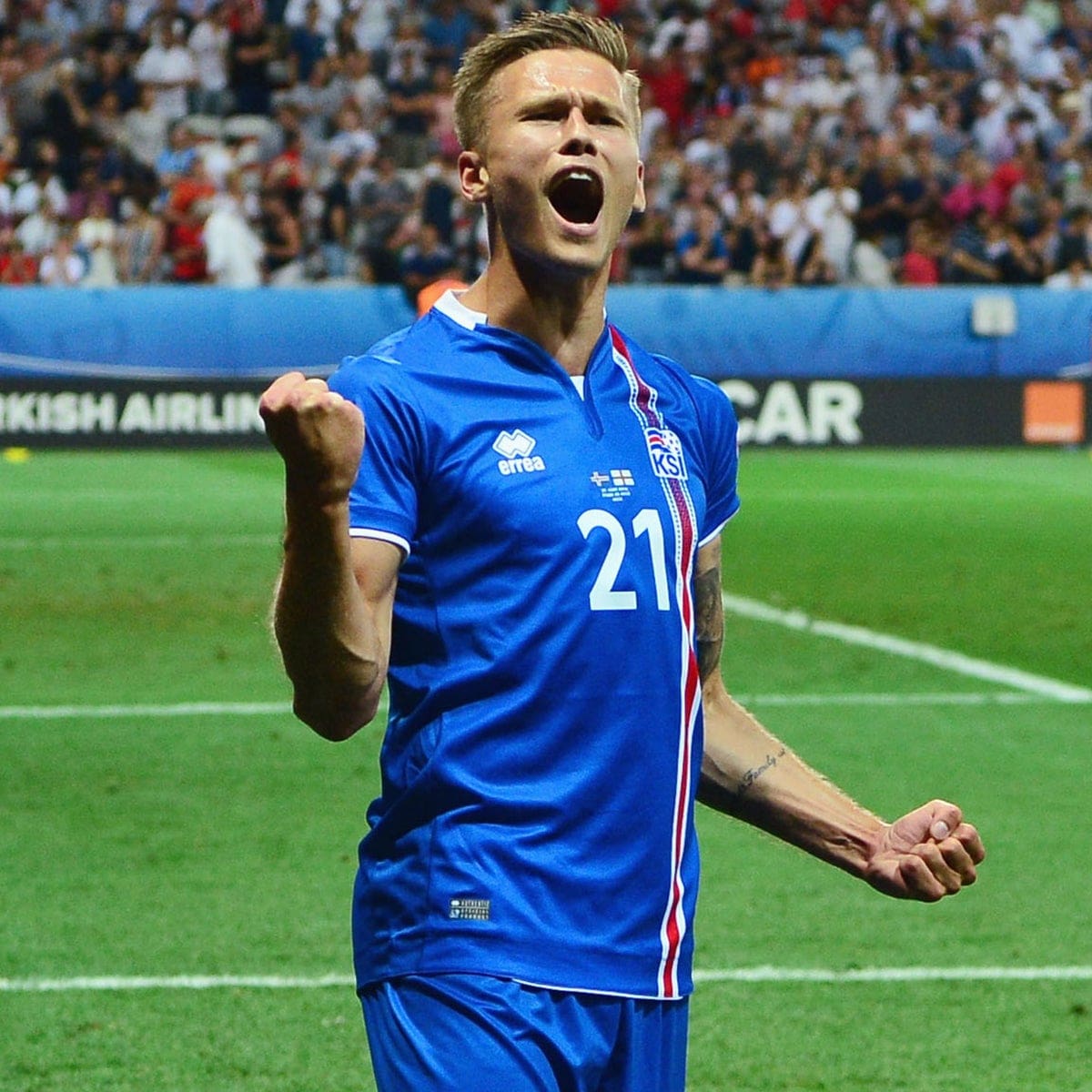
Suddenly an Erreà shirt was part of one of the images of the tournament. Iceland’s players stood in front of their supporters performing the thunderclap, the little logo sitting on the chest of a team nobody had expected to be there. They subsequently qualified for the 2018 World Cup too, again wearing Erreà.
It was quintessentially them. Not Brazil, France or Germany, acquired for hundreds of millions because somebody in marketing had calculated the global impressions. Iceland. And for a few weeks that summer, everybody knew the shirt.
What Erreà left behind
It’s tempting to tell the history of football sportswear as a process of consolidation. Small manufacturers flourish, football becomes enormous, Nike and Adidas arrive with gigantic budgets and everybody else is gradually pushed towards the edges. There’s plenty of truth in that, and a walk through the shirt racks of the 1990s compared with today tells its own story.
Erreà complicates it, because it didn’t disappear. It didn’t become an archive brand selling replicas of the three shirts people remember from 1996, either. It kept making kits, kept supplying clubs and kept finding space in a market that increasingly seemed designed to eliminate companies exactly like it.
Their old shirts carry more than a flicker of affection now. A 1990s Erreà shirt doesn’t just remind you of a particular team, it reminds you of a football landscape that felt less standardised. On any given Saturday you might see Umbro, Adidas, Pony, ASICS, Mizuno, Reebok, Avec, Admiral, Lotto and Erreà. Manufacturers had their own fabrics, collars, quirks and slightly odd ideas about what a football shirt ought to look like.
Erreà’s shirts weren’t always perfect, and that’s partly the charm. They belonged to their clubs, they belonged to their time and, looking back, they look better for it. Nearly 40 years after Angelo Gandolfi started the company outside Parma, Erreà remains independent, remains a family business and remains in football. Middlesbrough even came back.
Erreà never needed to conquer football to leave its mark. It just needed to stick around.