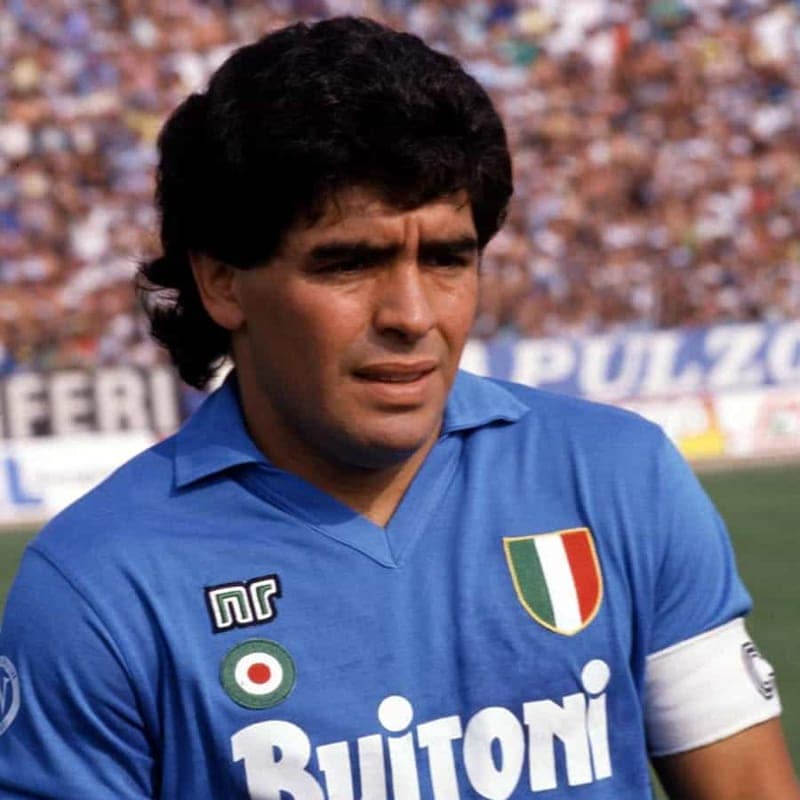
There was a period when watching Italian football meant seeing the little NR everywhere. It appeared on Maradona’s Napoli, Baresi’s Milan, Giannini’s Roma, Antognoni’s Fiorentina and the Sampdoria of Vialli and Mancini. At its height, Ennerre dressed a remarkable chunk of Serie A, during the period when Serie A itself was becoming the most glamorous league in the world.
And yet Ennerre wasn't like Adidas or Puma in that they didn’t feel like a sportswear corporation at all. There was something distinctly Italian about the brand: smaller, more personal and unusually concerned with how a footballer should look. That was largely because the man behind it had been one himself.
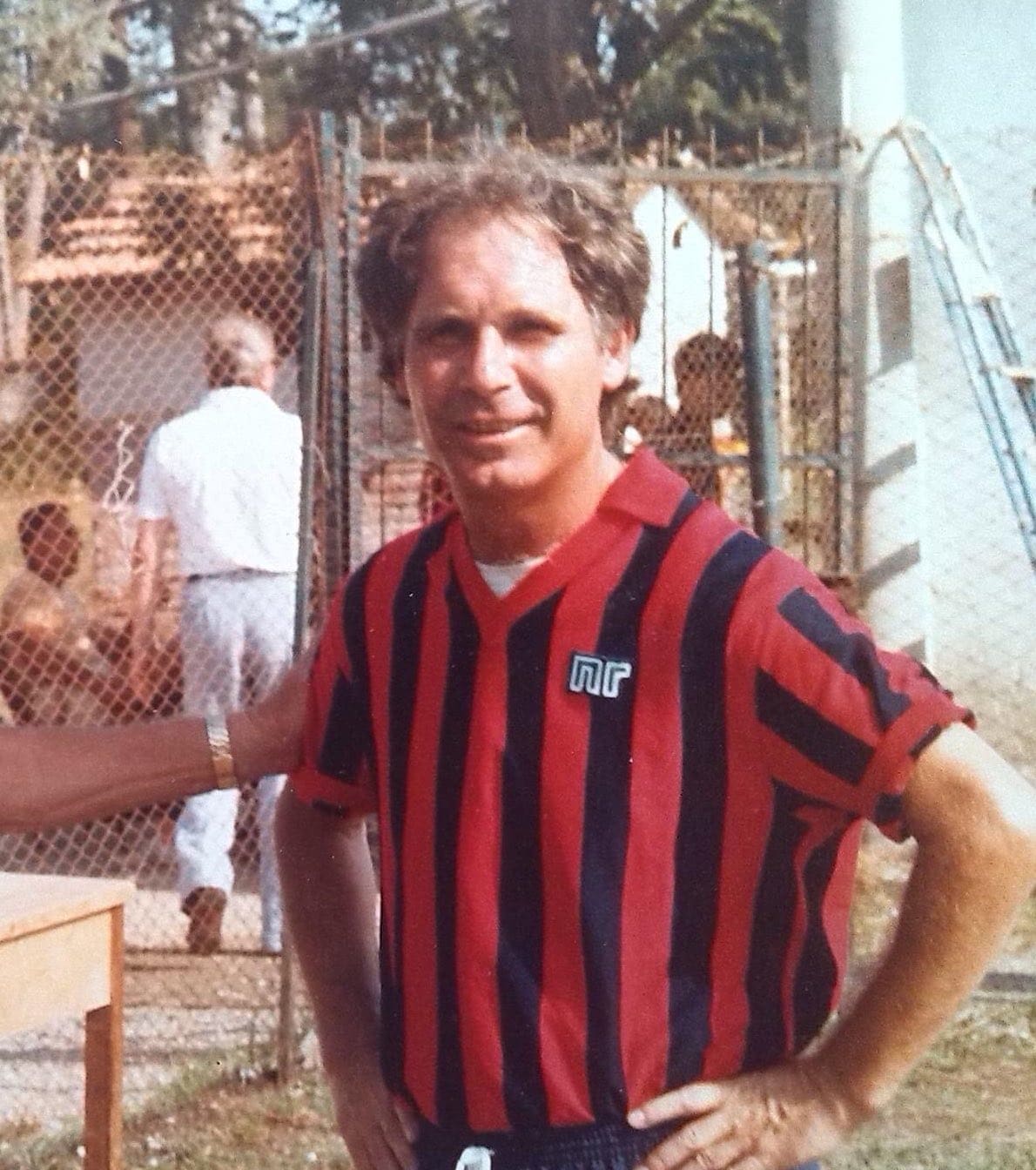
Who founded Ennerre?
Nicola Raccuglia was born in Palermo and spent his playing career moving around the Italian lower leagues, including spells in Pescara, Arezzo, Vicenza and Ascoli. Playing football gave him an unusually intimate understanding of the kit itself: how it fitted, how the fabric felt against the skin and how much something supposedly functional could affect the person wearing it.
When his playing career ended, Raccuglia founded NR in 1972. The letters were simply his initials, pronounced in Italian as Ennerre.
His philosophy was more interesting. Raccuglia believed footballers shouldn’t simply be covered by sportswear, they should be dressed. He cared about fabric, fit, colour and the identity of the club wearing it. More remarkably, he understood early that the football shirt was becoming something bigger than a uniform. It was an object supporters would want to own, collect and attach memories to.
Half a century later, that sounds obvious. In 1972, it was remarkably prescient.
When Ennerre took over Serie A
Ennerre grew quickly. At its peak, Raccuglia’s relatively modest operation employed around 250 people, yet competed for space with some of the biggest manufacturers in world sport.
Look through Ennerre’s archive and the names become slightly ridiculous: Napoli, Roma, Milan, Lazio, Fiorentina, Sampdoria, Atalanta, Bologna, Palermo, Cagliari, Parma and more. Beyond Italy came Toronto Blizzard, Kashima Antlers and even the New York Cosmos. Raccuglia also supplied international sides including Uruguay, who won the 1995 Copa América wearing Ennerre.
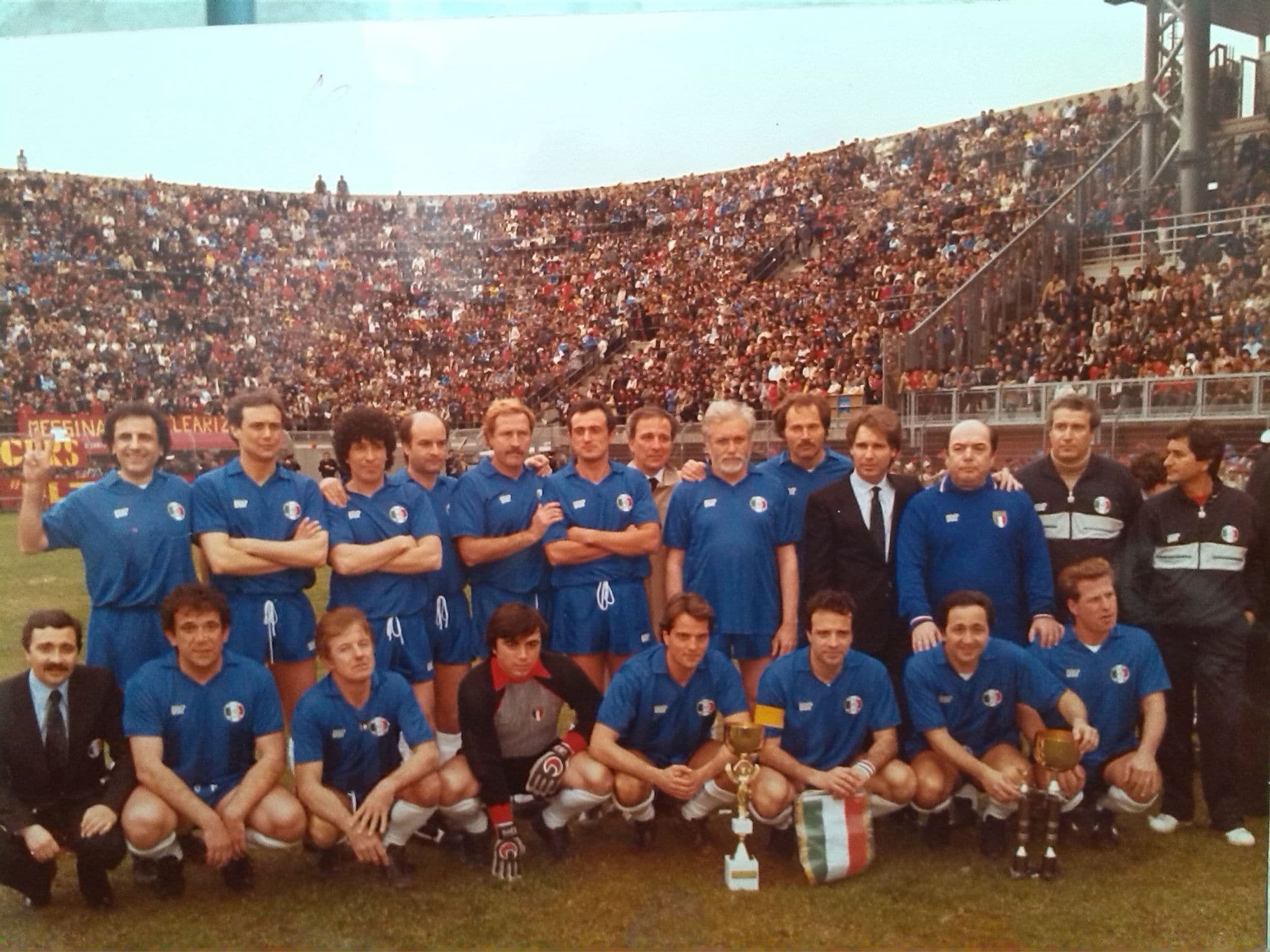
It was something Ennerre understood that better than most.
Maradona, Napoli and Ennerre’s greatest shirts
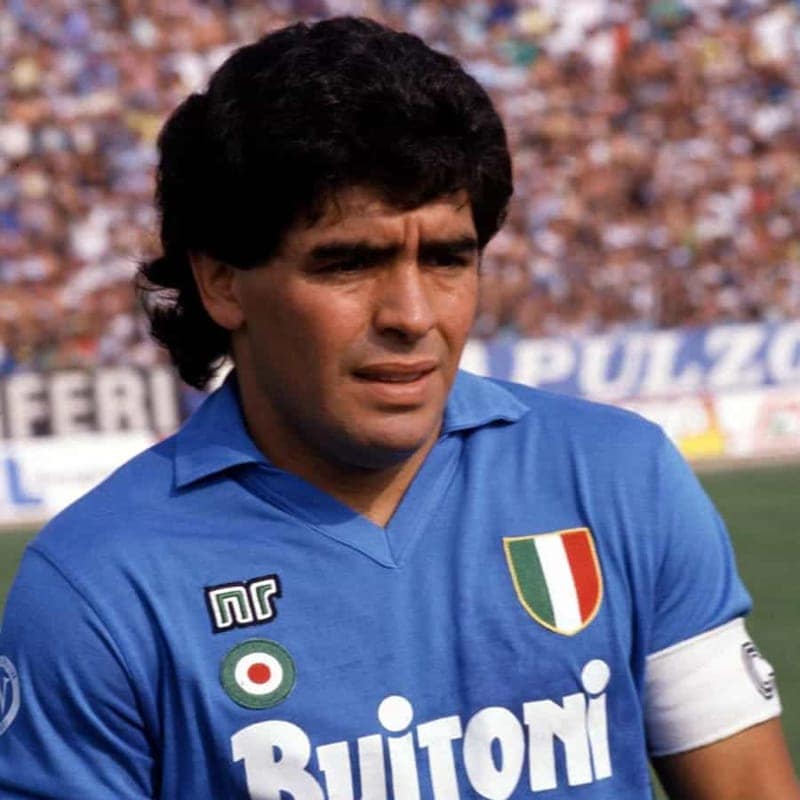
If one partnership made Ennerre immortal, it was Napoli. Ennerre returned as Napoli’s kit manufacturer for 1985/86, Maradona’s second season in Naples, and remained through the greatest period in the club’s history. The little NR therefore sits on the shirts worn as Napoli won the Scudetto in 1986/87 and 1989/90, as well as the UEFA Cup in 1989.
Some of them barely needed designing. The 1985/86 home shirt is almost absurdly simple: Napoli blue, a white V-neck, Buitoni across the middle and NR on the chest. Put Maradona inside it and very little else was required.
By 1989/90, Mars had replaced Buitoni and Napoli had become champions again. The resulting blue Ennerre shirt, with its fold-over collar and Scudetto-winning associations, is now one of those pieces that seems to contain an entire era within it.
Then there are the stranger ones. The white 1990/91 away shirt with its jagged blue chest graphic feels considerably more experimental, while the alternative blue shirt from the same season carries a wonderful wavy white band across the chest.
For collectors, though, Ennerre goes much deeper than Napoli. There is Lazio’s famous eagle design, with the bird stretched dramatically across the chest. Fiorentina’s purple shirts with the enormous stylised giglio. Roma with Barilla. Sampdoria’s already-perfect bands interpreted through Ennerre. Milan in red and black.
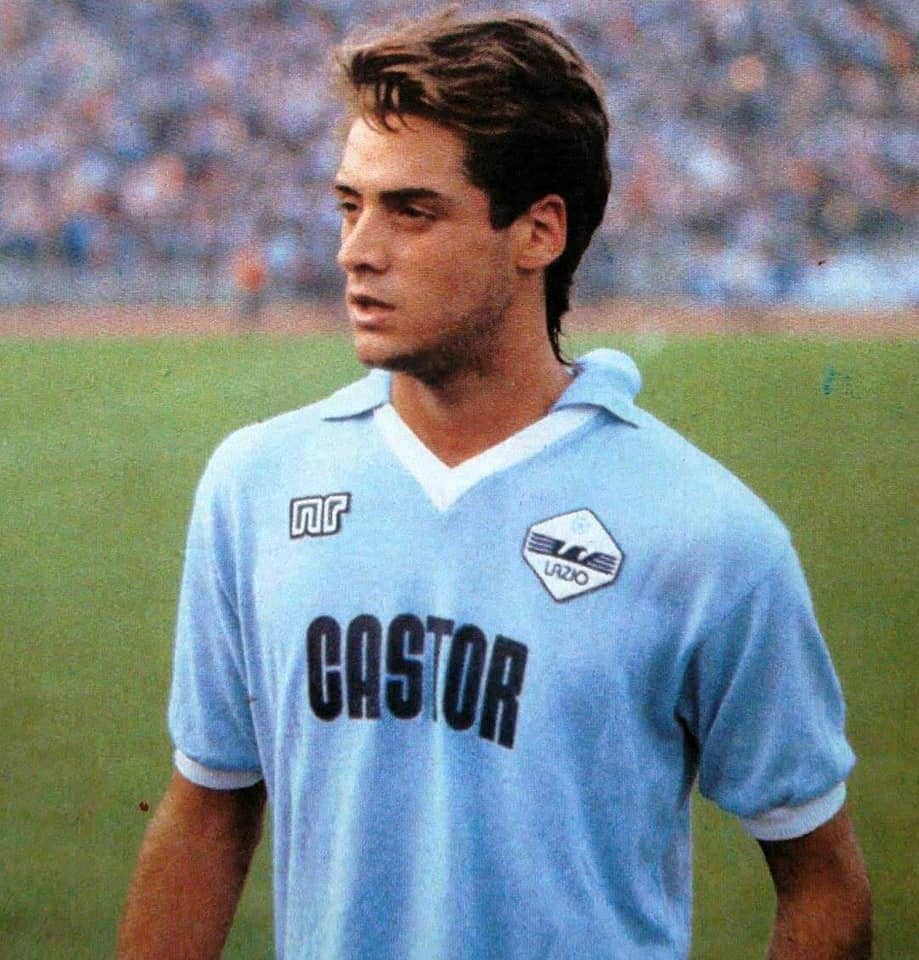
GQ Italia has described those designs as examples of a timeless football aesthetic, noting how details such as Ennerre’s sponsor application and number stitching contributed to their distinctive craftsmanship. They feel made rather than manufactured, is a line often used.
Why did Ennerre disappear?
Unfortunately, the thing that makes the Ennerre story so appealing also made its position increasingly difficult. Football changed, sportswear changed faster.
Manufacturing moved towards lower-cost global production while companies such as Nike and Adidas developed resources, distribution and sponsorship budgets that smaller independent manufacturers couldn’t realistically match. Ennerre’s own history acknowledges that competition from cheaper overseas production forced Raccuglia to reconsider the business.
The company gradually disappeared from football’s biggest stages. Raccuglia subsequently worked with the Ennedue name and eventually revived NR Ennerre, drawing on the archive and the renewed appetite for the shirts he had created decades earlier.
And perhaps that’s the nicest part of the story. Ennerre spent its greatest years making shirts at a time when nobody could have imagined quite how obsessive football shirt culture would eventually become. Now collectors pore over stitching, fabrics, sponsors and tiny manufacturing differences in precisely the way Raccuglia believed they might.
The big brands eventually won the commercial battle. But look back at Italian football’s most beautiful years and that little NR keeps appearing. A tailor’s mark on the golden age of Serie A.
You can shop classic Ennerre shirts in the Showboat marketplace or on our website.