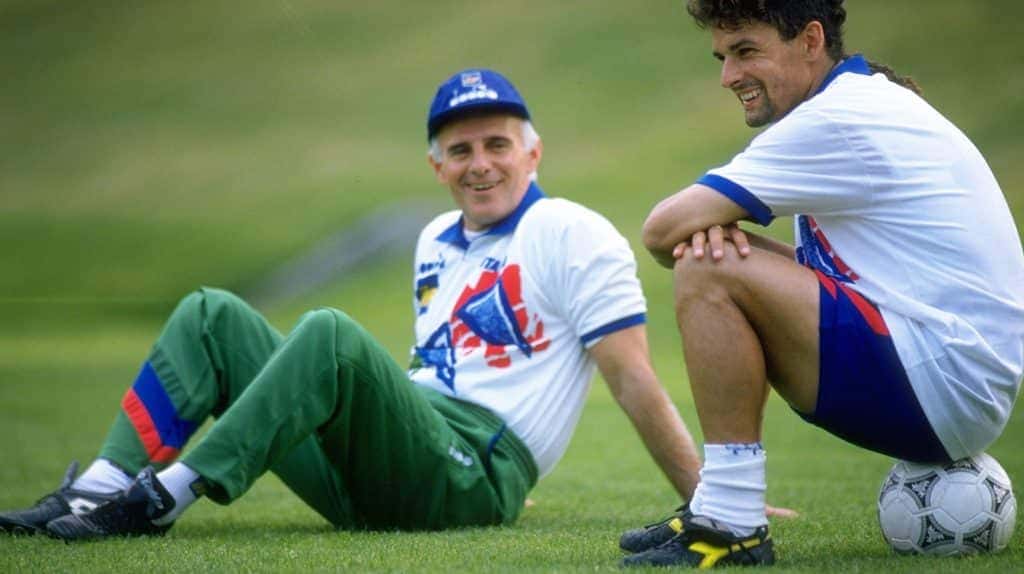
Made in the shadow of the Dolomites, worn on the biggest stages in football. Diadora became a byword for quality, and collectors have never quite let go of it.
From the Dolomites to football
Diadora's rise came at exactly the right time, but it wasn't built overnight.
Founded in 1948 in northern Italy, the company spent its first decades making mountain boots and workwear, the kind of products nobody buys twice if they're badly made. There was nothing glamorous about that early business. It was leather, stitching and detail, done properly, for people who needed gear that lasted. Long before Diadora football boots or Diadora football shirts turned up on a pitch anywhere, the brand had already built its name on craftsmanship.
So when Diadora moved into sport in the 1970s, it brought that obsession with it. The name itself comes from the Greek dia-dora, roughly "sharing gifts and honours". A bold choice for a company from a small town in Veneto. Decades later, it would feel like the right one.
Diadora and Serie A's golden age
By the late 1980s and early 1990s, football was changing fast. Television money was pouring in, stadiums were full, and Serie A had become the undisputed centre of the footballing world. Every weekend looked like an All-Star game. The best players weren't going to Spain or England. They were going to Italy.
Diadora found itself in exactly the right place at exactly the right time.
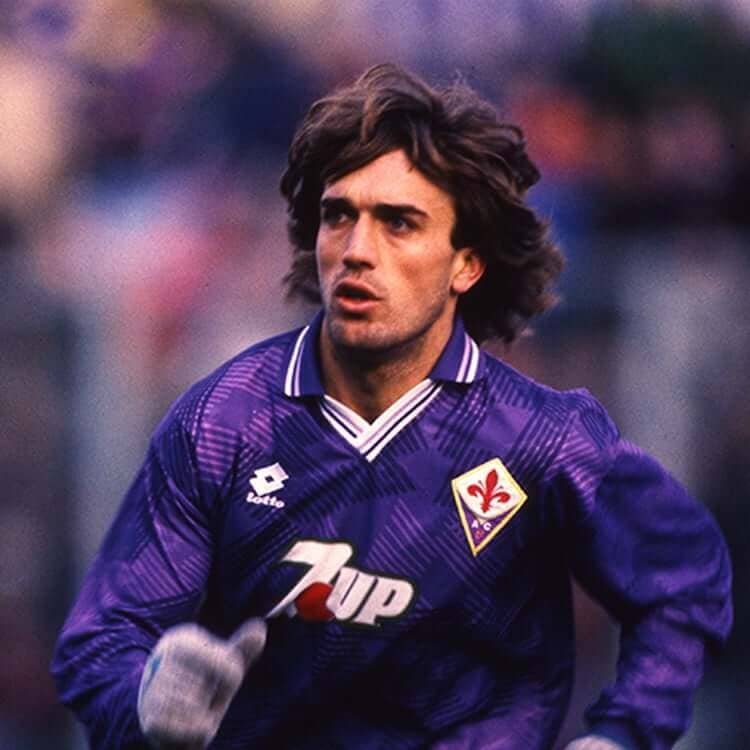
Its boots were on some of the most famous feet in the game. Roberto Baggio. Marco van Basten. George Weah. Christian Vieri. Roy Keane. These weren't fringe pros taking a sponsorship cheque. They were among the biggest names in football, and they wore Diadora because the kit was genuinely excellent.
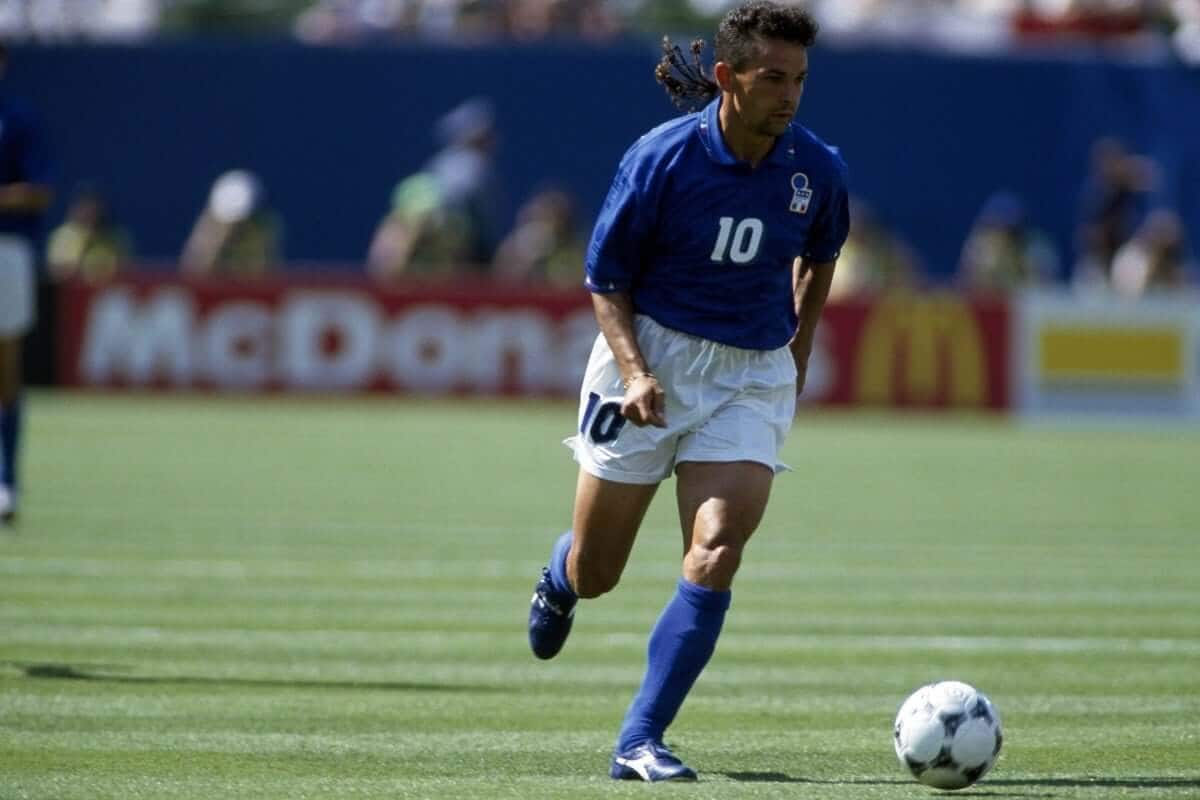
Nobody embodied the brand quite like Baggio. The ponytail, the calm, the sense that football could be art and competition in the same movement. He looked like a Diadora player before he'd signed a single contract.
At the time, Diadora wasn't an underdog brand fighting for scraps of attention. It sat alongside Lotto, Kappa and Umbro as part of the visual furniture of Italian football. Walk into a stadium in the early 90s and there was a decent chance you'd spot the Diadora logo somewhere on the pitch.
The shirts
That same philosophy carried straight over into the kits.
Whether it was Roma, Napoli, Belgium or Sheffield Wednesday, Diadora brought something distinctly Italian to the shirts it made. There was rarely a gimmick in sight. Instead, the designs leaned on proportion, colour and detail. That unmistakable Diadora font, sharp without trying too hard. Collars that always seemed perfectly judged. Confidence, but never arrogance.
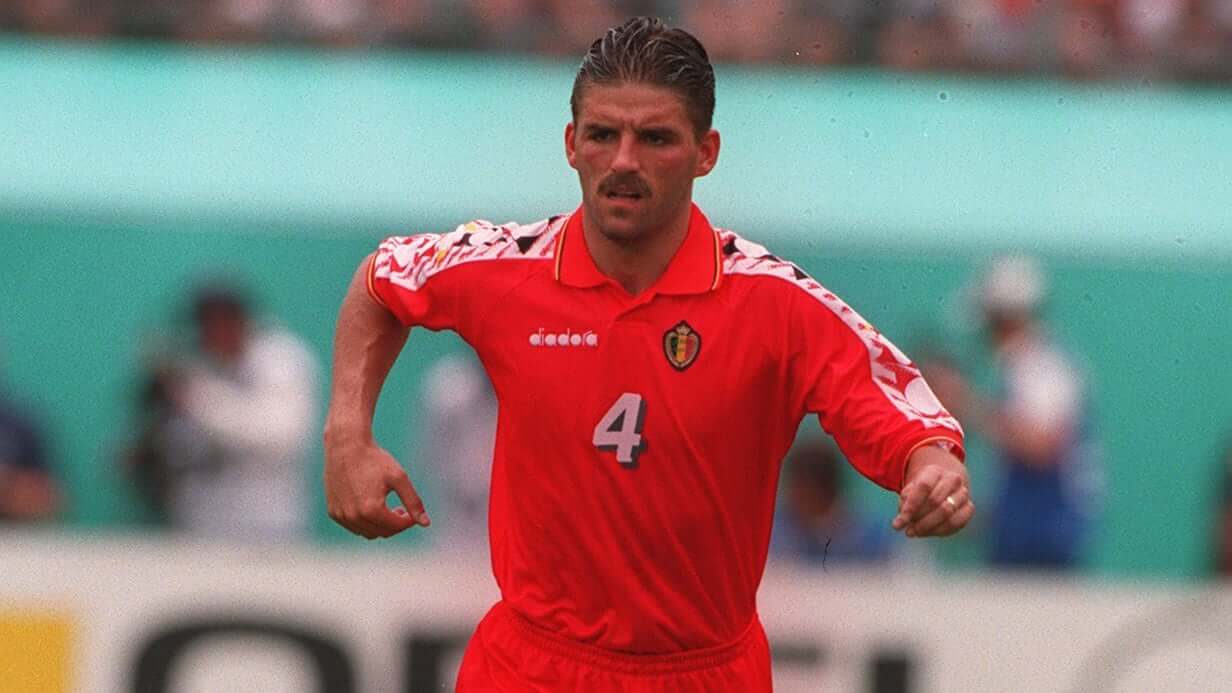
Diadora shirts had a restraint to them that set them apart from the competition. While other manufacturers were piling on increasingly elaborate graphics, Diadora let colour and proportion do the talking. Some brands made kits that belonged to a single season. Diadora made kits that belonged to an era.
Go back through the archive and you'll struggle to find a shirt that feels overworked. Belgium's home kits through the 90s remain among the most stylish international shirts ever produced. Napoli's strips carried the romance of the south. Sheffield Wednesday somehow ended up with a shirt that blended English football with Italian design instincts and made it look effortless. Plenty of them still look fresher than shirts released thirty years later.
That was the gift. Diadora understood that style doesn't always need to shout to be heard.
The boots
If the shirts were quietly stylish, the boots were where Diadora really left its mark.
The Brasil was the boot that built the reputation. A simple, sleek black silhouette with the volt green tongue and detailing that became instantly recognisable on Serie A pitches. Marco van Basten wore it through his peak years at Milan, including that volley against the Soviet Union at Euro 88, arguably the greatest goal ever scored in a European Championship final. George Weah wore a red pair through his Ballon d'Or-winning spell at Milan too, and there was something fitting about a brand built on quiet quality being worn by two of the most explosive players of the era.
Then came Baggio, and with him the Match Winner. Diadora built him a personalised boot, and he wore it through the 1994 World Cup, scoring the goals that dragged Italy to the final almost single-handedly. The image of Baggio in black and yellow Diadoras, ponytail bouncing, is as much a part of Italia 90 and USA 94 folklore as any shirt from the period. Later came the Mars, worn into his Inter and Brescia years, before a brief and little-loved spell away from the brand entirely.
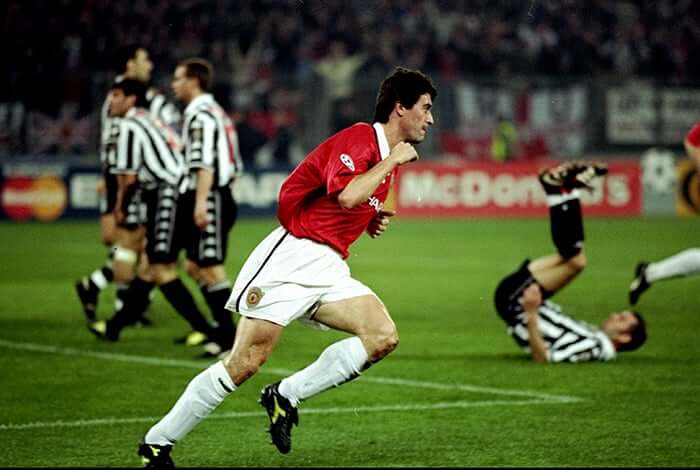
Diadora boots also picked up a reputation outside Italy that had nothing to do with results on the pitch. In England through the 80s and 90s, a pair of Diadoras became something of a status symbol within football's casual culture, partly because they were genuinely hard to get hold of outside Italy. Scarcity did some of the marketing for the brand without it having to lift a finger. This only heightened when Roy Keane put in a career performance in Turin in 1999 in Diadora.
The Maximus arrived later and found its own icon in Francesco Totti, who wore it through the mid-2000s as Roma's last great one-club man. By then the football landscape had already started shifting away from Diadora, but the boots themselves never stopped being good.
What's notable now is how often Diadora reaches back into that archive rather than away from it. The Match Winner and Brasil have both been rereleased in recent years, often in tiny limited runs, and by the brand's own admission they now outsell a lot of the modern range. Diadora has also struck a long-term partnership directly with Baggio himself, putting his name on new boots and clothing decades after he first laced up a pair. For a brand that built its name on craftsmanship rather than hype, leaning into nostalgia isn't a retreat. It's just playing to the strength that was always there.
Why Diadora left football's spotlight
Then football changed again.
The late 1990s and early 2000s brought a different kind of competition, one that had less to do with making the best product and more to do with marketing budgets and global reach. Nike and Adidas expanded relentlessly. Football got bigger, richer, and a lot less regional.
Diadora couldn't compete on those terms. Or maybe it simply chose not to try.
As the two American giants pushed further into every market, smaller manufacturers found themselves squeezed out. Diadora pulled its focus back towards footwear, the part of the business where its reputation had always been strongest and where craftsmanship still mattered more than marketing spend. The big clubs disappeared from the roster one by one. The household names became harder to find. Football shrank to a smaller corner of a much bigger business.
Why collectors still love Diadora
Even so, Diadora never lost its reputation. If anything, stepping back from the spotlight protected it.
Collectors still talk about the boots and the shirts in the same breath as Serie A under floodlights and Italian football at its absolute peak. Above all, they talk about Baggio.
Because when people bring up Diadora, they're rarely talking about a manufacturer. They're talking about a feeling. A moment when Italian football sat at the centre of the world game, and Diadora was right there in the middle of it.
The company may not dominate football the way it once did. But the reputation has held up better than most of its rivals from that era, and decades on, that's still exactly what collectors remember it for.