No manufacturer captured football's adolescence quite like Reebok.
If football had a wardrobe, for one glorious decade at least, it probably looked a lot like Reebok.
The shirts were oversized and the collars bordered on ridiculous. Goalkeepers looked like they were wearing parachutes and away kits got more and more bonkers with every passing season. Nothing about Reebok felt understated. But then neither did football. The Premier League had arrived, satellite television was changing how we watched sport and replica shirts were no longer bought simply to wear on matchdays. They were appearing in school playgrounds, on Saturday afternoons in town centres and on the backs of lads who knew every lyric to Definitely Maybe. Football wasn’t just becoming a sport to watch, but a culture to wear.
No manufacturer reflected that shift better than Reebok. Which is a strange thing to say when you consider the company arrived relatively late to football. By the time the Bolton brand began taking the game seriously, Adidas had already spent decades dressing world champions, Umbro had become woven into the fabric of English football and Puma had built its reputation around some of the sport’s greatest names. Reebok wasn’t a pioneer. It wasn’t even an obvious contender. But they had, in fact, turned up at exactly the right moment. And timing, as we know, is everything.
Now, long before football, Reebok had been built on running. The company traces its roots back to Joseph William Foster, whose handmade running spikes were worn by athletes at the end of the nineteenth century. His grandsons, Joe and Jeff Foster, eventually broke away from the family business in 1958 to form Mercury Sports Footwear before renaming the company Reebok, borrowing the name from a South African antelope found in a dictionary that had once belonged to Joe’s son. It was an unusual choice, but then Reebok have always gone slightly against the grain.
For much of its early life, football barely featured in the company’s story. Reebok found success where Adidas had largely ignored it: women’s fitness. The aerobics explosion of the 1980s transformed the business from a respected British footwear manufacturer into one of the biggest sports brands in the world. White Freestyle trainers became a cultural phenomenon in America, revenues soared into the billions and, for a brief period, Reebok wasn’t chasing Nike. It was beating them. But success often changes ambition.
By the end of the decade, Reebok had conquered running, aerobics and training. Football, however, remained one of the few great prizes still untouched. Conveniently, the game itself was standing on the edge of its own transformation. Italia ’90 had reminded the world how beautiful football could be. The Premier League was waiting just around the corner. Television money was about to flood the sport and clubs were beginning to understand that shirts could be something more than uniforms. They could become products and statements and fashion.
Reebok didn’t create this brave new world but they certainly understood it.
Football Grows Up
Reebok’s football story wasn’t built around one club or even a handful of signature shirts. Rather, they became synonymous with the decade itself.
The 1990s changed almost everything about football. Not overnight, and not always for the better, but enough that by the time the millennium arrived the sport looked, sounded and behaved differently. Grounds were becoming all-seater. Kick-off times revolved around television rather than train timetables. Footballers were no longer simply athletes; they were celebrities. The game was finding money, confidence and, perhaps for the first time, a sense of style. Reebok looked as though it had been waiting for that moment all along.
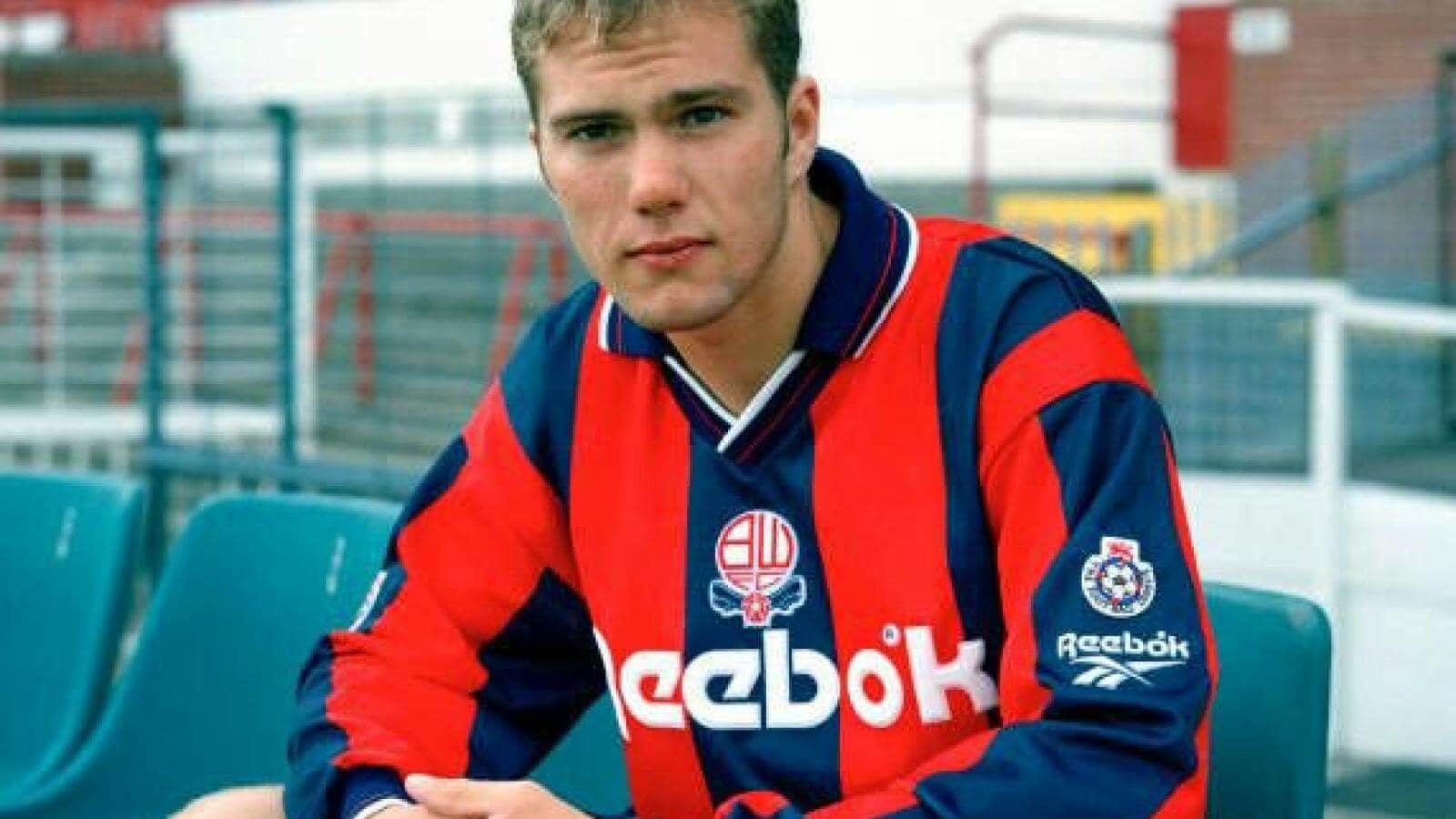
Its shirts didn’t feel rooted in tradition like Umbro’s, nor did they carry the almost institutional authority of Adidas. Reebok was freer than that. It embraced the decade’s excesses with a confidence that somehow stopped short of arrogance. Sublimated graphics crept into the fabric and manufacturers’ logos became more prominent. There was an understanding that football shirts were now being seen in places they hadn’t been before. On television every weekend, certainly, but also in pubs, clubs, colleges and high streets. The replica shirt had become part of everyday life.
Walk into JJB Sports in 1998 and it was impossible to miss them. Rows of Liverpool red. Manchester City sky blue. Bolton white. Goalkeeper shirts that looked like abstract paintings. The Reebok logo sat proudly across them all, no longer feeling like the newcomer but like a brand that belonged.
Perhaps that’s why Reebok’s designs have aged so well. At the time, some critics thought they were too loud. Too commercial. Too far removed from the clean simplicity of the shirts that had come before. Looking back, that’s precisely why they work. Which isn't to say, they were perfect or even the defining shirts of the 90s. If you think of shirts of this era, it's impossible to ignore what Nike did through Drake Ramberg. But Reebok were up there. They were cool and they were relevant even if they weren't always iconic.
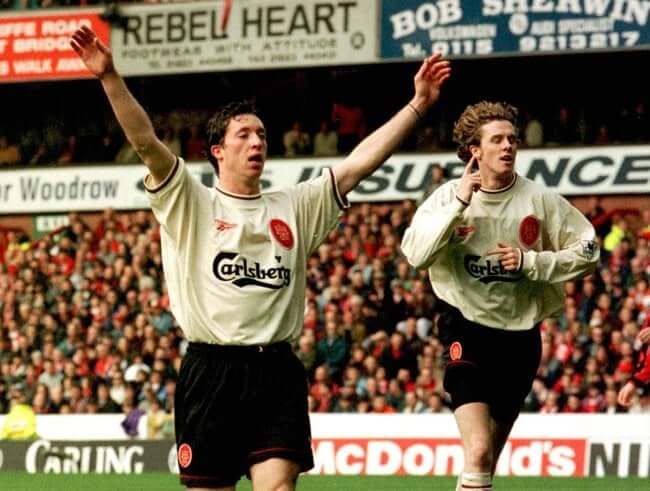
You can almost chart the Premier League’s adolescence through those shirts. Liverpool’s partnership with Reebok is probably the clearest example. The Carlsberg era wasn’t simply successful because of trophies, although Gérard Houllier’s side would eventually deliver plenty of those (not many major ones though - ed). It was successful because the kits became inseparable from the players who wore them. Robbie Fowler celebrating in deep red and Michael Owen announcing himself to the world. Even supporters who never owned those shirts can picture them instantly.
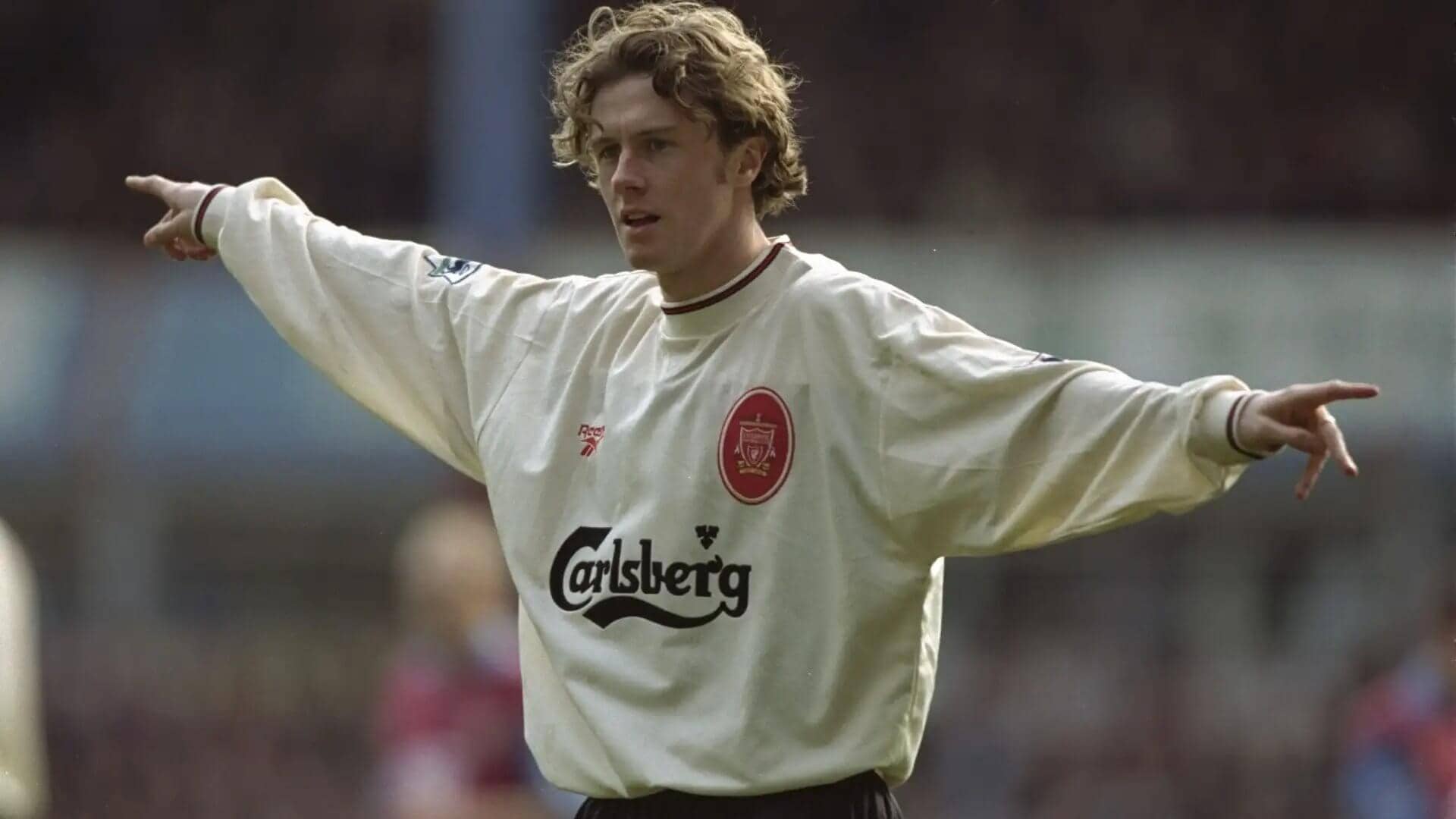
The cream away shirt from 1996–97 has become almost mythical. Beautiful in its own right, but elevated by memory. That’s often how football shirts work. Fabric collects stories, they say. Every great kit becomes shorthand for an era, and Reebok seemed to understand that before most manufacturers did. It wasn’t selling polyester. It was selling belonging.That instinct reached its most literal expression 30 miles east of Anfield.
When Bolton Wanderers moved into a new stadium in 1997, they named it after the company that had grown up alongside them. Today, stadium naming rights barely raise an eyebrow. Back then, they felt revolutionary. Some supporters hated it. Others thought it was another sign that football was disappearing into commerce. Yet over time something unexpected happened. The Reebok Stadium stopped feeling like advertising and started feeling like home.
It’s difficult to imagine a more fitting tribute. A company born in Bolton. A football club born in Bolton. Growing up together, just as English football was discovering what it wanted to become.
You can see a visual feature of Reebok's classic kits on our Instagram channel here and shop classic Reebok football shirts on the Showboat marketplace here.