Football shirt collecting has changed quickly. What was once a relatively small world of collectors, vintage shops and message boards now stretches across Instagram, marketplaces, independent sellers and an audience increasingly willing to treat shirts as fashion, memorabilia and cultural objects all at once.
Infinity Football Shirts has grown alongside that shift. What began as one collector’s obsession eventually became a business sourcing and selling shirts to customers around the world, with everything from mid-2000s classics to increasingly rare pieces passing through its hands.
We spoke to Infinity about the shirts that started it all, building a reliable supply network, why the mid-2000s are becoming the new retro, the rise of match-worn collecting and the pieces he still wishes he had never sold.
Let’s start at the beginning. How did you first get into football shirts? Were you a collector before you became a seller?
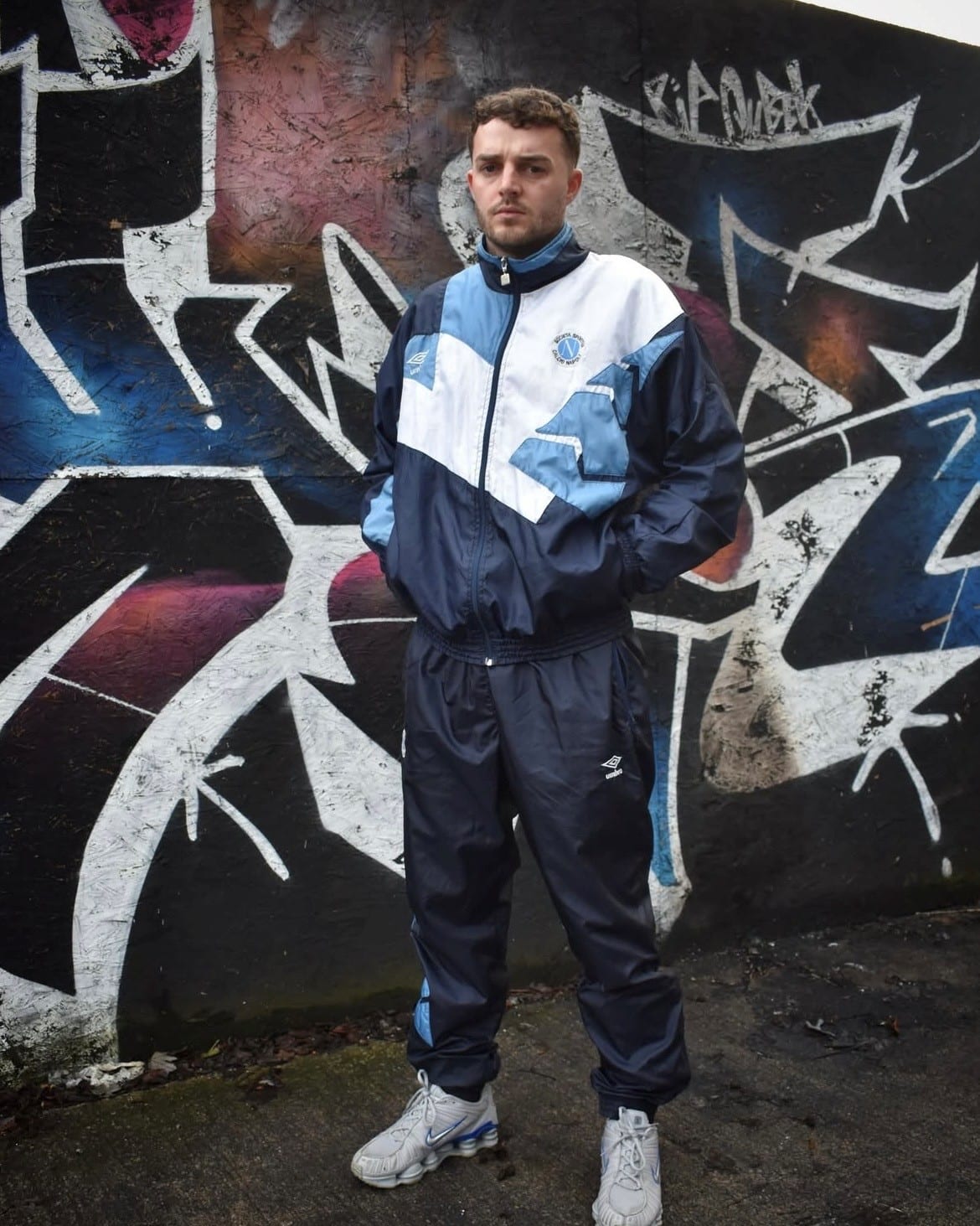
I’ve been wearing football shirts for as long as I can remember. My earliest real memories probably go back to around 2005. I remember being obsessed with players like Samuel Eto’o and Ronaldinho, and having shirts connected to those players.
One of my earliest standout memories actually came from my dad’s mate, who worked for Diadora. I remember getting a 2005 Roma full kit in a presentation box and, honestly, back then you definitely didn’t see many kids walking around in a full Roma kit. Looking back, it was probably one of the things that really helped spark my interest in football shirts and the stories behind them.
I think it really developed when I went to university in Sheffield in 2018. I started discovering vintage shops and all these £10 shirt rails, and that was when I realised there was a whole world of football shirts beyond the mainstream shirts you’d see every weekend.
I started picking things up, learning more about different eras, manufacturers and players, and gradually the collecting side became a real passion.
When did that turn into Infinity Football Shirts? Was there a particular moment when you realised it could become a proper business?
The Instagram page actually started during lockdown. At the time, there was a really strong core group of collectors and enthusiasts who were all sharing shirts, buying and selling, and just talking about the hobby.
As the page grew, I started getting loads of people reaching out asking if they could buy shirts from my collection. I already had the knowledge and the connections from sourcing shirts for myself, so I realised I could potentially turn it into a side hustle.
What did Infinity look like in the early days compared with what it is now?
I remember launching the website and almost immediately getting orders from places like Indonesia, Japan and Singapore. That was a bit surreal because it made me realise something I’d started as a hobby and built from my bedroom was reaching people on the other side of the world.
Those first few days were pretty mental, to be honest, but it was also a massive confirmation that there was a genuine community out there for what I was doing.
That’s really how Infinity Football Shirts developed. What started as a personal passion gradually became something I could build a business around. It’s now been running for around three years, and launching the website in 2024 really took things to another level.
What does the name Infinity Football Shirts come from?
When I was just collecting, people would notice that I seemed to wear a different shirt every day. They’d often ask, “How many do you have?” At the time, I’d reply with what felt like a crazy number, usually 200-plus. The next question was always, “What’s your target?” or, “At what number will you stop?”
In my mind, the answer was simple: never. I didn’t have a target because I never planned to stop collecting. Then it clicked. If the collection would never end, it was effectively infinite.
That idea became the inspiration behind the brand. Infinity represents an endless passion for football shirts, which is why our motto is: “An Infinite Collection of Football Shirts.”
How would you describe your taste in shirts? Does what you personally love generally line up with what your customers buy?
The kits that really stand out to me are the ones that bring back memories and a sense of nostalgia. I’m a sucker for the early-2000s Nike Total 90 range because it instantly takes me back to growing up, walking into JJB Sports and seeing all the latest shirts worn by the players I looked up to.
The adidas Teamgeist era also brings back great memories of the 2006 World Cup, which was iconic for so many reasons. I think a lot of people relate to that because those designs are so closely tied to unforgettable moments in football.
How do you decide what to buy? Is it instinct, data, knowing your customers, or simply knowing a great shirt when you see one?
I’d say it’s a mixture of instinct and experience, based on what I’ve sold successfully in the past. One of my most reliable suppliers, who I’ve been buying from for years, consistently stocks a similar niche of shirts, and that approach has always worked well for me. Very few shirts end up sitting on the website for more than a few months before they’re sold.
I firmly believe every shirt has the right owner out there somewhere. What might not mean much to one person could hold a special memory or connection for somebody else, which is one of the things I love most about selling vintage football shirts.
Without giving away your secrets, how do you build a reliable supply network? How much of it comes down to relationships and trust?
Ultimately, that’s what it all comes down to: the trust and relationships you build with both suppliers and customers over time.
As I mentioned before, I have one main supplier who has probably accounted for around 70% of our stock throughout the journey. The rest comes from putting in the legwork and sourcing shirts through platforms such as Facebook Marketplace, eBay and Vinted.
There isn’t really a big secret to it. You’ve just got to understand the market, know what you’re looking for and develop a strategy that works for you. Building a strong network and having an eye for what people want goes a long way in this industry.
What’s changed most in the football shirt market since you started? Are people buying differently now?
I was lucky enough to connect with a lot of people in the community early on, and some of those guys are still people I speak to regularly today, years later. They know who they are. A lot of them have gone on to become big names within the shirt community, so it’s been brilliant to see how much their passion has continued and how much the football shirt industry itself has grown.
These days, I’d say the market is slightly more saturated than it was a few years ago, mainly because of social media and the way the algorithms have opened the space up to a much wider audience.
What are younger collectors looking for? We keep hearing that shirts from the mid-2000s and even the 2010s are now becoming genuinely desirable. Are you seeing that?
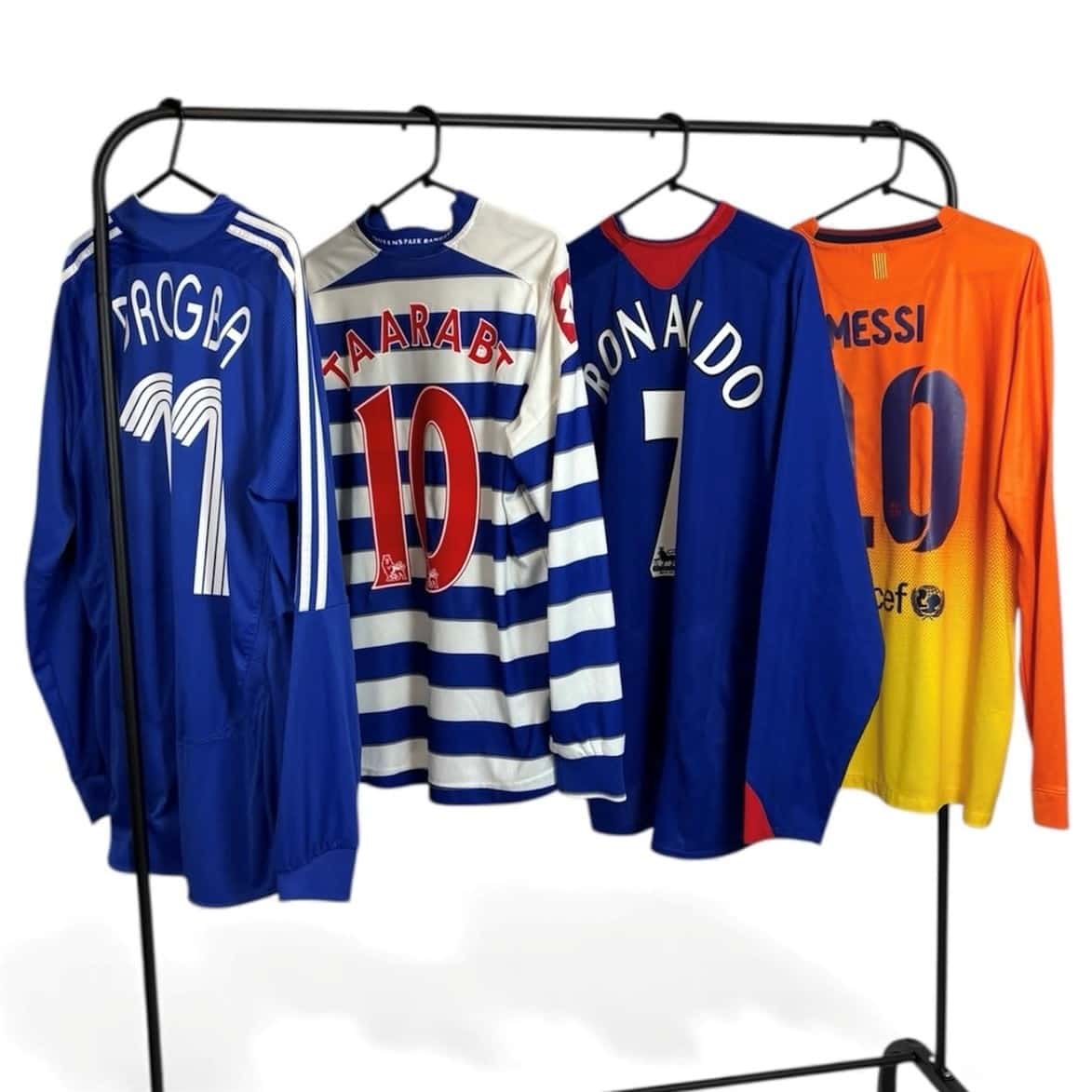
Yes, I’d say those are definitely some of the quickest and best-selling shirts. Messi and Ronaldo shirts from the mid-2000s are especially popular because they’re right on the cusp of becoming true retro classics. They combine nostalgia with the appeal of two of the greatest players to ever play the game.
Shirts from clubs like Manchester United, Barcelona, Chelsea and Real Madrid between 2005 and 2011 tend to be consistently strong sellers. A lot of that comes down to nostalgia for the era of managers like Ferguson, Mourinho and Pep Guardiola, as well as iconic players such as Rooney, Lampard, Kaká, Xavi and Iniesta. The list could go on.
For many younger collectors, those were the teams and players they grew up watching, so owning a shirt from that period helps them reconnect with some of their favourite football memories. That’s what makes those shirts so desirable and why they continue to sell so well.
Is there anything you think the football shirt world gets wrong at the moment?
One thing I think the football shirt world gets wrong at the moment is the growing acceptance of replica and counterfeit shirts. I completely understand why people buy them. With clubs and manufacturers regularly releasing new shirts at £90-plus, it’s easy to see why someone would choose a £15 or £20 alternative.
That said, there’s something far more special about owning an authentic shirt, whether it’s a modern release or a classic piece. Authentic shirts carry memories, history and value that counterfeits simply can’t replicate. For me, collecting has always been about preserving those stories and connections, not just owning the design.
Do you still collect yourself? If so, what does your own collection look like?
Yes, I still collect now and then, but these days I’m much more selective. I tend to only buy shirts that I’ll actually wear or ones that hold sentimental value for me.
Lately, I’ve started rebuilding my childhood collection by tracking down shirts I owned growing up. It’s been a real trip down memory lane. One example is the 2005 Roma shirt I mentioned earlier, which brought back so many memories as soon as I found it again.
Looking back, I had no idea how difficult it would become to find some of those shirts in authentic condition. A great example is the 2006/07 AC Milan home shirt. I have photos of myself as a kid wearing the full kit, but finding a genuine original nowadays is incredibly challenging. It’s probably one of the most replicated and frequently faked football shirts on the market, which makes authentic examples even more special to own.
What’s the best shirt you own, or one you’d never sell if it came through the door?
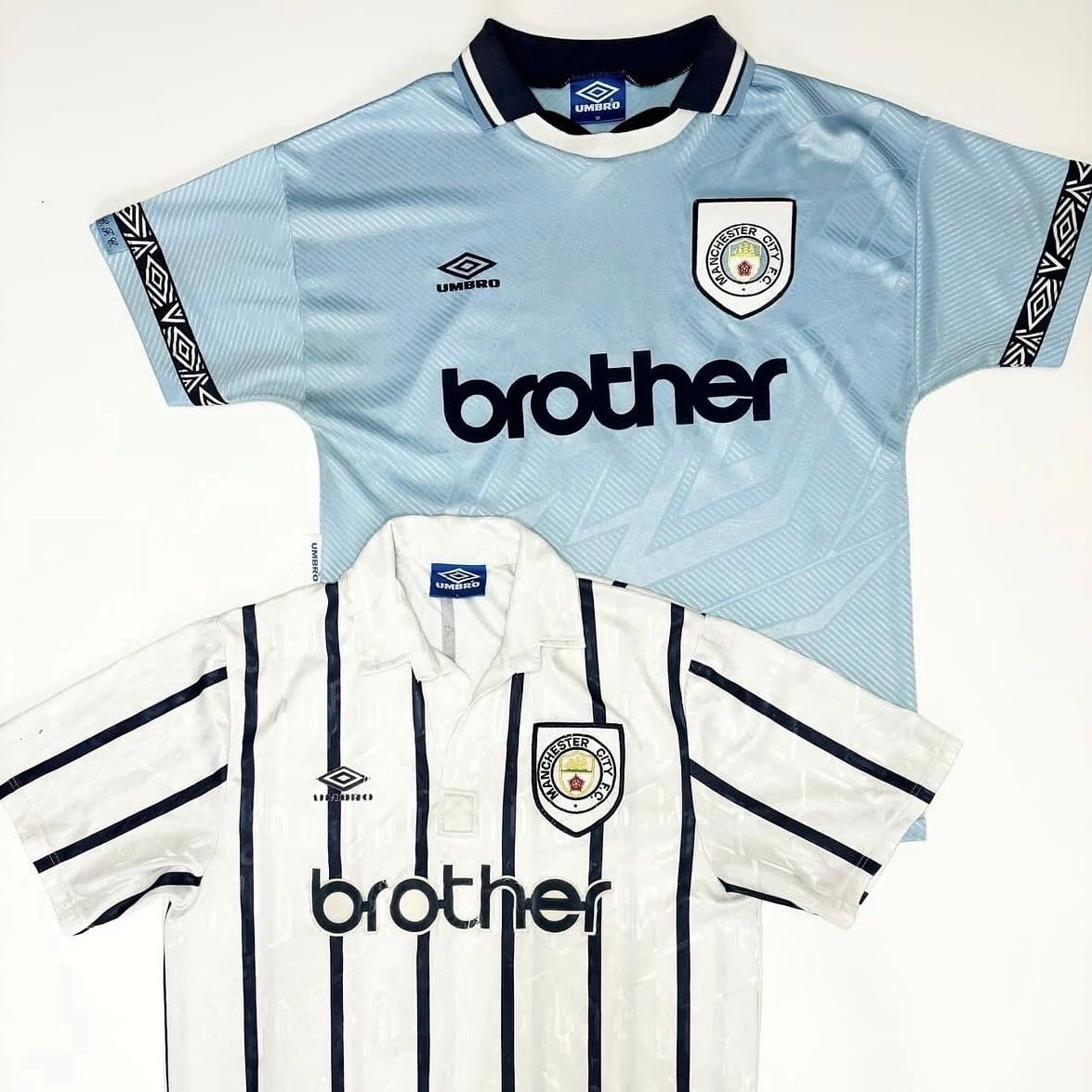
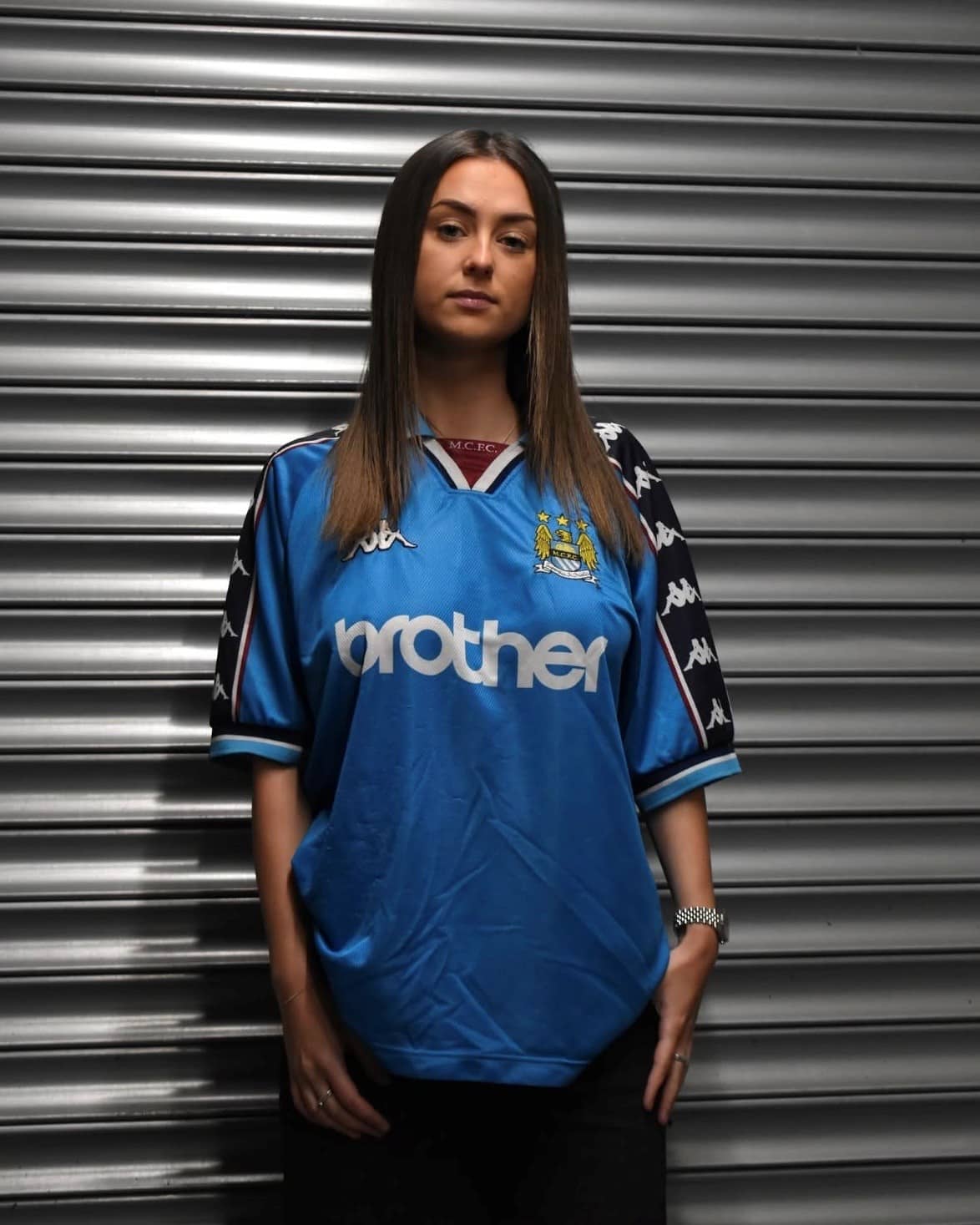
Growing up in a family that has always supported the blue side of Manchester, it’s got to be the Manchester City 1993/94 third shirt, the classic Umbro and Brother design in white with the thin navy stripes. It was made even more iconic by Oasis, and you see them selling for £400-plus these days.
Alternatively, there’s a match-issued Niall Quinn Manchester City 1993/94 away shirt that was handed down from my dad, who was gifted it back in the 90s. This time it’s the purple version, which I assume everyone knows very well. I’ve previously turned down an offer in excess of £800 for it.
What’s the best shirt that’s ever passed through Infinity that you wish you’d kept?
It’s probably one of two. A Napoli 2001/02 long-sleeve third shirt by Diadora with the double Peroni sponsor, or a classic Umbro Inter Milan jacket from around 1997/98.
Both were insane pieces and I’ve never seen either of them again.
What’s selling surprisingly well at the moment? Is there a club, player, manufacturer or era that’s having a moment?
The whole “Barclaysmen” and “streets won’t forget” category is a great niche that a lot of fans absolutely love. A perfect example would be shirts associated with players like Adel Taarabt at QPR or Jay-Jay Okocha at Bolton Wanderers.
These are the kinds of players who may not have won everything, but they left a lasting impression on fans because of how exciting and entertaining they were to watch. Those shirts carry a lot of nostalgia for people who watched them during their peak years, and we get plenty of requests for that type of shirt.
It’s often not just about the club or the kit itself, but the memories and stories attached to the player who wore it. That’s what makes these shirts so iconic and sought after among collectors.
Where do you think football shirt collecting goes next? We’ve seen 90s shirts explode, then Y2K, player shirts, benchwear and training gear. What do you think people will be chasing in a couple of years?
That’s a tough one. Personally, I don’t think the nostalgic and iconic side of shirt collecting will ever disappear. As I’ve mentioned before, every shirt means something different to different people, whether it’s tied to a favourite player, a memorable match or a specific period in their life.
One trend I’ve noticed recently is a growing interest in match-worn shirts. More collectors seem to be looking for unique pieces with a direct connection to the game itself, so I can definitely see that side of the hobby continuing to grow.
While nostalgia will always be at the heart of collecting, the demand for rare and authentic match-worn items could become an even bigger part of the market in the years ahead.
Finally, why Showboat? What made joining the marketplace make sense for Infinity?
I’ve really enjoyed watching how much the football shirt scene has grown over the last few years. I’ve seen the work that you and Rob have been doing across social media, as well as the work around RFF and Shirts vs Boots, and I think it’s great to see the different sides of the community continuing to develop.
What started as a relatively niche passion has become a proper industry, but I think the best thing is that the passion for the shirts themselves is still at the heart of it. That’s what attracted me to it in the first place, and it’s what keeps me involved today.