Football Finery: From Paramedic to Football Shirt Merchant
The football shirt world is built on obsession. Late-night eBay searches, charity shop finds, the thrill of spotting something rare before anyone else does. For Chris, founder of Football Finery in Cambridge, that obsession gradually became a business.
What started as a collector’s hobby has grown into a thriving shop, a global online operation and a trusted supplier within the vintage shirt community.
We caught up with Chris to talk about how it all began, the realities of running a physical shirt shop, and why the 1990s still dominate the market.
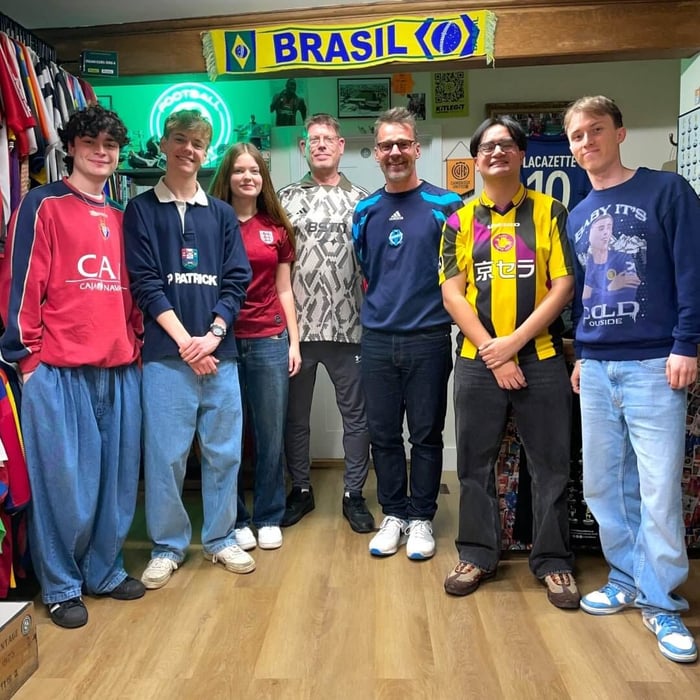
How did you first get into football shirts?
I’ve always been a huge football fan. I’m a Spurs supporter and my dad used to take me to games when I was younger, so football was always part of life - going to matches, watching Match of the Day, Football Focus, Saint & Greavsie, playing and talking about football with my mates. I loved it.
I always bought shirts. Mostly Spurs and England shirts, but I had a soft spot for Serie A too. That probably came from the Channel 4 era with James Richardson presenting Football Italia every weekend.
But the real spark came from my son. During the 2018 World Cup he got obsessed with collecting Panini stickers and filling in the wall chart. From there he fell in love with football and started wanting to wear football shirts.
He began asking about older shirts as well, which I found interesting. So I started picking a few up for him. We went up to the CFS store in Manchester and at the time they only had a small rail of kids vintage shirts. It got me thinking about all the shirts I used to have.
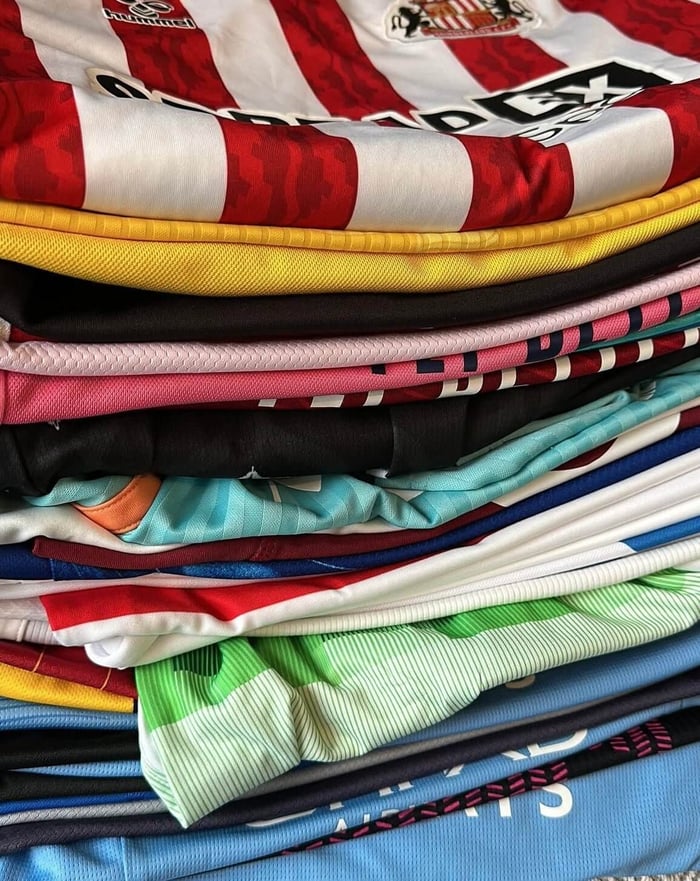
So I started buying them back. Before long I was waking up in the middle of the night scrolling through eBay looking for listing of any shirts that triggered memories - sponsors, colours, matches, players. It became a bit of an obsession.
When did collecting turn into a business?
It started with selling a few shirts on eBay. I’d buy things that caught my eye and occasionally sell one or two to fund the next purchase. That gradually led to learning more about authenticity, suppliers and the wider football shirt community.
In the early days I definitely kissed a few frogs. I bought fakes, made mistakes and learned the hard way. Over time, that learning process became one of the foundations of the business - making sure everything we sell is 100% authentic and properly checked. I also set up an Instagram page to share my collection. That helped me connect with other collectors and sellers.
Eventually I went to a retro football fair and realised I had enough stock to try doing this properly. After watching a whole pile of YouTube videos, I started building a basic website and just got stuck in, learning as I went.
At the time I was working as a paramedic. My plan was to run the business alongside that job. My rota was four days on, four days off, so I thought I could balance both.
But you quickly realise you’re not doing either job properly if you split your focus. So, after working through Covid, I felt ready to have a break from the Ambulance and took the plunge, committing to Football Finery full time. Life’s too short not to have a go!
Opening a physical shop is a big step. How did that happen?
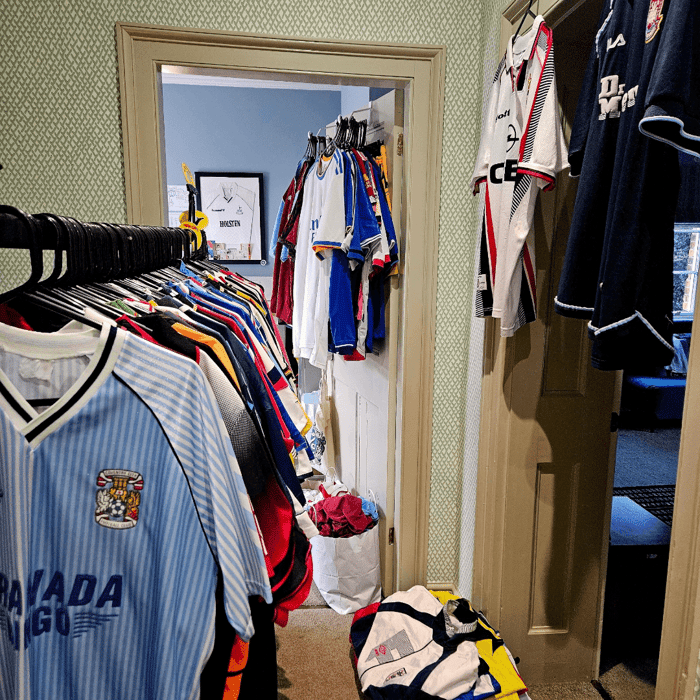
Honestly, it was almost forced on me. I ran out of space at home. The spare room was full of shirts. Then the landing. Eventually, it started creeping into the dining room. At that point, I thought I might as well move everything into a proper workspace, where people could see the shirts all the time.
The idea was that I’d sit in the shop working on the site, listing products online and maybe get one or two customers a day. But it quickly became much busier than that. Cambridge is actually a brilliant place for this kind of shop. There’s a strong football culture, lots of students and a steady flow of tourists. And football shirts now appeal to a much wider audience than they did ten years ago. It’s not just middle-aged collectors anymore - younger fans are really into vintage shirts.
Perhaps the best thing that came out of the decision to open the shop has been that it’s allowed me to build a brilliant team around the business. It was just me, but now we’ve got people helping in the shop, in the office, at fairs and pop-ups - and everyone mucks in with whatever’s needed, whether that’s washing shirts, tagging, listing stock, dealing with customer queries, running social media or serving customers. I genuinely couldn’t do it without them.
Opening the shop was definitely a leap of faith, but it’s been hugely important for the business.
What does the split look like between shop and online sales?
At the moment the physical shop probably leads. Which is quite surprising really, because the online potential is enormous. We ship all over the world but our website still has loads of room for improvement. Our SEO could be better, our marketing could be better and we’ve only just started scratching the surface with things like paid ads. Sothere’s a huge opportunity to grow that side of things.
The goal is to improve the listing process, get more shirts online faster and improve things like descriptions and condition reports. If we get that right, the online side could become much bigger.
How closely does your own taste align with what sells?
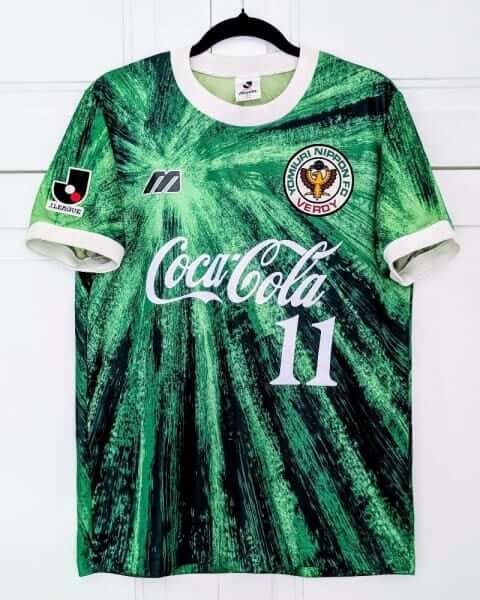
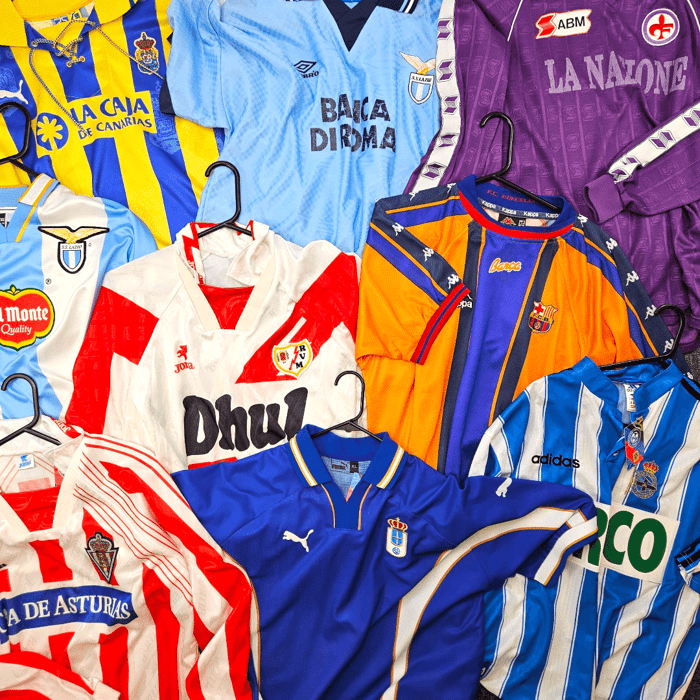
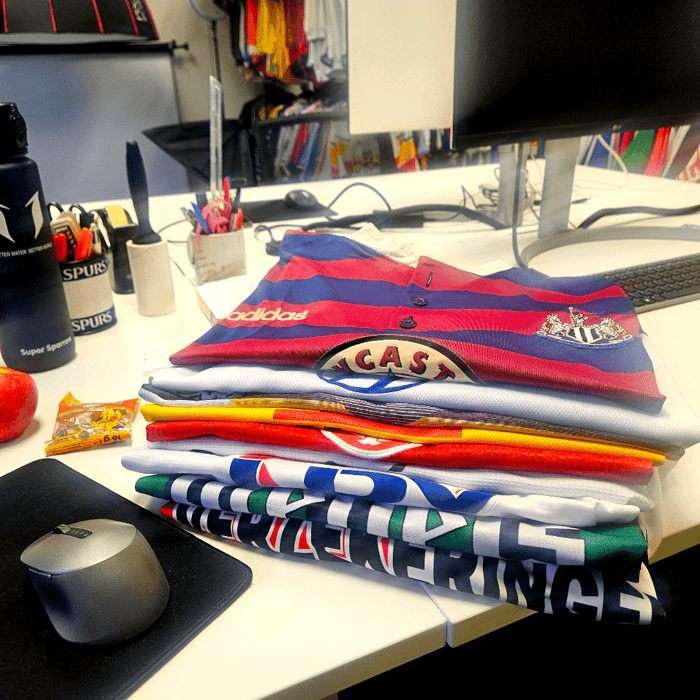
Online it aligns pretty closely. If I like something, there’s a good chance our online customers will like it too. The sweet spot is usually 1990s shirts. The 1980s pieces are either incredibly rare or very expensive, so I tend to focus on shirts in the £80–£150 range. That’s where I personally like buying as well.
The shop is quite different though. In-store you need to cover off on the more modern shirts and there is huge interest in players like Neymar, Mbappé, Bellingham, Messi, Ronaldo. Younger fans want those shirts and they tend to sell around the £60–£70 mark.
Opening the shop also revealed another market I’d never really tapped into before: kids’ shirts. Parents come in with their kids and the kids want to go through the rails themselves. So we added a ‘Kids Corner’ and it’s become a really strong part of the business.
We also have some great football artwork, 90s Corinthian figures, vintage scarves and other bits of cool footy merch. There’s something for everyone.
Building a reliable supply network is one of the hardest parts of the business. How did you do it?
It’s mostly hard work and time. You try a lot of suppliers before you find the reliable ones. Over the years I’ve built relationships with a handful of regulars who consistently send good stock. At the moment I probably have four or five people who can each send me around 50 shirts a month.
They’ll send photos of maybe 150shirts and I’ll choose the ones I want. Some suppliers come and go. I had an incredible contact in Spain who used to send fantastic 1990s shirts at great prices, but eventually his supply dried up. Still hopeful he may reappear one day.
Having a physical shop helps a lot though. We now get people walking in with shirts they want to sell. We also have a page on the website where people can submit shirts and a WhatsApp number for shirt selling enquiries. We now get five to ten messages a day from people looking to sell anything from one shirt to thirty. Just filtering through those enquiries can be a full-time job in itself.
Do you still have a personal collection?
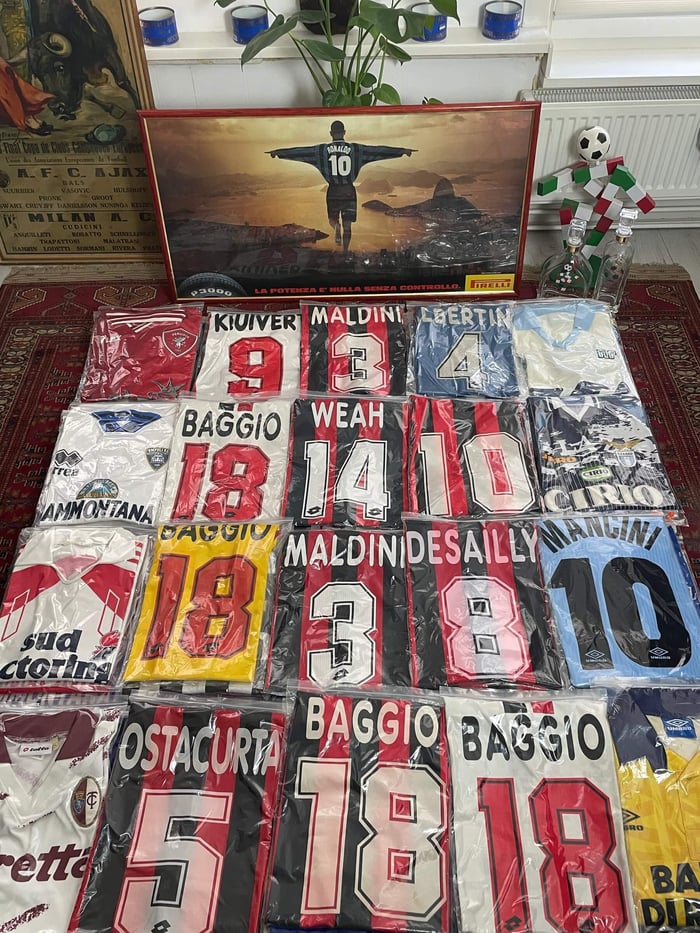
Yes, absolutely. Spurs is the main focus. I’ve got most of the shirts from the mid-1980s onwards, which probably comes to around 80 or 100 shirts. The late 80s early 90s Hummel stuff is where my heart’s really at. Then I’ve got about 20 or 30 England shirts and a similar number from Serie A or La Liga that I just like personally.
One of the perks of the job is that shirts pass through the shop constantly, so I sometimes wear them for a few weeks before they get listed. Over the past 12 months I have really got into football sweats too – they are more effective than a football shirt for keeping you warm in the shop over winter.
Why did you decide to partner with Showboat?
I’ve met yourself and Rob at several of the football fairs now and I think you’re going about it the right way. You clearly care about shirts and collecting. For me it’s about strengthening the community.
The football shirt space works best when people collaborate rather than compete in isolation. Platforms like Showboat help bring more collectors into the market and give the whole community a shared place to engage.
If the overall market grows, everyone benefits.
The goal shouldn’t be everyone fighting over scraps. It should be raising the profile of football shirt collecting so the entire ecosystem grows together. If Football Finery can help grow and be a part of that, I’d be delighted. Work and fun, wrapped up in football shirts - can’t beat it.
More from The Supply
→ Read our interview with Granny's Football Store
→ Read our interview with Retro Football Shirts
→ Read our interview with Squadra
→ Read our interview with NI Clasico
→ Explore shirts from the best suppliers in the UK on the Showboat Marketplace.