Twenty years ago, Burberry’s famous check was associated with football hooligans and a tabloid caricature of working-class Britain. Now the fashion house has built an entire campaign around matchday culture. Has football changed, or has the idea of the football supporter simply become fashionable?
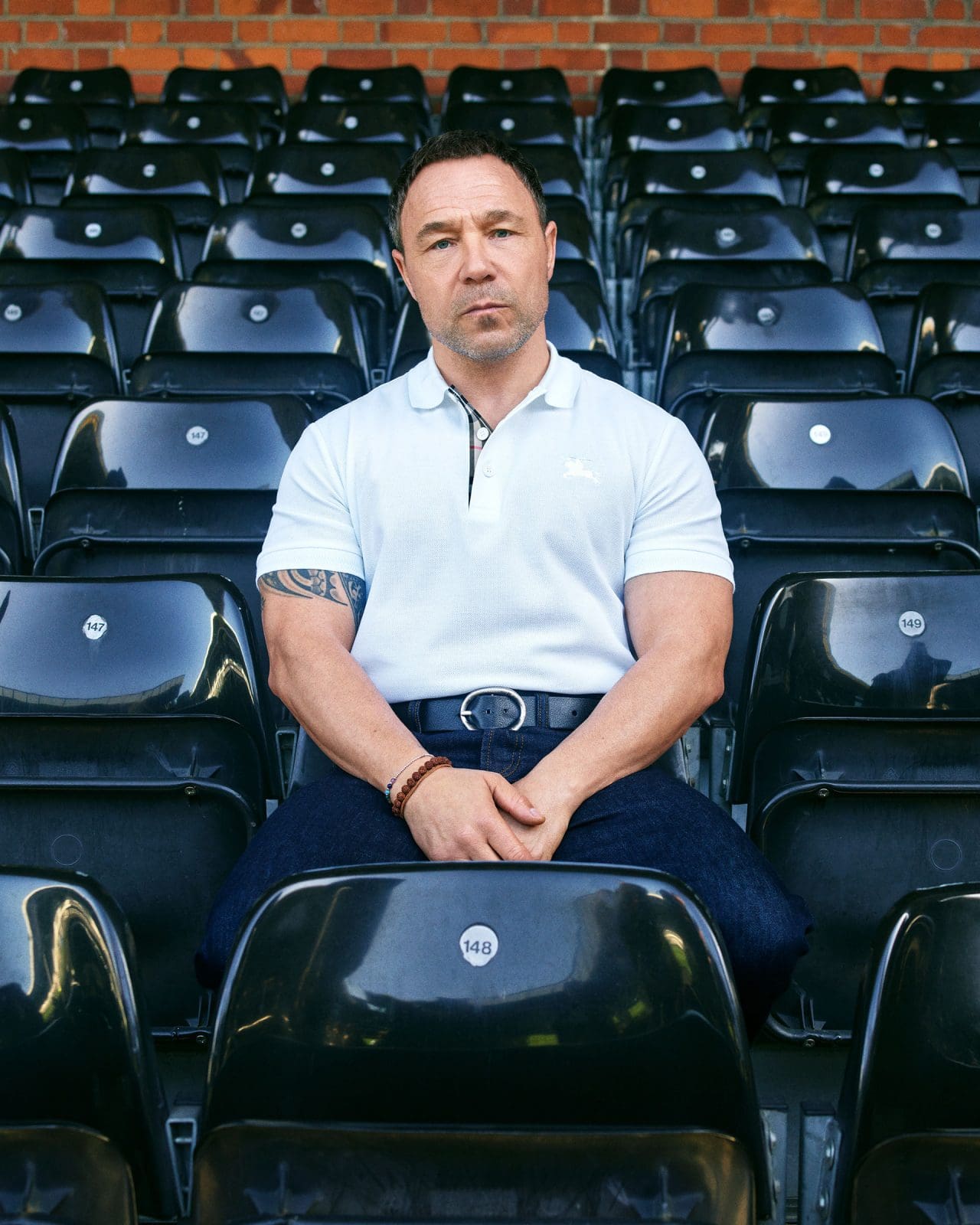
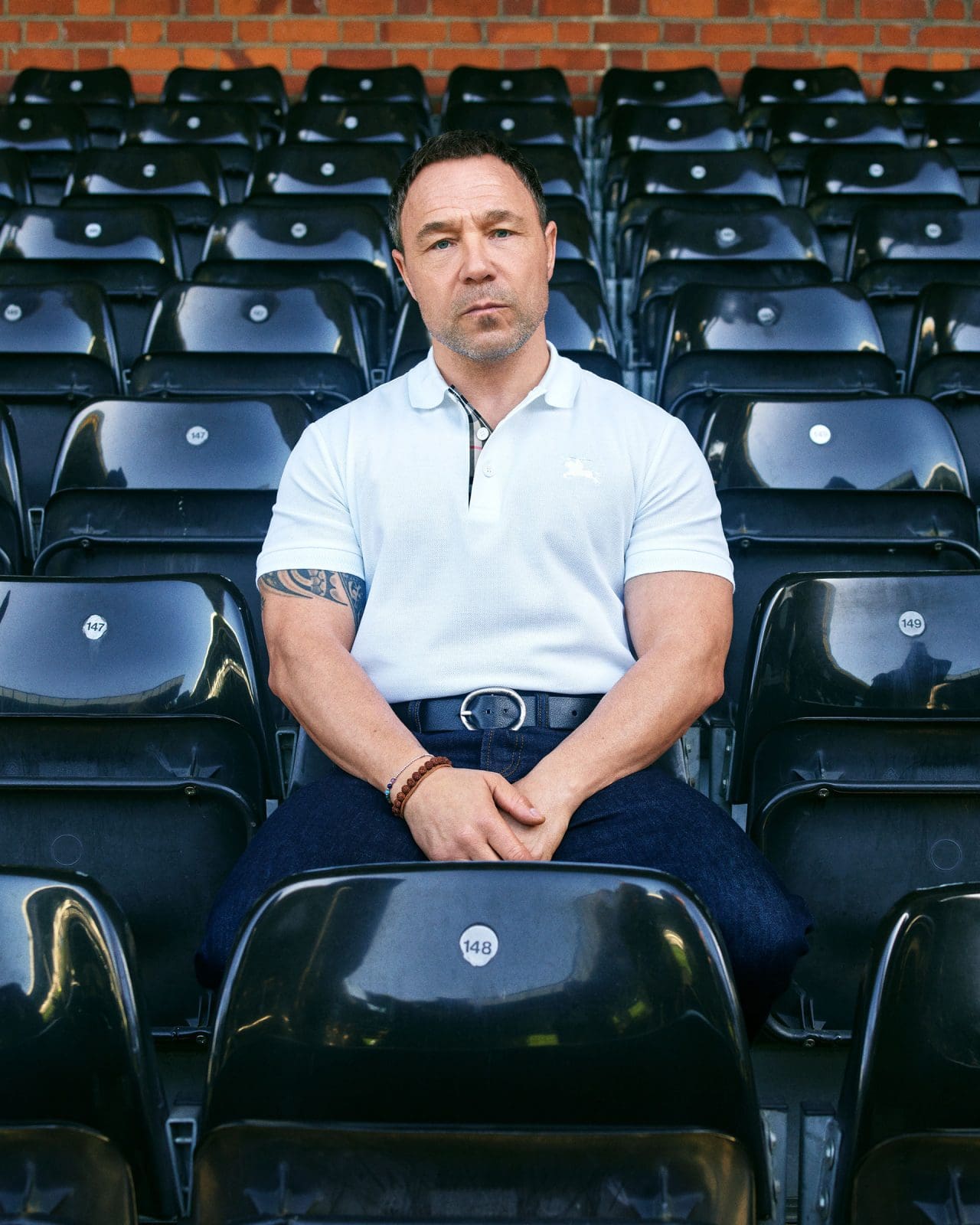
There’s something rather wonderful about the sight of Stephen Graham sitting in a football stand, looking thoroughly miserable. He’s wearing a Burberry polo shirt, surrounded by empty plastic seats, and has the expression of a man whose centre-half has just attempted a Cruyff turn on the edge of his own penalty area. Elsewhere, Lucy Punch is queuing at a burger van, Jason Sudeikis is shouting encouragement from the stands and Rosie Huntington-Whiteley is doing her best to make the touchline of a children’s football match look like the French Riviera.
It’s all part of A Good Sport, Burberry’s Autumn 2026 campaign, a celebration of British football culture featuring an assortment of actors, models and professional footballers, photographed by Mario Sorrenti and accompanied by Bloc Party’s Banquet. It’s beautifully put together, full of familiar matchday rituals and the sort of clothing that might have you reconsidering the contents of your wardrobe. Assuming, of course, you’ve recently come into a substantial inheritance.
But there’s something else rather interesting about the whole exercise. Twenty years ago, Burberry wasn’t especially enthusiastic about certain associations its famous check had acquired on Britain’s football terraces. Now it’s building an entire advertising campaign around the people who inhabit them.
Which raises a question. Has football finally become posh enough for Burberry?
When the Check Became a Problem
To understand the peculiar nature of this reunion, it’s worth remembering just how complicated Burberry’s relationship with British popular culture became during the late 1990s and early 2000s.
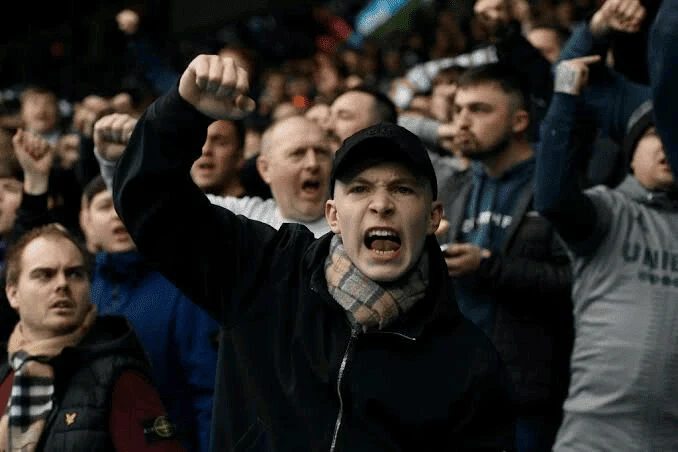
The brand’s distinctive beige check had become a familiar sight at football grounds, adopted by supporters who had spent the previous two decades developing an increasingly sophisticated relationship with expensive clothing. The casual movement had introduced everything from Lacoste and Sergio Tacchini to Stone Island and Aquascutum, with football supporters establishing their own peculiar fashion hierarchies. The right jacket or pair of trainers could be every bit as important as the result on Saturday afternoon.
Burberry fitted rather nicely into that world. It was expensive, unmistakably British and immediately recognisable. Unfortunately for the company’s carefully cultivated luxury image, it was also becoming associated with something rather less desirable in the eyes of the fashion establishment.
The early 2000s brought a particularly unpleasant period of British tabloid culture, when the word ‘chav’ became a convenient shorthand for mocking working-class people, their clothes and their aspirations. Burberry’s check became part of that caricature, helped along by counterfeit clothing, celebrity photographs and its association with sections of football’s hooligan culture.
By 2004, some pubs had even banned customers wearing the pattern. Burberry hadn’t suddenly become cheap, but its most recognisable design had acquired a meaning that the company could no longer control. It was no longer simply a symbol of expensive British clothing. It had become a symbol of the people wearing it.
It’s important not to romanticise this period. Football hooliganism was real, and the casual movement wasn’t entirely separate from it. But neither was everybody wearing a Burberry scarf looking for a fight. Much of the hostility directed towards the brand’s new audience had less to do with violence than with class, and with the perceived vulgarity of ordinary people adopting the visual language of the wealthy.
Burberry subsequently spent years carefully managing its image, placing greater emphasis on its luxury credentials and becoming more selective about how prominently the check appeared. The situation was never quite as simple as the company abandoning football, but the distance between the brand’s desired identity and its reputation on Britain’s streets was unmistakable.
Football Gets a Makeover
Fast forward twenty years and the cultural landscape looks rather different. Footballers are fashion ambassadors, football shirts are worn to fashion shows and luxury brands routinely borrow from the clothing and imagery of supporters.
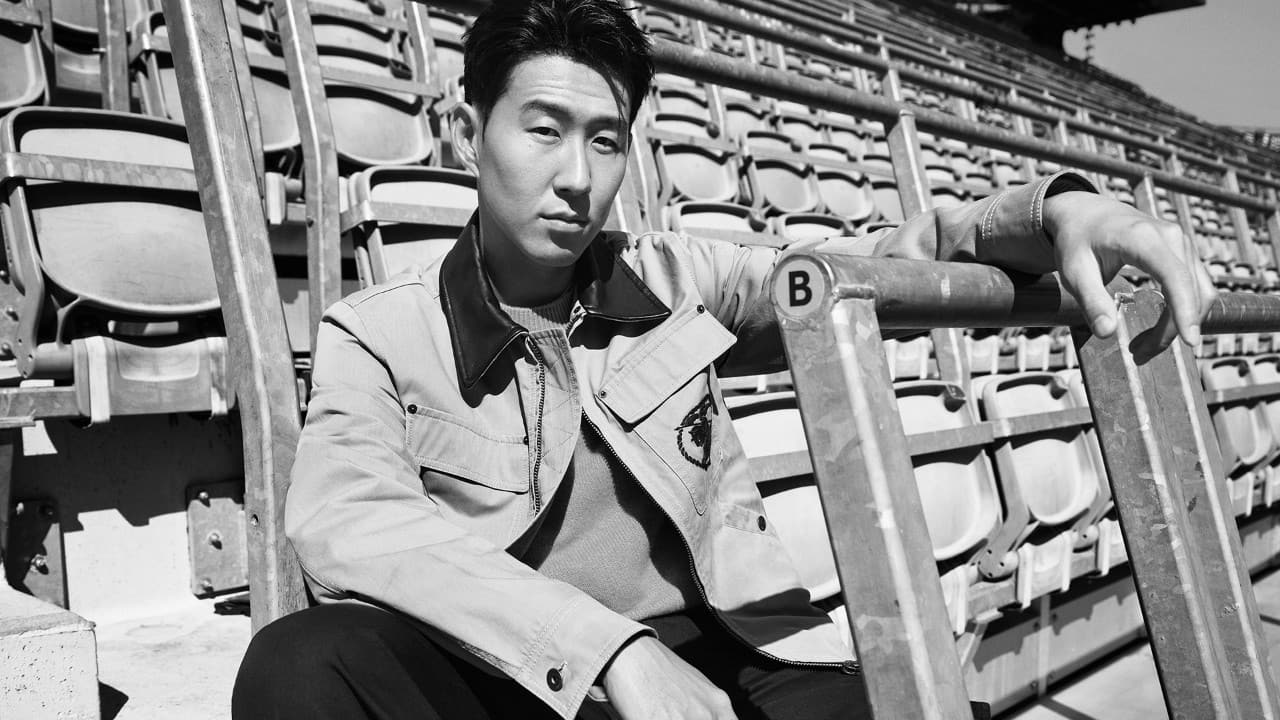
Burberry itself has been moving back towards the game for some time. Marcus Rashford worked with the company in 2020, Son Heung-min became a brand ambassador in 2022, and footballers have increasingly appeared in its campaigns and at its shows.
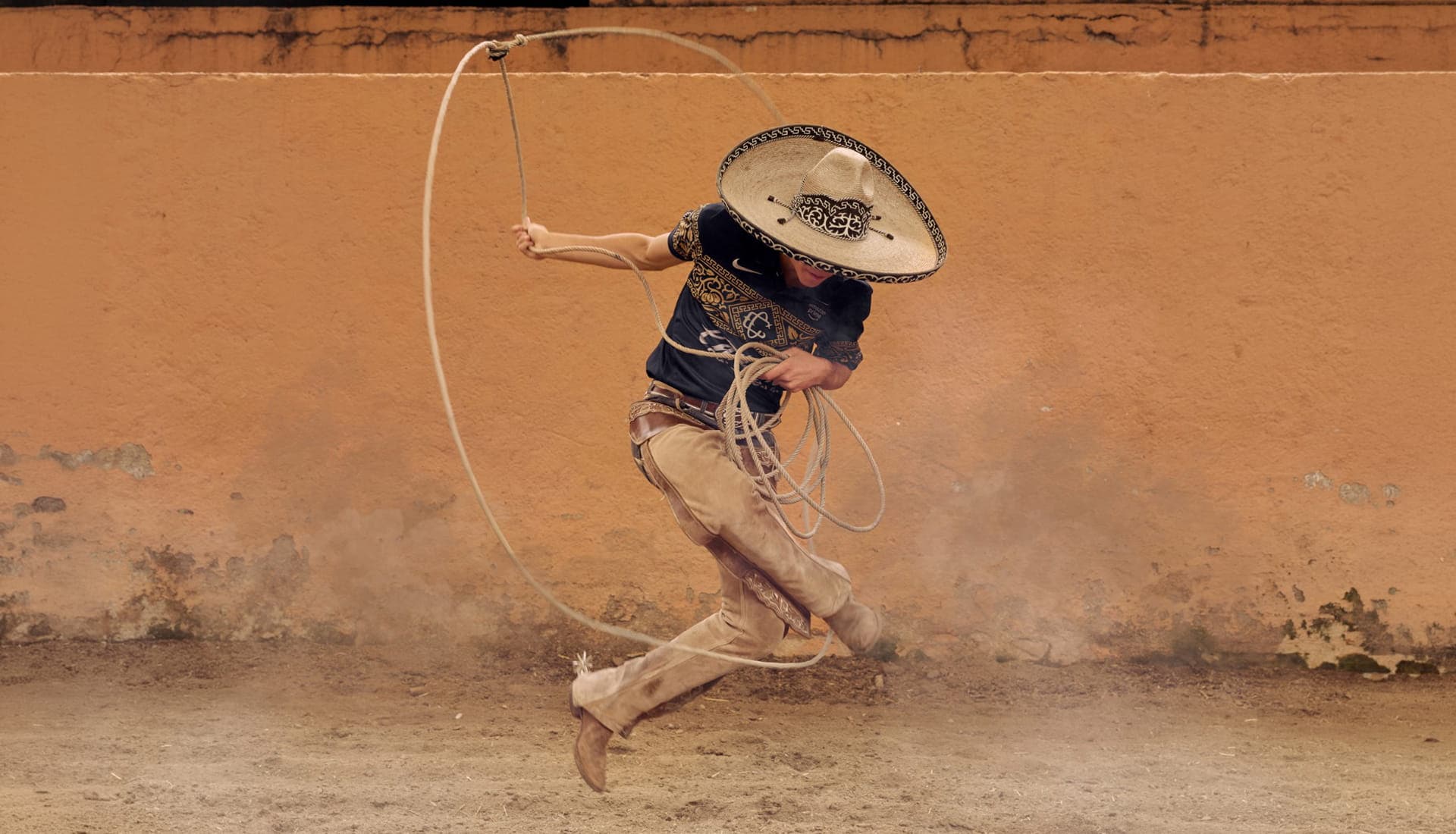
But there’s a distinction between dressing a millionaire footballer in expensive clothing and celebrating the people who stand behind the goal. With A Good Sport, Burberry has moved its attention away from the pitch and towards the spectators, adopting the visual language of ordinary football culture as the setting for a luxury fashion campaign.
The burger vans, plastic seats, grassroots pitches and Harrington jackets are all there, lovingly photographed and carefully arranged. It’s a recognisable version of British football, albeit one in which nobody appears to have stepped in dog muck or spent forty minutes trying to find somewhere to park.
There’s an irony in all this. The same cultural references that once threatened to undermine Burberry’s exclusivity have become an attractive way of communicating authenticity. The football supporter, previously a potential reputational problem, is now somebody whose habits, surroundings and clothing can help sell an expensive vision of Britishness.
Perhaps football itself has become more respectable. Or perhaps the people selling us things have simply realised how valuable its culture can be.
The Price of Admission
Of course, football has undergone its own transformation during this period, and not always for the better. The Premier League has grown into an extraordinarily successful global entertainment business, attracting enormous international audiences, wealthy investors and commercial partners whose interests extend well beyond the ninety minutes. Stadiums have improved, footballers have become global celebrities and the sport’s cultural influence has expanded into almost every corner of popular life.
Attending matches, meanwhile, has become considerably more expensive. In 1990-91, a ticket for a top-flight match typically cost around £7. By February 2026, UEFA financial data showed that supporters of the Premier League’s six wealthiest clubs were generating an average of £74 per ticket per match. These aren’t perfectly comparable figures, but the direction of travel is fairly obvious.
That doesn’t mean football has stopped being a working-class game. Far from it. Across the country, millions of supporters continue to follow clubs whose identities remain inseparable from their local communities. Nor should we pretend that the old terraces represented some golden age, when everybody could afford to attend matches and football existed in a state of perfect social harmony.
But there is something uncomfortable about the growing commercial value of working-class football culture at a time when the cost of participating in the sport continues to rise.
The scarves, jackets and matchday rituals of ordinary supporters have become desirable cultural references, even as some of those supporters find themselves increasingly priced out of the grounds where that culture developed.
It’s a strange arrangement. Football’s traditional audience provides the history, atmosphere and visual identity, while an increasingly wealthy industry finds new ways of selling those things back to us.

Who Owns Football Culture?
None of this necessarily makes Burberry’s campaign cynical. It’s an excellent piece of work, with some wonderful photography and a cast that feels more thoughtfully assembled than the usual collection of famous faces wearing expensive coats.
Stephen Graham, in particular, is inspired casting. There’s something immediately recognisable about him in a football setting, an authenticity that comes from his screen work and the working-class British communities he has so often portrayed. He makes the whole thing feel considerably more believable than it might otherwise.
But authenticity is an interesting commodity, particularly when it comes with a luxury price tag.
Burberry’s creative director Daniel Lee says the brand has connected football supporters across generations, and he’s right. The relationship is genuine, even if it hasn’t always been entirely comfortable. What makes this campaign interesting is the change in who gets to celebrate that connection, and on whose terms.
The supporters who wore Burberry to football matches thirty years ago weren’t making a statement about the relationship between luxury fashion and British sporting heritage. They were wearing clothes they liked, showing off to their mates and trying to look the part. Some were wealthy, some weren’t, and plenty were spending rather more than they could reasonably afford.
Nobody needed to explain their cultural significance to them. They were simply getting dressed for the football. Now those same visual references are being carefully reproduced by one of Britain’s most prestigious fashion houses, with an internationally recognised cast and a celebrated fashion photographer behind the camera.

Maybe that’s the real measure of how much football has changed. The sport hasn’t lost its working-class roots, but those roots have become enormously valuable to people and companies far beyond the communities that established them.
Burberry hasn’t invented a new relationship between football and fashion. Nor has it discovered something that supporters didn’t already know. It’s just found itself in a world where the clothes, habits and surroundings of ordinary football fans are considered rather desirable.
Twenty years ago, the Burberry check could get you turned away from a pub. Today, it might get you into a fashion campaign. Funny old game.