Every four years football experiences a strange kind of inflation.
Players who were worth £5 million suddenly look like £20 million footballers. Established stars become global superstars. Scouts convince themselves they have spotted the next big thing after three good games in June.
Sometimes it ends badly. For every World Cup transfer that transforms a club there are half a dozen that leave directors wondering what they actually paid for.
But occasionally a tournament reveals something real. A player arrives on the biggest stage in football and shows enough quality that everyone watching understands the next step is inevitable.
These are the ten best signings made on the back of a World Cup.
10. Mesut Özil
Germany 2010 → Real Madrid
Outside Germany, Mesut Özil wasn't exactly a household name heading into South Africa, but by the end of the tournament he was the player everyone was talking about.
Germany's young side played some of the most exciting football of the World Cup, dismantling England and Argentina with relative ease. And Özil was at the centre of it all. Elegant without ever looking rushed, he seemed to glide through matches while everyone else sprinted.
Real Madrid moved quickly, signing him from Werder Bremen for around €15 million. Looking back now, it feels like daylight robbery.
For three years he became one of the most creative players in Europe, collecting assists almost by accident and helping José Mourinho's side to a record-breaking La Liga title. For a relatively modest fee, Madrid acquired one of the defining playmakers of his generation.
9. Sami Khedira
Germany 2010 → Real Madrid
The best teams need players who make everything else work. The water-carriers, if you like. Sami Khedira was one of those players.
He lacked Özil's elegance and never generated the same headlines, but his performances in South Africa convinced Real Madrid they had found the perfect modern midfielder. Strong, intelligent and endlessly selfless, Khedira covered ground that allowed others to shine.
He stayed in Madrid longer than Özil and ended up with something neither player arrived expecting: a Champions League winner's medal.
And proof that the best World Cup signings aren't always the biggest names.
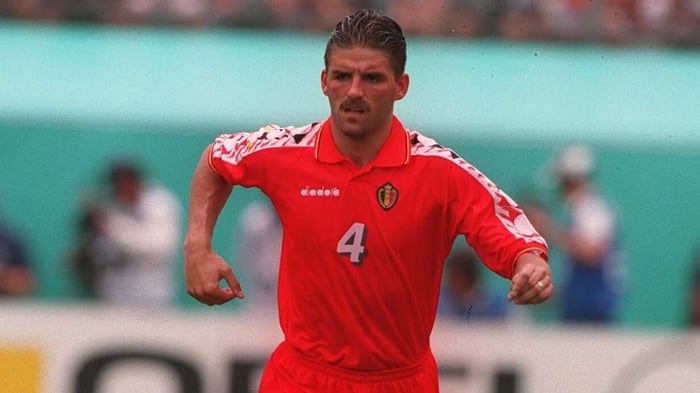
8. Philippe Albert
Belgium 1994 → Newcastle United
Philippe Albert arrived in England about fifteen years before English football fully understood what he was.
A centre-back who wanted the ball. A defender who wandered into midfield. A player entirely comfortable doing things that would have made traditional British centre-halves break out in hives.
His performances for Belgium at USA '94 attracted plenty of attention. He scored against the Netherlands. He scored against Germany. More importantly, he looked completely comfortable playing football in a way few defenders did at the time.
Kevin Keegan saw something. Newcastle supporters quickly did too.
Albert would only spend four years at St James' Park, but he remains one of the club's great cult heroes. Not because of longevity, but because of moments. The chip over Peter Schmeichel in a 5-0 win over Manchester United remains one of the most beloved goals in Premier League history.
Albert didn't win silverware at Newcastle but he left Geordies with memories to last a lifetime.
7. Dan Petrescu
Romania 1994 → Sheffield Wednesday
Romania were undoubtedly one of the stories of USA '94.
Hagi pulled the strings, Dumitrescu dazzled, but Dan Petrescu was arguably the player most suited to the direction football was heading. At a time when full-backs were still largely expected to defend first and think later, Petrescu attacked with purpose. He scored against the United States and played a major role in Romania reaching the quarter-finals.
Sheffield Wednesday took the gamble but it was Chelsea who reaped the rewards.
Within a few years Petrescu had become one of the Premier League's most effective and intelligent wing-backs, helping Chelsea win multiple trophies and laying the groundwork for the modern attacking full-back that would eventually dominate the game.
6. Gheorghe Hagi
Romania 1994 → Barcelona
If some World Cups make players famous, USA '94 reminded everyone that Gheorghe Hagi was already a genius.
The Romanian captain produced one of the great individual tournaments of the decade, scoring three goals and playing football with a swagger that felt entirely his own. The strike against Colombia remains one of the most replayed goals in World Cup history.
Barcelona could hardly ignore him.
His time at the Camp Nou never quite reached the heights many expected, but that should not distract from the significance of the move. Hagi left the United States as one of the biggest stars in world football and eventually cemented his legacy at Galatasaray, where he became an icon.
For many supporters, USA '94 was where Hagi truly entered football immortality.
5. Cafu
Brazil 1994 → Real Zaragoza
The strange thing about Cafu is that people still underrate him.
He won two World Cups. Played in three finals. Captained Brazil. Won Serie A titles. Won the Champions League. And yet he rarely appears in conversations about football's greatest players.
USA '94 was where Europe really took notice. Cafu began the tournament as a squad player and finished it as a World Cup winner. His energy, athleticism and relentless attacking instincts offered a glimpse of what the modern full-back would become.
Real Zaragoza secured his signature first. Roma and Milan would benefit most.
By the time his career ended, Cafu had helped redefine the position.
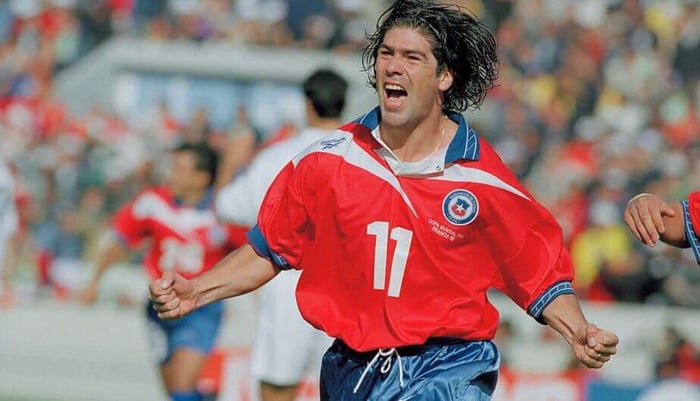
4. Marcelo Salas
Chile 1998 → Lazio
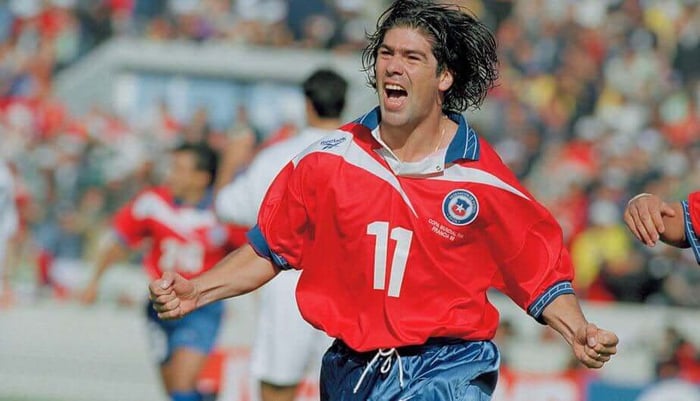
France '98 introduced many supporters to Marcelo Salas.
The rest of Europe immediately understood what River Plate supporters had been talking about for years.
Stocky, explosive and utterly ruthless inside the penalty area, Salas scored four goals at the tournament and carried Chile into the knockout rounds. Defenders knew exactly what he wanted to do and still struggled to stop him.
Lazio moved quickly in what proved to be one of the smartest pieces of business of the era.
Salas became a central figure in one of the greatest teams in Lazio's history, helping deliver European silverware before winning Serie A and the Coppa Italia. He scored goals, won trophies and justified every bit of the hype.
3. Dejan Stanković
Yugoslavia 1998 → Lazio
At nineteen years old, most players are still figuring out who they are.
Dejan Stanković arrived at France '98 looking like he already knew.
Playing alongside some of Yugoslavia's greatest talents, he never looked overawed by the occasion. There was a maturity to his game that made Lazio's decision feel obvious.
What followed was one of the great European careers. He won trophies at Lazio, then moved to Inter Milan where he spent nearly a decade collecting league titles and eventually lifting the Champions League.
The World Cup didn't make Stanković, rather it introduced him to a wider audience.
2. Gilberto Silva
Brazil 2002 → Arsenal
Gilberto Silva wasn't supposed to be one of the stars of the tournament.
He wasn't even supposed to start. An injury to Emerson opened the door and Gilberto walked through it, playing every minute as Brazil won the World Cup in South Korea and Japan.
Arsenal watched closely. Arsène Wenger understood exactly what he was buying. Not a headline-maker. Not a marketing asset. A footballer.
The kind managers adore and supporters only fully appreciate after he's gone.
Alongside Patrick Vieira he became the foundation of one of the greatest Arsenal teams ever assembled. He won league titles, FA Cups and played a vital role in the Invincibles season.
For value, longevity and impact, few World Cup signings can match him.
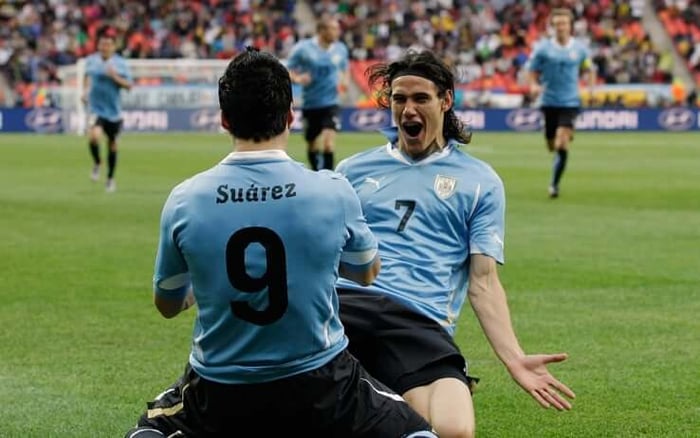
1. Edinson Cavani
Uruguay 2010 → Napoli
Diego Forlán won the Golden Ball in South Africa.
Edinson Cavani quietly changed his life.
While Forlán grabbed the headlines, Napoli saw something deeper. They saw a striker entering his prime. A player whose movement never stopped and whose appetite for goals seemed limitless.
The transfer from Palermo felt ambitious at the time but it soon looked inspired.
Napoli thought they were buying a goalscorer. What they actually bought was the player who would help drag them back towards relevance.
Cavani scored 104 goals in 138 appearances. He turned the Stadio San Paolo into one of Europe's most intimidating venues again. He gave Napoli supporters a team capable of dreaming.
When Paris Saint-Germain eventually paid a huge fee to take him to France, Cavani left as a club icon.
Some World Cup signings improve a team. But the very best help redefine it.