Mizuno Football Shirts
Mizuno lived at opposite ends of football’s spectrum. And we’re still not entirely sure whether that was strategy or circumstance.
There has always been something slightly difficult to pin down about Mizuno in football. This is, after all, one of the great names in global sportswear. A company older than Adidas, Nike and Puma, with more than a century of history and a reputation for making some of the finest sporting equipment on earth. And yet its relationship with football has rarely followed the obvious route.
In Japan, Mizuno helped dress the newly formed J.League in some of the most bombastic, colourful and gloriously over-the-top shirts the game has ever seen. Around the same time in England, you could find that same RunBird logo sitting above Wirral Council on a Tranmere Rovers shirt at Prenton Park. Then there were the players. Dwight Yorke wore Mizuno while tearing through the Premier League and winning the Treble with Manchester United. Rivaldo wore them while becoming the best player in the world. Mizuno was simultaneously enormous and strangely niche, capable of appearing on football’s biggest stages without ever seeming particularly interested in owning them.
We’re not entirely sure whether that was strategy or circumstance. That’s partly what makes the story so good.
From Osaka to the World
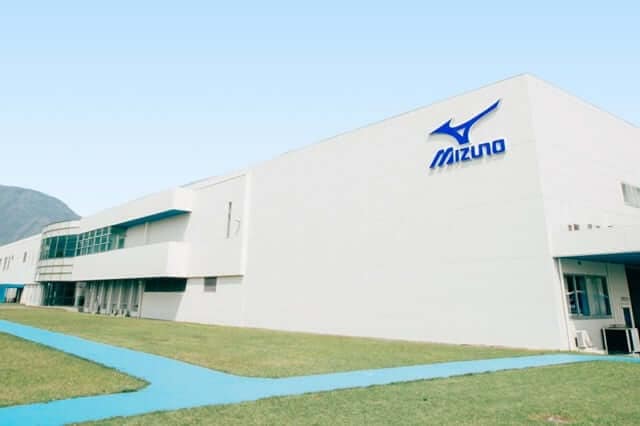
The Mizuno story starts long before any of this. Rihachi Mizuno and his younger brother Rizo founded Mizuno Brothers Ltd. in Osaka in 1906, initially selling Western goods including baseballs. Rihachi had become fascinated by the growing popularity of baseball and saw sport as something Japan was going to embrace. Within a year, the company was making made-to-order athletic clothing. Baseball shoes followed in 1910, gloves and balls in 1913, and Mizuno gradually expanded into almost every corner of Japanese sport.
That breadth is important when trying to understand the company. Mizuno has never really been a football brand in the way Umbro has. Nor was it a footwear company that eventually decided football looked commercially interesting. It was a sports company in the broadest possible sense. Baseball, athletics, golf, tennis, skiing, volleyball, football. If people were competing at something, there was a decent chance Mizuno wanted to make the equipment.
There was also a philosophy behind it. Rihachi’s belief was essentially that a sporting goods company should make better sporting goods and, in doing so, help sport itself develop. It isn’t the sexiest marketing proposition in the world, but it explains a lot about Mizuno. Quality became the selling point. The company’s Yoro factory developed an almost mythical reputation for craftsmanship, particularly around golf and, later, football boots. Mizuno never needed to invent much mythology around the product because the product usually did the job for them.
Which brings us to football.
Then the J.League Happened
If you collect 1990s football shirts, you probably don’t need us to explain why the early J.League matters. If you don’t, clear an afternoon.
Japan launched its professional league in 1993 and seemingly decided that subtlety could wait. This was a new competition trying to establish itself in a country where baseball remained king. The clubs had new identities, new mascots, new colour palettes and, crucially for us, an almost complete absence of the visual baggage that came with a century of European football.
There was no bloke in the corner of the social club complaining that the away shirt wasn’t the correct shade of yellow.
So they went for it. And Mizuno found itself right in the middle of the whole wonderful thing.
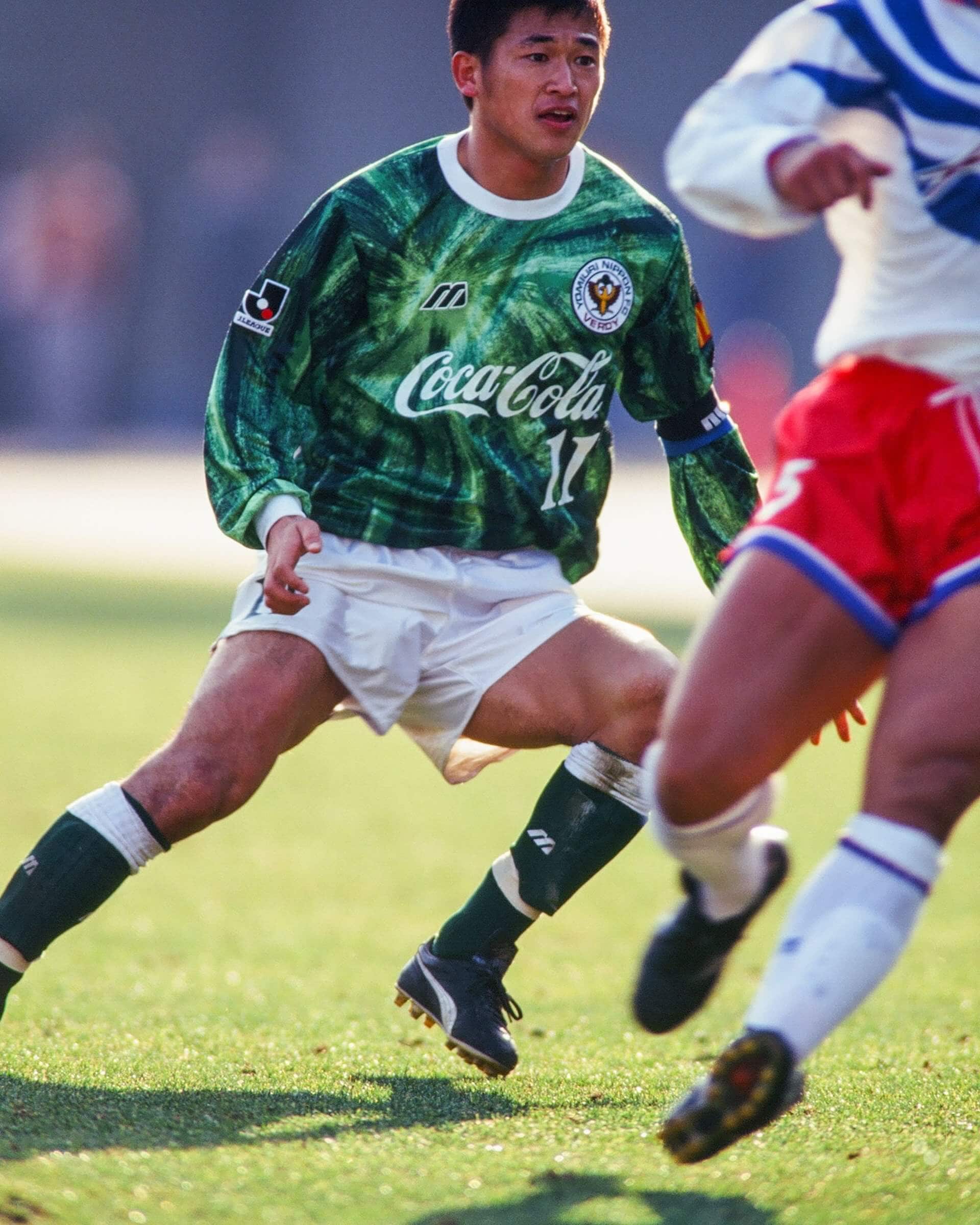
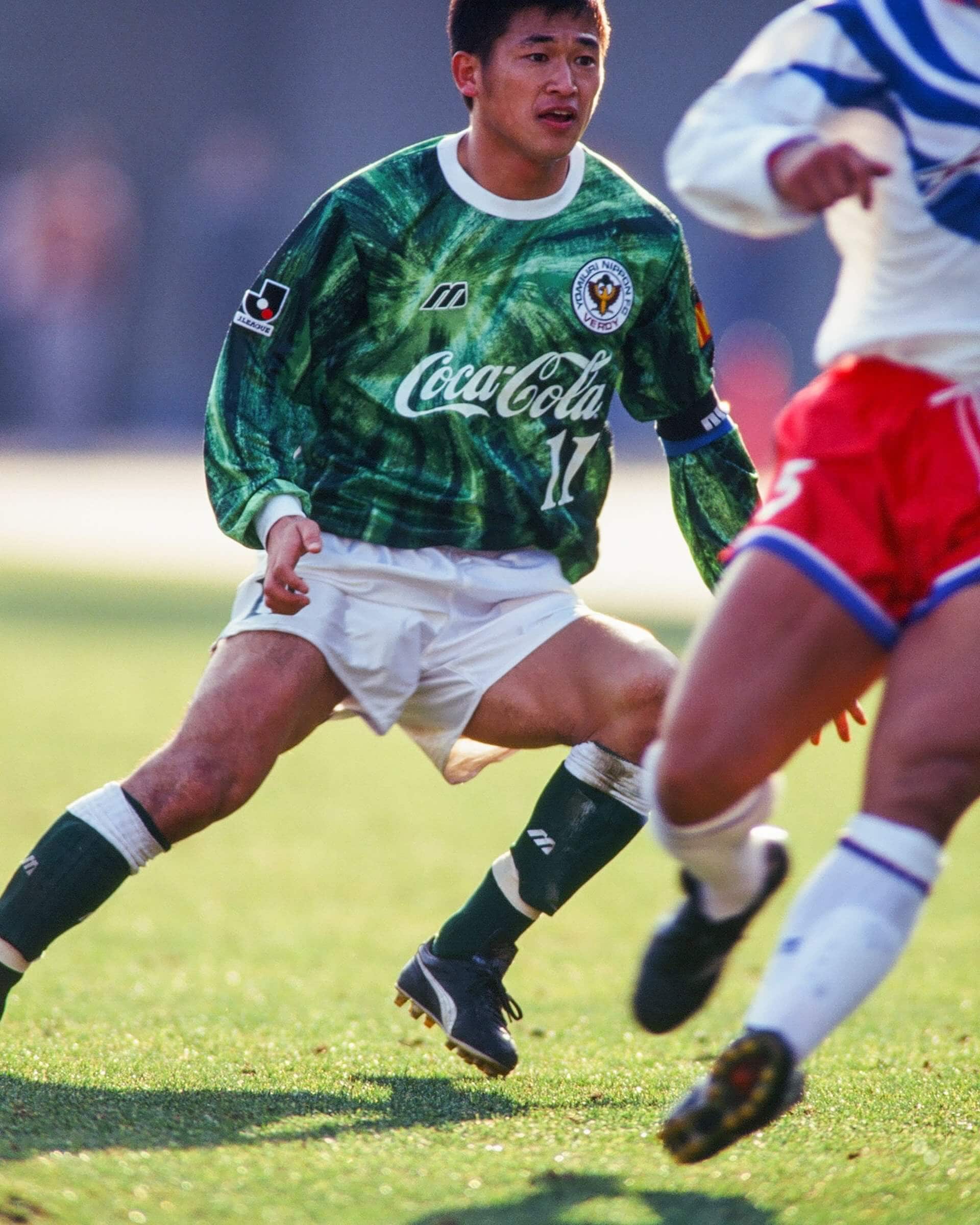
The early J.League was a visual assault in the best possible sense. Verdy Kawasaki, Kashima Antlers, Urawa Red Diamonds, JEF United Ichihara, Nagoya Grampus Eight, Gamba Osaka and others appeared in designs featuring enormous geometric patterns, gradients, contrasting sleeves, graphics running in every conceivable direction and colours that would have caused an emergency board meeting at most English clubs.
Mizuno football shirt from this period is particularly fascinating because there appears to have been very little desire to create one neat house style. That would have been the easy option. Build a template, swap the colours, move on to the next club. Instead, the shirts often felt like individual projects. Look through a selection of early J.League Mizuno shirts now and it’s difficult to believe some of them came from the same manufacturer.
That’s exactly why collectors love them.
JEF United Ichihara might be the best example. Green, yellow and red are not colours that naturally suggest restraint, and Mizuno had absolutely no intention of finding any. Some of those shirts look as though several designers were given the same brief and nobody had the heart to reject any of their ideas. They are magnificent. Nagoya Grampus produced similarly extraordinary designs, while the Antlers shirts somehow made red, black and grey look even more aggressive through huge graphics and patterns.
Context helped. The J.League itself wanted attention. This was football as a new entertainment product and everything surrounding it reflected that ambition. Brazilian stars arrived. Gary Lineker went to Nagoya. Zico played for Kashima. Supporters were presented with something deliberately modern and colourful, and the shirts became part of the spectacle.
In hindsight, Mizuno couldn’t have had a better canvas.
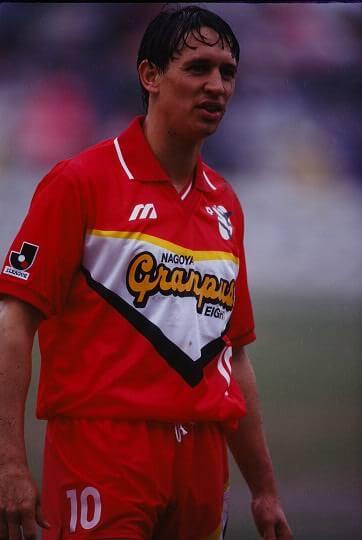
The funny thing is that these designs have aged in precisely the opposite way you might expect. What looked excessive in 1993 now looks incredibly desirable. Original J.League shirts have become staples of serious vintage collections, precisely because they capture a moment that couldn’t really happen again. They come from a football culture without decades of design rules, produced during the most experimental period in football shirt history.
For a few years, anything seemed possible.
From Japan to… Birkenhead
This is where Mizuno gets wonderfully strange.
While all of that was happening in Japan, the brand’s British football portfolio was considerably less glamorous. There was no attempt to sign Manchester United, Liverpool or Arsenal and announce Mizuno’s conquest of the Premier League. Instead, one of the places the Japanese giant found a home was Tranmere Rovers.
And we mean this entirely as a compliment.
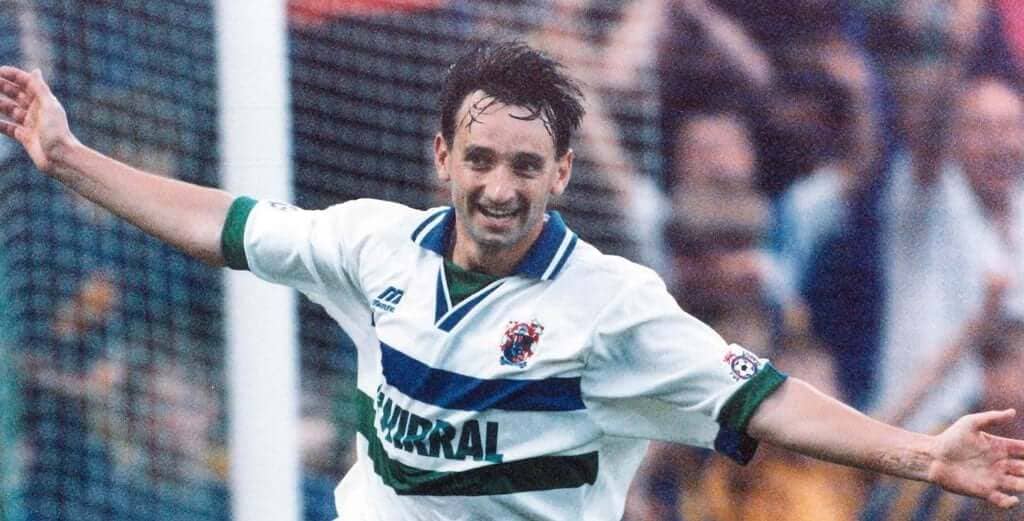
Mizuno supplied Tranmere from 1995 until 1999, a period when the club were established in the second tier and regularly threatening the play-offs. John Aldridge was there. Pat Nevin was there. Prenton Park was Prenton Park. The shirts carried the wonderfully municipal “Wirral” sponsorship and the whole thing felt about as far removed from the neon optimism of the new J.League as it was possible to get.
That’s precisely why we love it.
There is something brilliant about one of Japan’s most prestigious sporting manufacturers making shirts for a Football League club on the Wirral. The 1995/96 home shirt in particular, with its white base and blue and green band, has aged beautifully. In fact, its reputation endured strongly enough that Tranmere later used it as inspiration when supporters voted on a new kit design.
And this wasn’t really an aberration in the wider Mizuno story. The company’s footprint in football has always felt selective rather than imperial. It appears somewhere interesting, makes something good, and then occasionally disappears again. There isn’t the same relentless land-grab associated with the largest manufacturers.
Mizuno never seemed desperate to prove how big they were. Maybe because they knew how good they were.
Yorke, Rivaldo and the Other Mizuno
Then there are the boots. Mizuno football shirts might have got some attention in the 90s but the real star has always been their boots.
We could write an entirely separate Thread about Mizuno football boots and probably will at some point, so we’ll try not to disappear down that particular rabbit hole. But you can’t tell this story properly without mentioning them because the Morelia arguably explains Mizuno better than any shirt ever could.
Introduced in 1985, the Morelia became synonymous with beautifully made leather football boots. Lightweight, uncomplicated and built around touch and comfort, they earned the sort of loyalty usually reserved for the Copa Mundial and Puma King. The difference was that Mizuno never seemed quite as interested in shouting about them.
Dwight Yorke is perhaps the perfect Premier League example. During Manchester United’s Treble-winning 1998/99 season, while David Beckham’s Predators became a marketing phenomenon, Yorke was scoring goals in Mizuno Morelias. He finished as the Premier League’s joint top scorer and scored crucial goals throughout United’s European campaign. At the height of the commercial explosion around football boots, one of the best forwards in Europe was wearing something comparatively understated.
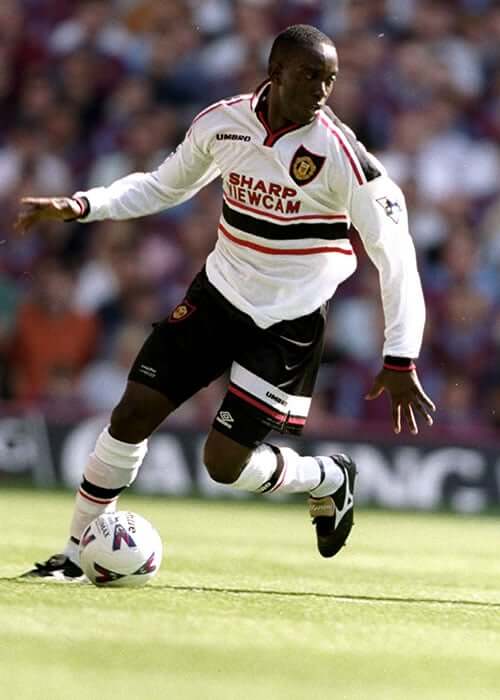
That association wasn’t accidental either. Yorke had worn Mizuno for years. There is a wonderful detail from former Aston Villa youngster Alan Kirby, who recalled being tasked with cleaning Yorke’s collection of five pairs of Mizuno boots while coming through at Villa. By the summer of 1999, Yorke’s stock had risen so dramatically that Nike and Umbro were reportedly trying to prise him away from the Japanese company with enormous endorsement offers.
Then there was Rivaldo.
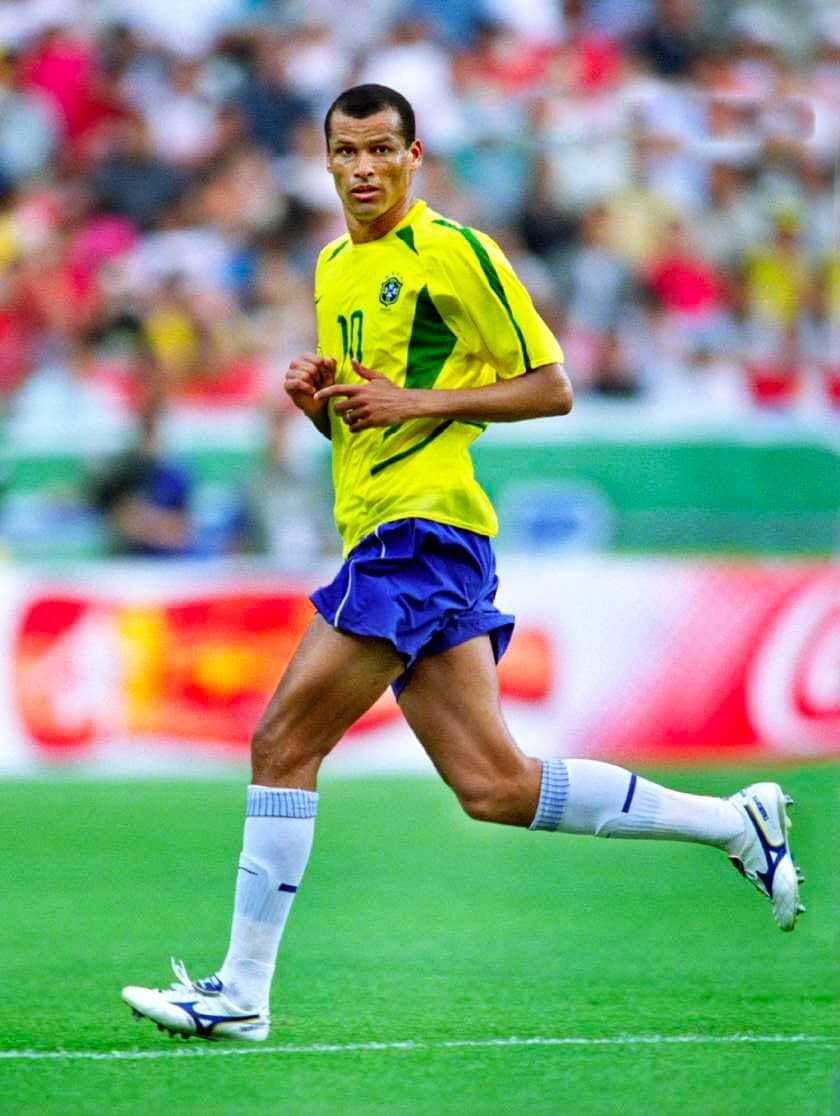
If Yorke represented Mizuno in the Premier League, Rivaldo did it on the global stage. Barcelona, Brazil, the 1999 Ballon d’Or, the 2002 World Cup. Through much of it, those Mizuno boots were there. Rivaldo became so closely associated with the Morelia that even years after retirement he could still be found wearing them in legends matches.
Selective. Mercurial. Slightly outside the mainstream. It summed Mizuno up rather nicely.
The company didn’t have Beckham. It didn’t need Ronaldo Nazário. Instead, somehow, it had Dwight Yorke and Rivaldo. Two footballers capable of looking completely relaxed while doing things other players couldn’t. There was something almost fitting about that.
Mizuno Never Really Went Anywhere
It would be easy to finish this story by saying Mizuno disappeared from football as Nike, Adidas and Puma consolidated their grip on the sport. Plenty of manufacturers did.
Except Mizuno didn’t.
The shirt presence became less conspicuous in certain markets, particularly Britain, but the boots remained deeply respected and the company continued to operate throughout football. More recently, its kit business has become conspicuous again in Europe. Lazio and Monaco have worn Mizuno. The brand has moved into the Bundesliga, and for 2026/27 Rapid Vienna announced a five-year Mizuno agreement. In Brazil, Botafogo have just announced Mizuno as their new technical supplier on a deal running through 2029. Back home, the company remains involved in Japanese football too.
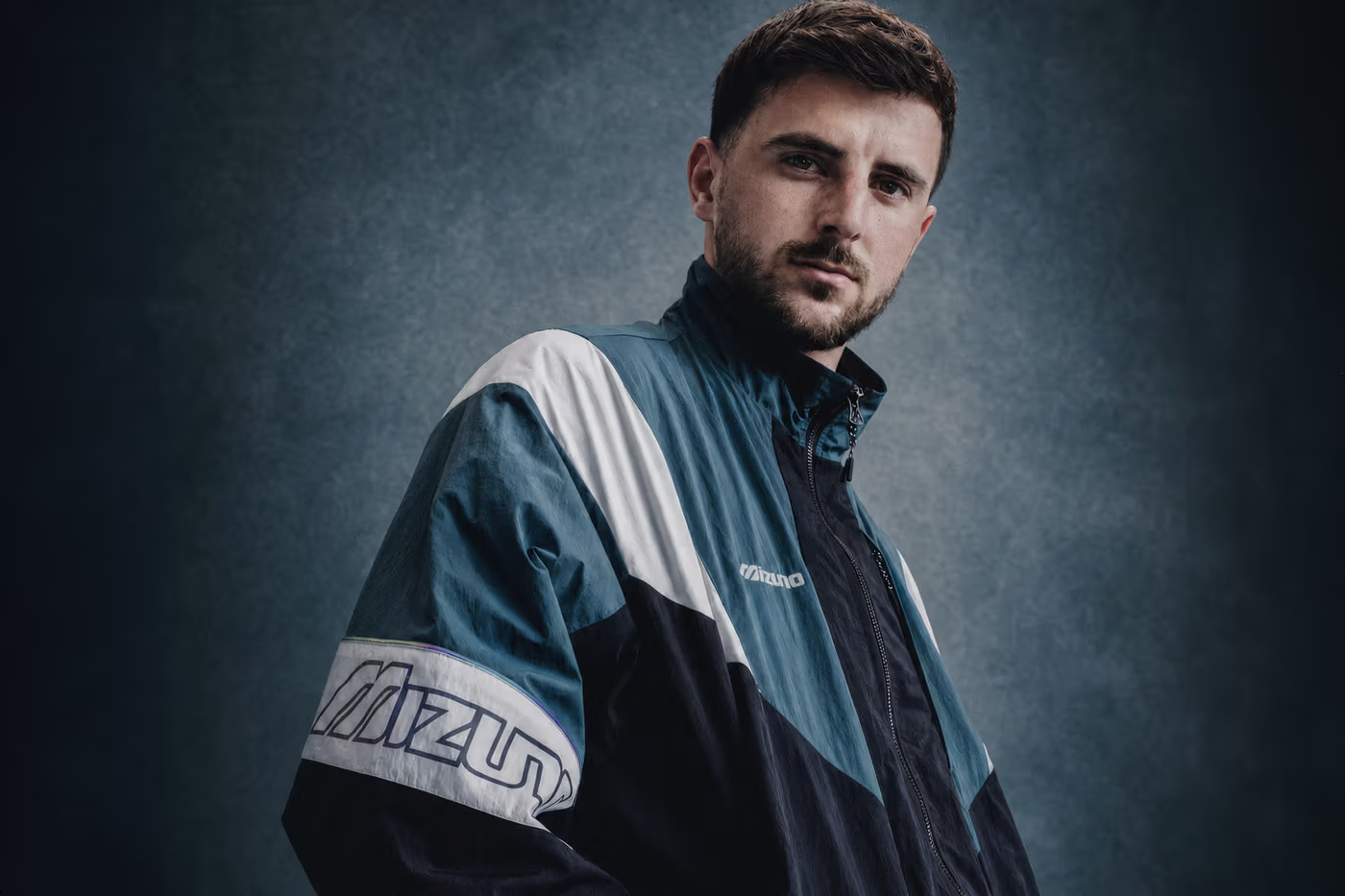
And then there are the players. João Félix joined the boot roster in 2025. In March 2026, Mizuno announced Mason Mount as a global ambassador, putting him into the Mizuno Alpha III Japan. It hardly feels like a company retreating from football.
Perhaps the more interesting point is that Mizuno has never needed football in quite the same way football-specific brands have. It remains a huge multi-sport company with deep roots in baseball, running, golf and countless other disciplines. Football is important, but it doesn’t have to consume the entire identity.
That gives Mizuno a freedom most manufacturers don’t have.
Opposite Ends of the Spectrum
Which brings us back to where we started.
Mizuno’s football history doesn’t fit neatly together. That’s the appeal.
This is a company that could help turn the early J.League into one of the great periods of football shirt design and, a couple of years later, produce something completely appropriate for Tranmere Rovers. It could put boots on Rivaldo while he was becoming the best footballer on the planet and Dwight Yorke while he was winning the Treble, without ever turning either relationship into the sort of marketing circus its competitors might have.
Maybe there was a grand strategy behind all of it. Maybe there wasn’t.
Either way, Mizuno lived at opposite ends of football’s spectrum and somehow looked comfortable at both.
The J.League madness, the Football League, Rivaldo at Barcelona, Yorke at United. But, much more commonly, a pair of Morelias that somebody will inevitably tell you are the best boots they’ve ever owned.
Mizuno. A brand quite unlike any other.