At the end of the 1990s, football shirts were still largely built around one idea, more fabric was better. Sleeves were long, bodies were wide, shirts hung loose over shorts and even the world’s best players often looked as though they’d borrowed a size up. It was simply how football looked, and nobody seemed in much of a hurry to change it. Then Kappa looked at the shirt and decided almost everything about it could be different. The result was the Kappa Kombat 2000.
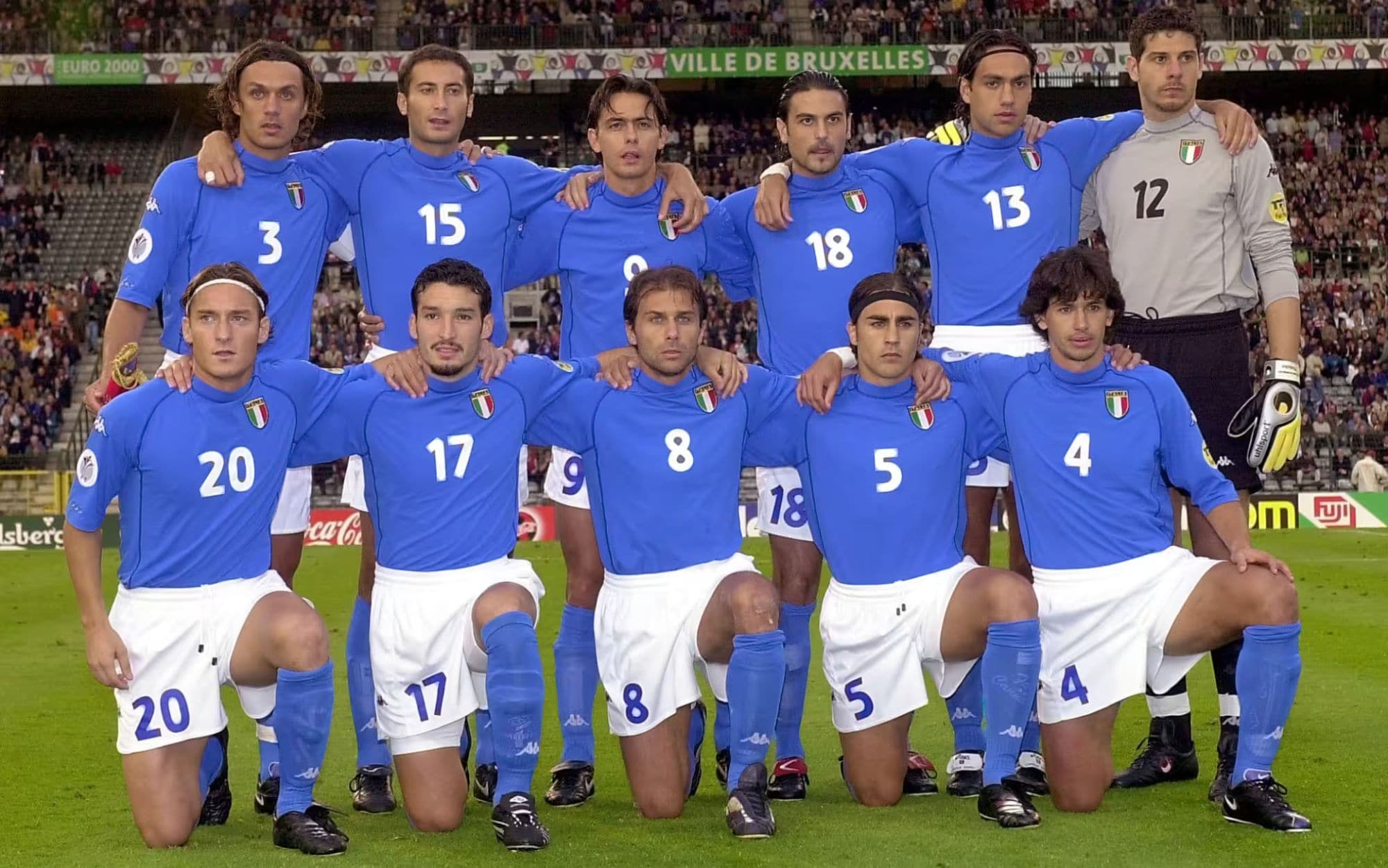
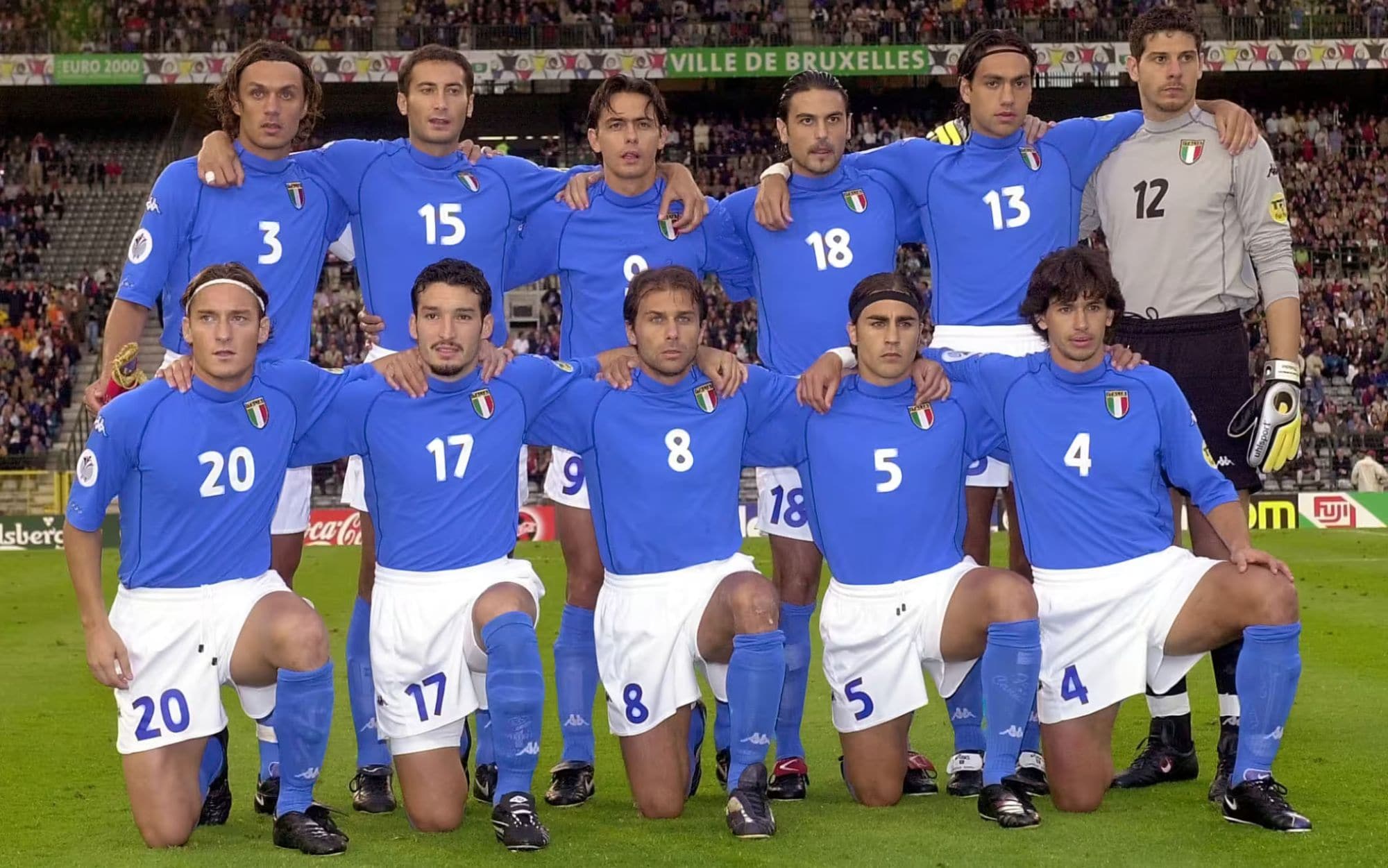
First worn by Italy at Euro 2000, a shirt so tight, elastic and deliberately minimal that it looked almost alien next to what had come before. Twenty-five years later, Kappa still talks about it as the jersey that changed modern football kit design, and it’s difficult to argue with that when you look at what players wear now. The really interesting part, though, is that the shirt we eventually saw on the pitch was actually a compromise, because Kappa’s original idea was even more radical.
Emanuele Ostini, one of the key figures behind Kappa’s football design at the time, was looking outside football for inspiration. Kappa’s own history points towards surf clothing, athletics and aerodynamic performance wear, all of which were doing things football hadn’t really caught up with yet. The original concept was closer to a cycling-style bodysuit than a conventional kit, with an underlayer connecting the upper body and shorts, then covered by the match jersey. FIFA didn’t allow Italy to use the full one-piece version, but the thinking behind it survived, football clothing shouldn’t hang off the player, it should work with the body.
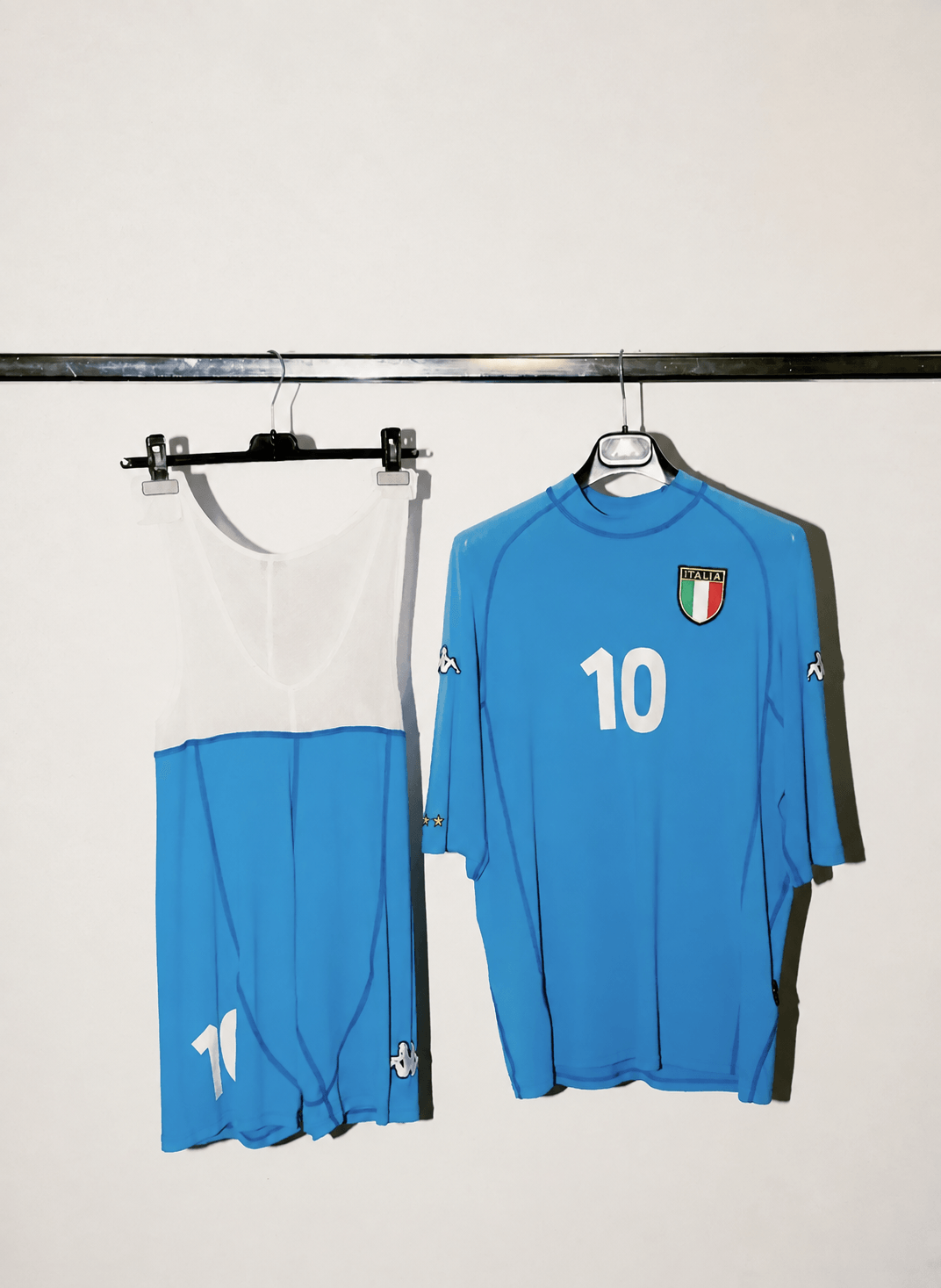
That thinking became the Kombat. Instead of the loose polyester shirts that had defined so much of the previous decade, Kappa created a close-fitting, hyper-elastic jersey designed around movement. Its so-called “stop stopping” technology meant that when a defender grabbed hold of the shirt, the fabric could stretch significantly before actually restricting the player, while also making the foul much more obvious to the referee. It wasn’t innovation hidden inside an ordinary-looking shirt either, because Kappa allowed the technology to dictate the aesthetic.
Italy’s Euro 2000 shirt was incredibly clean, a bright azzurro body, the national crest high on the chest, the number sitting centrally and the famous Kappa Omini logos pushed out onto the sleeves. There was very little decoration because it didn’t need any. The shape of the shirt itself was the design, and on players like Francesco Totti, Alessandro Del Piero, Fabio Cannavaro and Paolo Maldini, it looked unlike anything else at the tournament. Italy reached the final, Totti produced that penalty against the Netherlands, and suddenly one of international football’s most traditional teams had become the advert for what the sport might look like next.
Of course, it doesn’t really look radical anymore. Look at a modern player-spec football shirt and you’ll find many of the ideas Kappa was pushing in 2000, lighter fabric, closer cuts, greater elasticity, shirts designed around athletic performance rather than simply identifying eleven players wearing the same colours. What seemed almost confrontational at the time has become normal, which is usually the clearest sign that an idea genuinely changed something.
There was something aesthetically important happening too. The 1990s had given us some extraordinary football shirts, but they were often loud, oversized and busy, full of pattern, texture and excess. The Kombat went in the opposite direction, and its beauty came from reduction, from fit, colour and silhouette rather than layers of design. That’s partly why the shirt has aged so well, because it still feels modern without relying on the nostalgia that gives so many old kits their appeal.
There are football shirts that become classics because they remind us of a particular player, goal or summer, and there are others that matter because they actually changed what came afterwards. The Kombat manages to be both. Italy didn’t win Euro 2000, losing the final to France after David Trezeguet’s golden goal, but the shirt they wore throughout the tournament ended up having a much longer life than most winning kits ever do.
Kappa kept developing the Kombat concept, other manufacturers moved towards tighter and more technical cuts, and the silhouette that seemed so strange at the beginning of the century gradually became standard. By the time Kappa marked the shirt’s 25th anniversary, it wasn’t reviving some forgotten experiment, it was celebrating an idea football had largely absorbed.
It makes the Kappa Kombat 2000 more than just a beautiful Italy shirt. Before it, football kits were largely clothes made for footballers, after it, they increasingly became pieces of sporting equipment, engineered around the body rather than simply worn on top of it. It all started with an idea that sounded slightly ridiculous at the time, take something closer to a cycling bodysuit, put it on a footballer and see what happens.
Research from Giampa. You can shop classic Italy shirts on the Showboat marketplace in-app or on our website.