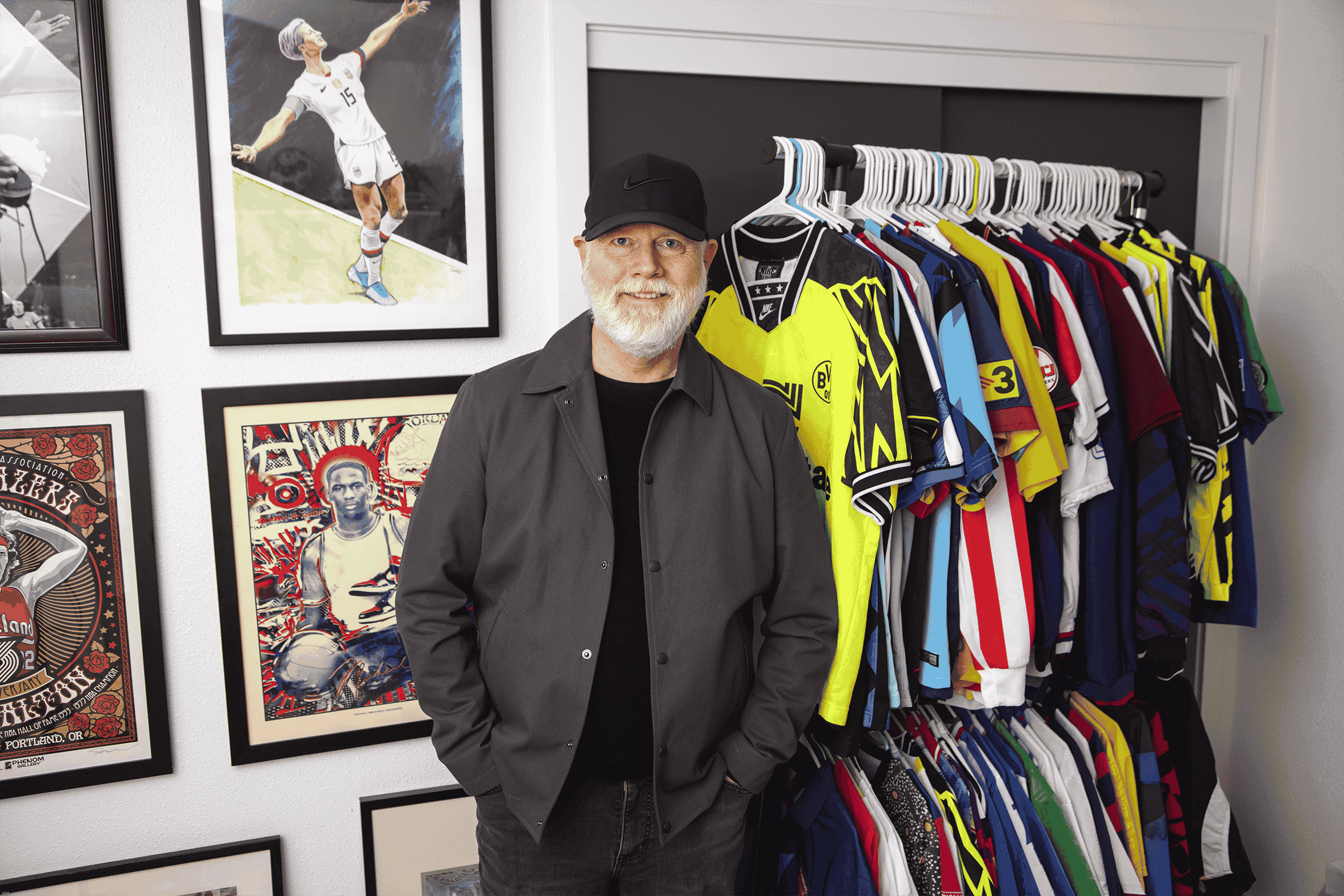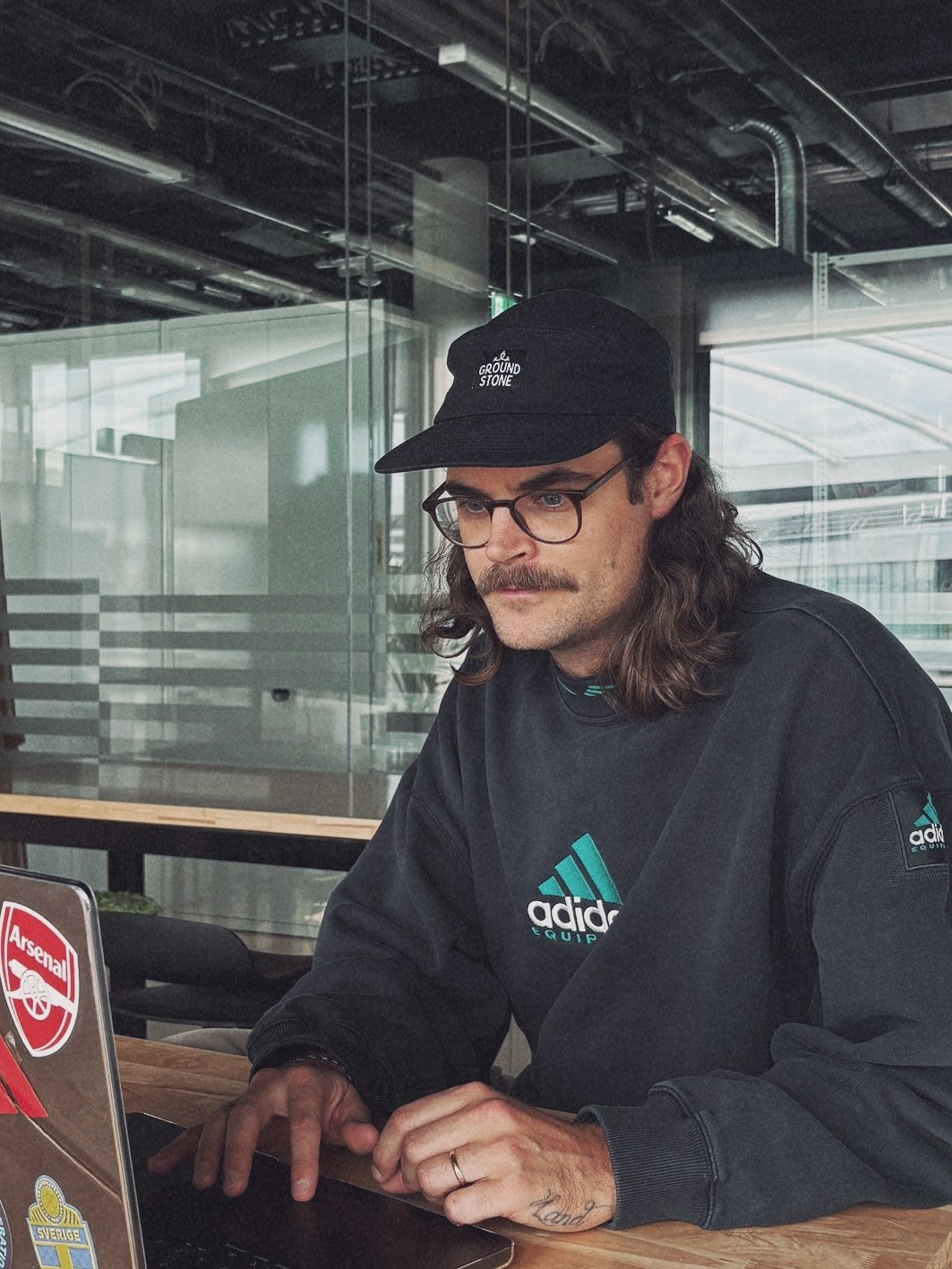
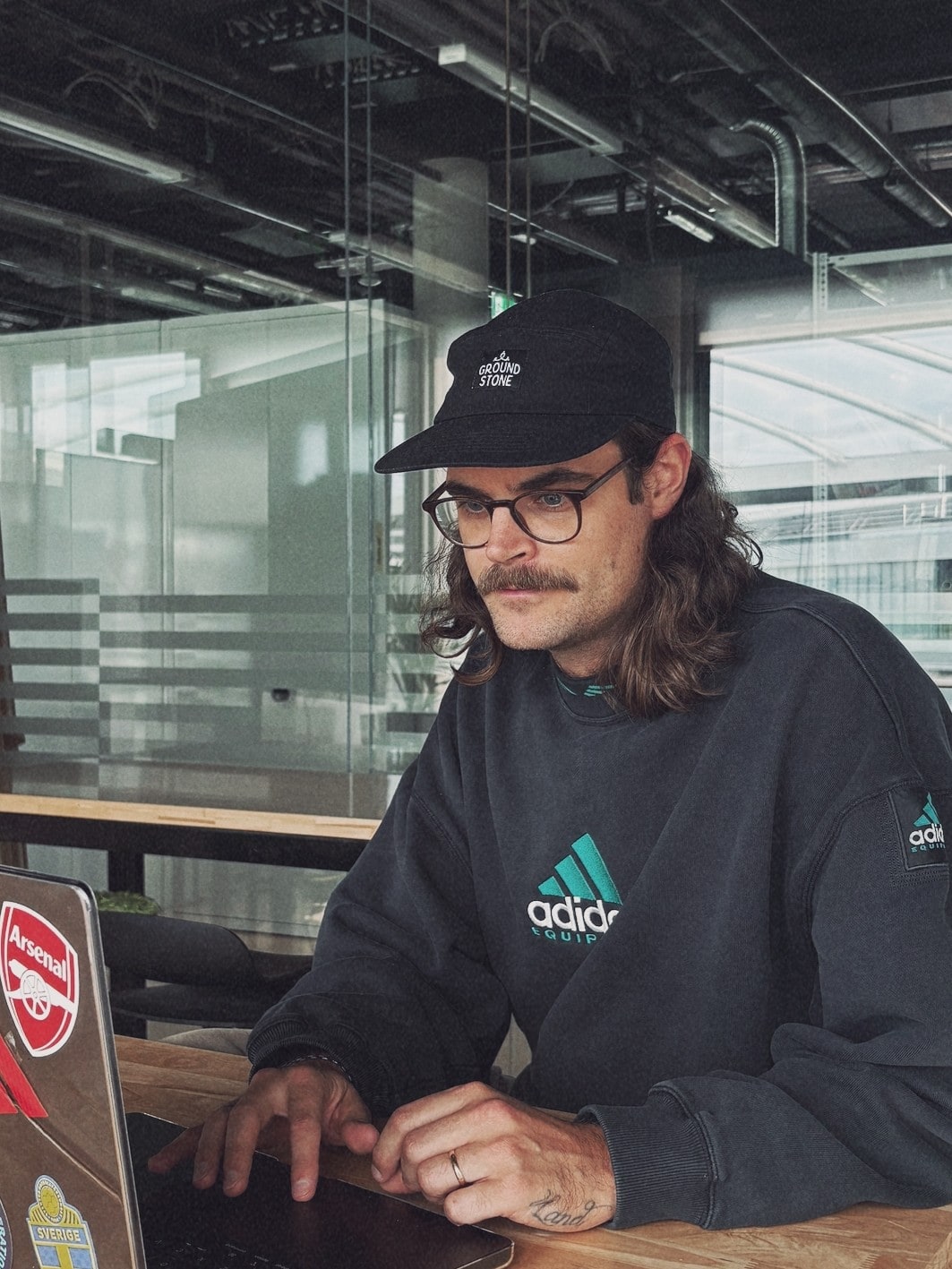
Marcus Jonasson has what many football shirt collectors would consider the dream job. He designs football shirts for a living. Very good ones, too.
The Swedish designer started out creating fantasy kits and sharing them on Instagram. Today, he’s a senior designer at adidas, responsible for Arsenal’s matchwear and streetwear, with designs for Croatia and his native Sweden also on his CV.
We caught up with him to talk about finding inspiration in unexpected places, the difficulties of designing something new when everyone loves the old stuff, and a particularly rare Sweden shirt that he’ll be taking to the grave.
Inside the World of Football Shirt Design with adidas
Marcus, you’ve got a job that plenty of our readers would love. How did you get here?
It all started when I was studying digital design. I used to make graphics on the side as a hobby and eventually started putting them onto football shirt concepts. I’ve always been a huge football fan and shirt collector, so it was something I loved doing.
Eventually, I started an Instagram account and regularly posted my fantasy kits while still working as a digital designer. The more I posted, the more interaction I got. One thing led to another and I started getting freelance work, both small and big projects.
That was a great way of learning the industry and gaining experience with a variety of clients and clubs. Three years ago, I joined adidas and immediately felt I was in the right place. It’s genuinely a dream job.
Designing Football Shirts for Arsenal and Croatia
You’re now responsible for Arsenal’s shirts. What does that actually involve?
I’m currently working solely on Arsenal, with full responsibility for everything from matchwear to streetwear.
There’s rarely a normal day in football because things are constantly changing. We work in seasons, with dedicated periods for design, client meetings and sample reviews. There’s always something happening.
When you sit down to design a shirt, how much freedom do you actually have?
It depends on the club or federation. We always receive a brief from our marketing colleagues, who’ve spent time researching the local market and gathering insights.
So we’re rarely starting with a completely blank sheet of paper. But within that brief, we’re free to explore different directions. As long as you have a reason for what you’ve done and can make a convincing argument for it, you can push your own vision.
adidas has an extraordinary archive. Is having all that history behind you a blessing or a curse?
A blessing, in my opinion. We’re working two years ahead of launch to meet all the deadlines, and there’s a constant push for something new, both internally and from the clubs.
Having that heritage of great designs gives you the freedom to explore and build on what’s come before.
You’ve recently worked on Croatia’s new shirts, following their switch from Nike to adidas after more than 20 years. Where did you begin?
It’s always exciting to work with a new federation, especially one that hasn’t been with adidas before. There’s so much you can explore, so I didn’t feel anything but excitement.
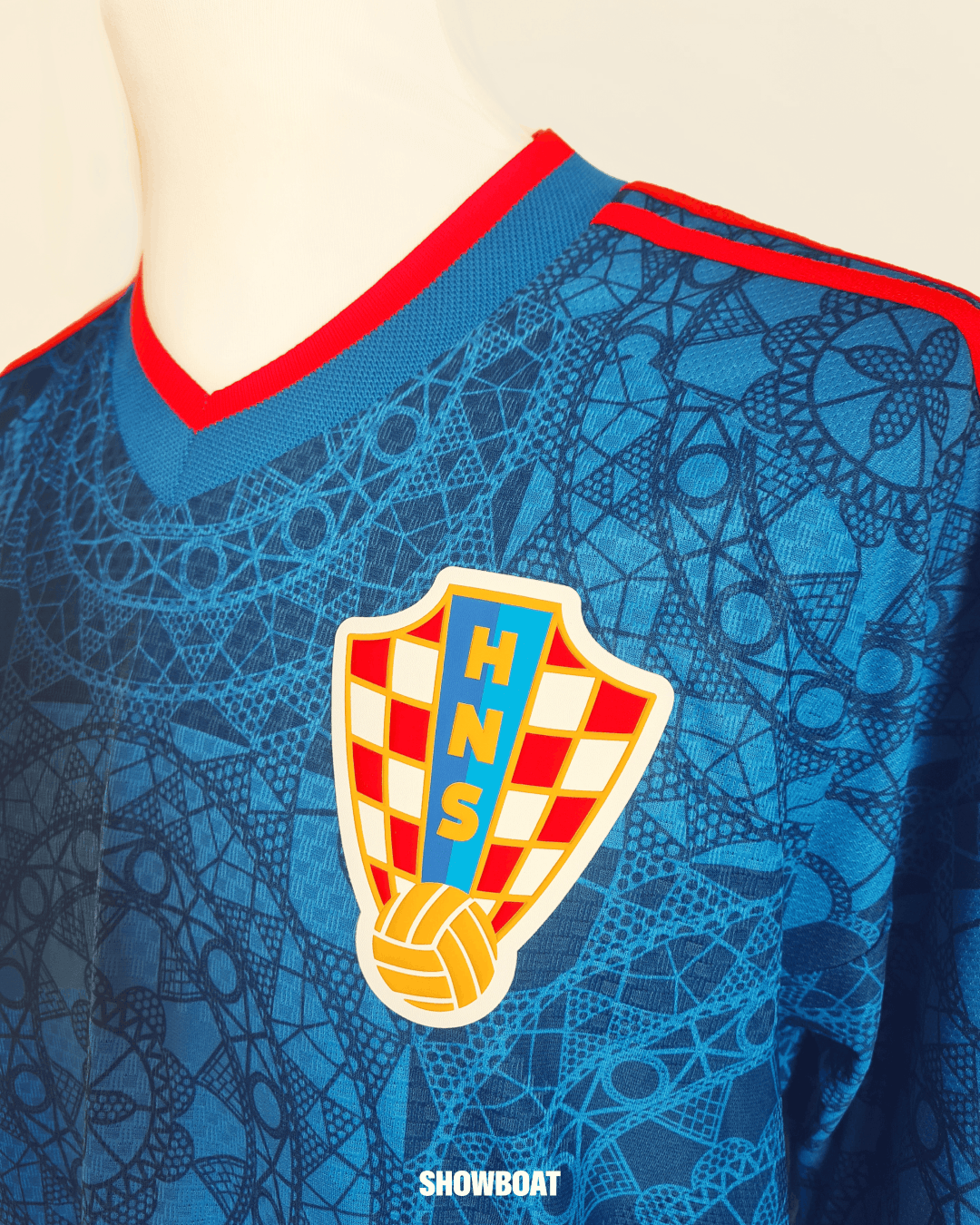
I didn’t design the final home shirt. That was my Croatian colleague, Martin Horvatic. But for the away shirt, I wanted to incorporate those famous checks in a clever, subtle way.
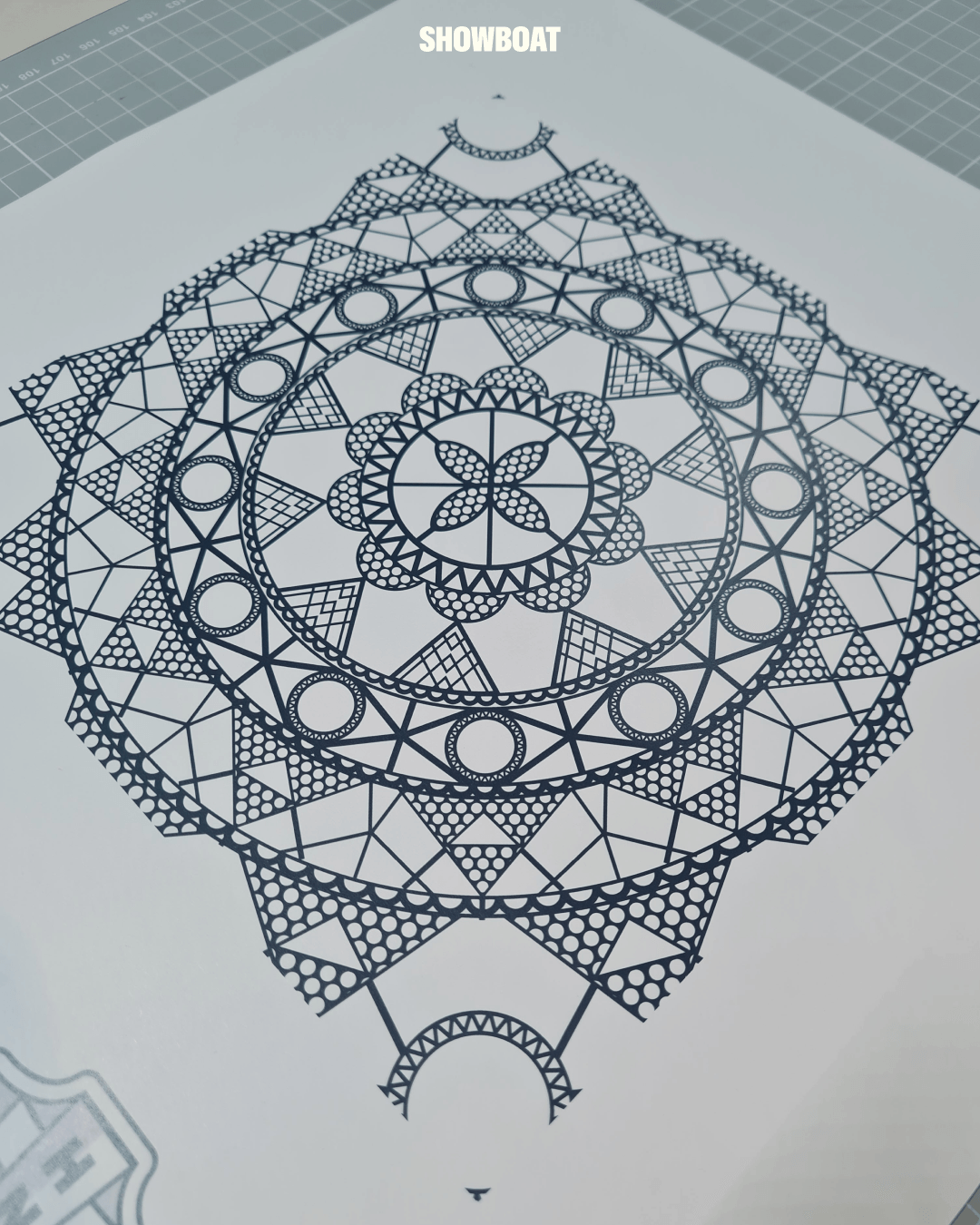
The starting point was a brief around Croatian lace-making. I did my own research to understand its cultural importance and began exploring how we could translate that craftsmanship into the design.
I’m normally pretty quick at developing graphics. I’d say it’s one of my strengths, without sounding too confident! I ended up with two or three different directions, and we chose the subtle chequered version.
The final pattern uses inverted lace motifs in positive and negative, bringing those two stories together.
Nostalgia, Inspiration and the Future of Football Shirts
Football shirts are having a nostalgic moment. Do you ever have to resist the temptation to simply revisit an old classic?
Yes, sometimes. I see myself as a progressive designer. I always want to push boundaries and explore things that haven’t been done before.
But you also have to take a step back and consider what’s best for each individual shirt. Not every jersey needs a huge, loud graphic.
If you’re not looking at old football shirts, where do you find inspiration?
I never really look at previous or existing jerseys unless the brief specifically asks for it.
At the moment, I find inspiration in almost everything. It could be the smallest thing I notice while walking down the street or the way the sun breaks through my bedroom window in the morning.
It’s difficult to pinpoint exactly where an idea comes from because everything is part of a constantly moving process. One thing always leads to another.
What makes the difference between a good shirt and one that collectors are still hunting down 20 years later?
Football is about moments, and shirts are very much attached to those moments.
A design can be ten out of ten, but if the club isn’t performing or is going through a difficult period, that shirt might be forgotten, even if it’s brilliant.
A lot of the shirts from the 1990s are so popular today because of what happened on the pitch, but also because of the moments in our own lives that we associate with them.
Where do you think football shirt design goes next?
I can see a future where high-performance technology is combined with bold, expressive graphics.
Athletes are getting stronger and faster, which demands increasingly sophisticated technology. At the same time, supporters want unique, exciting ways to express themselves through what they wear. I think we’ll see those two things coming together more and more.
Finally, if you could claim one shirt from football history as your own design, what would it be?
I’ve actually got two. The first is the Netherlands shirt from 1988. Purely because the graphic is one of the most iconic in football history. Almost everyone recognises it, even people who aren’t football fans.
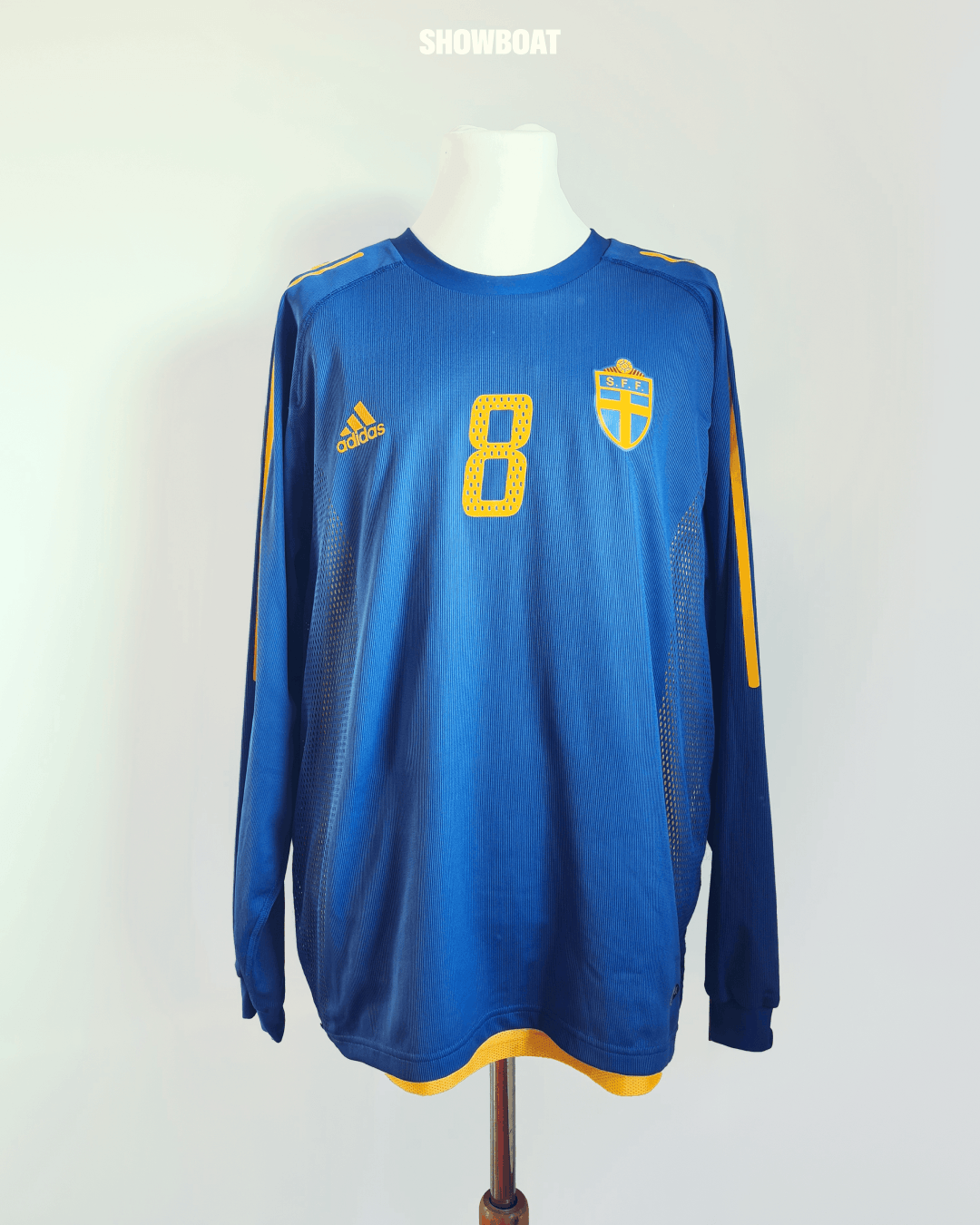
The second is Sweden’s 2002 away shirt. It’s a very clean, simple design with a strong focus on performance. The dual-layered fabric was intended to help players feel more comfortable and less sweaty during matches.
But it’s the story behind it that I really love. Ahead of the World Cup in Japan and South Korea, Sweden had their usual yellow home shirt and a white away shirt with yellow sleeves. Both had been signed off by everyone involved, including FIFA. They’d gone into production, reached the shops and everyone was happy.
Then, a few months before the tournament, someone realised we couldn’t wear either against England. Both the yellow and white colourways would clash with England’s white home shirt. So adidas had to create another one.
The result was one of the rarest Sweden shirts ever made. It was produced exclusively for the players, with none sold in shops. That means if you ever find one, it’s either match-worn or match-prepared.
I have one myself, and I’ll be taking that one to the grave.