Some football shirts are forever tied to moments of history. The Germany 1990 home shirt, designed by Adidas, is one of those rare garments that transcends fabric and stitching to become a symbol of sporting triumph and cultural change. Worn by Lothar Matthäus and his teammates when West Germany lifted the FIFA World Cup in Italy, the shirt’s bold tricolour motif embodied national pride at a time when Germany itself was on the cusp of reunification. It is not just a reminder of 1990’s football glory; it is a window into a period when design, sport and politics were intertwined.
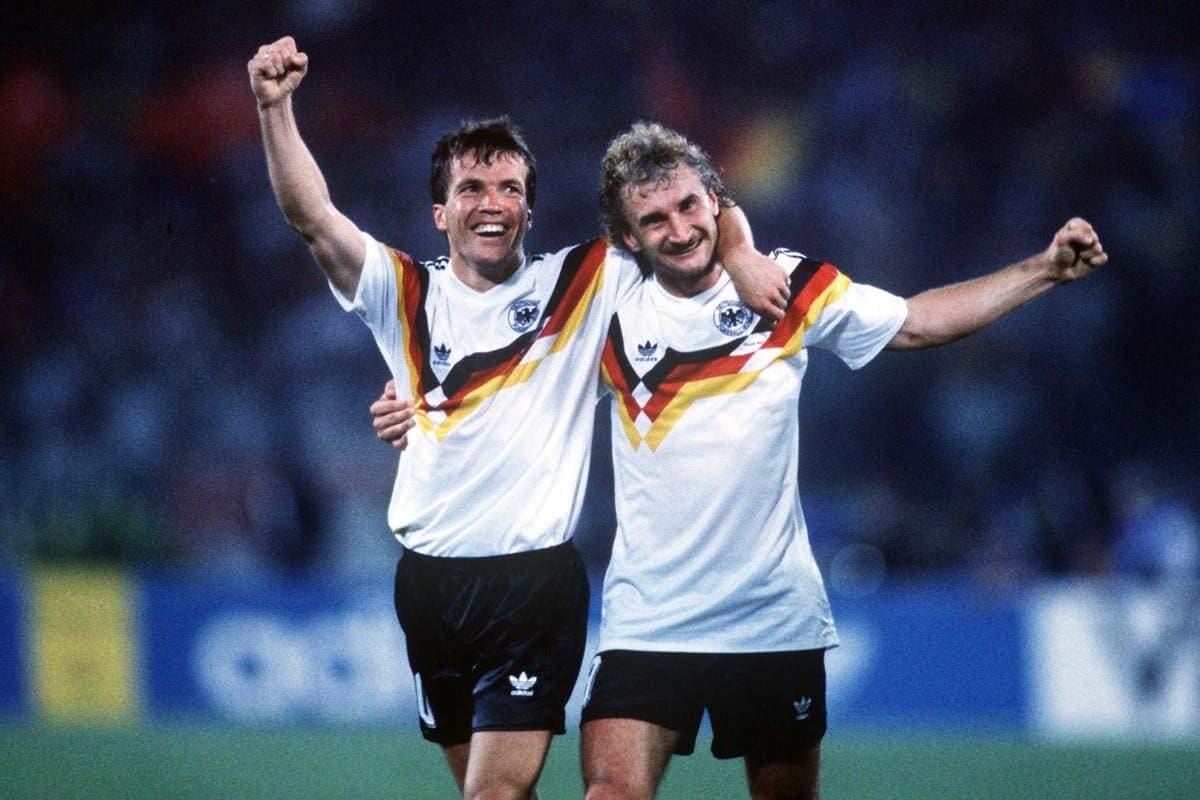
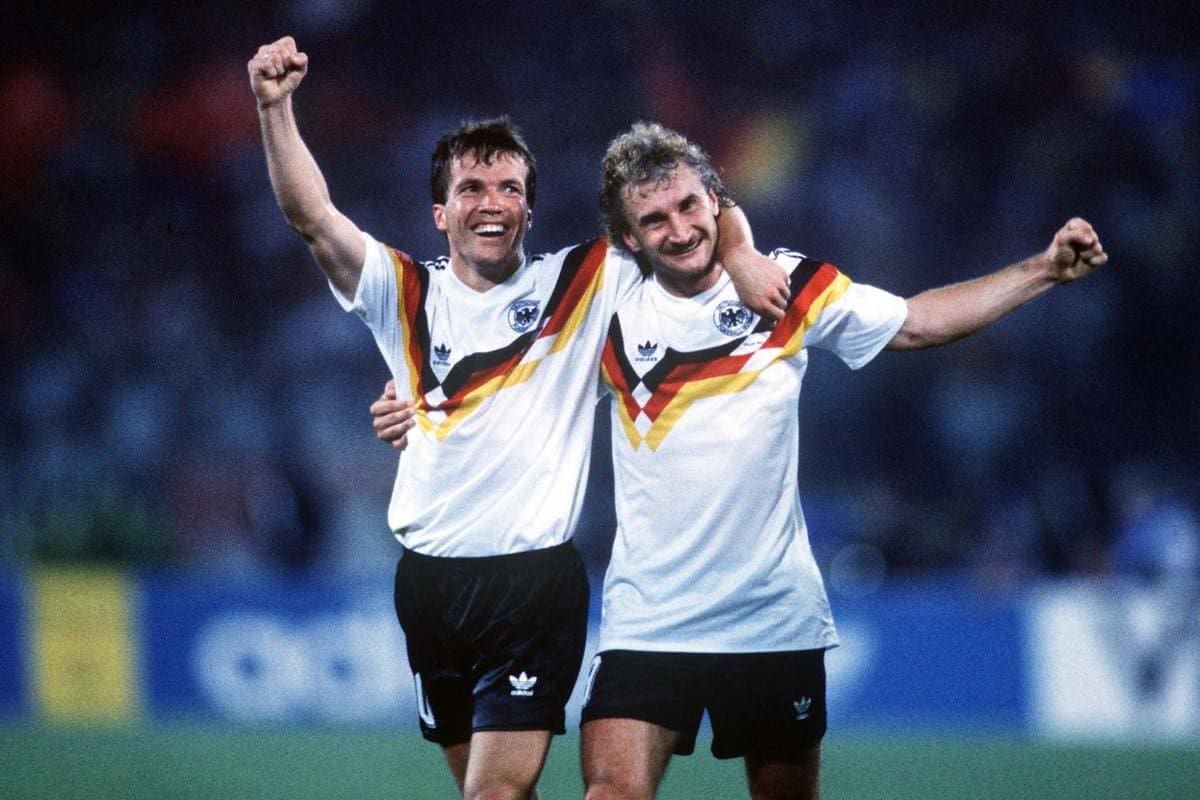
In a tournament defined by tactical discipline, defensive excellence and moments of individual brilliance, the West Germany kit stood out. The angled black, red and gold bands across the chest echoed the national flag in a way that felt modern yet respectful of tradition. Paired with a clean white base and black trim, the pattern drew the eye without overwhelming it. Watching Matthäus stride through midfield or Jürgen Klinsmann dart into the box, the shirt seemed to move with them, injecting energy into every run. Today, more than three decades later, that visual still sparks conversation among collectors and casual fans alike.
This design came at a time when Adidas was experimenting with geometric patterns across its football range. The West Germany 1990 home shirt balanced boldness with restraint. It was not loud for the sake of being loud; it told a story. As Germany navigated the political shift toward reunification later that year, supporters saw their team’s kit as both a rallying point and a piece of wearable art. The idea that a football shirt could reflect national identity while also pushing design forward was relatively new in mainstream European football, and it set the tone for many memorable kits that followed.
Design Details
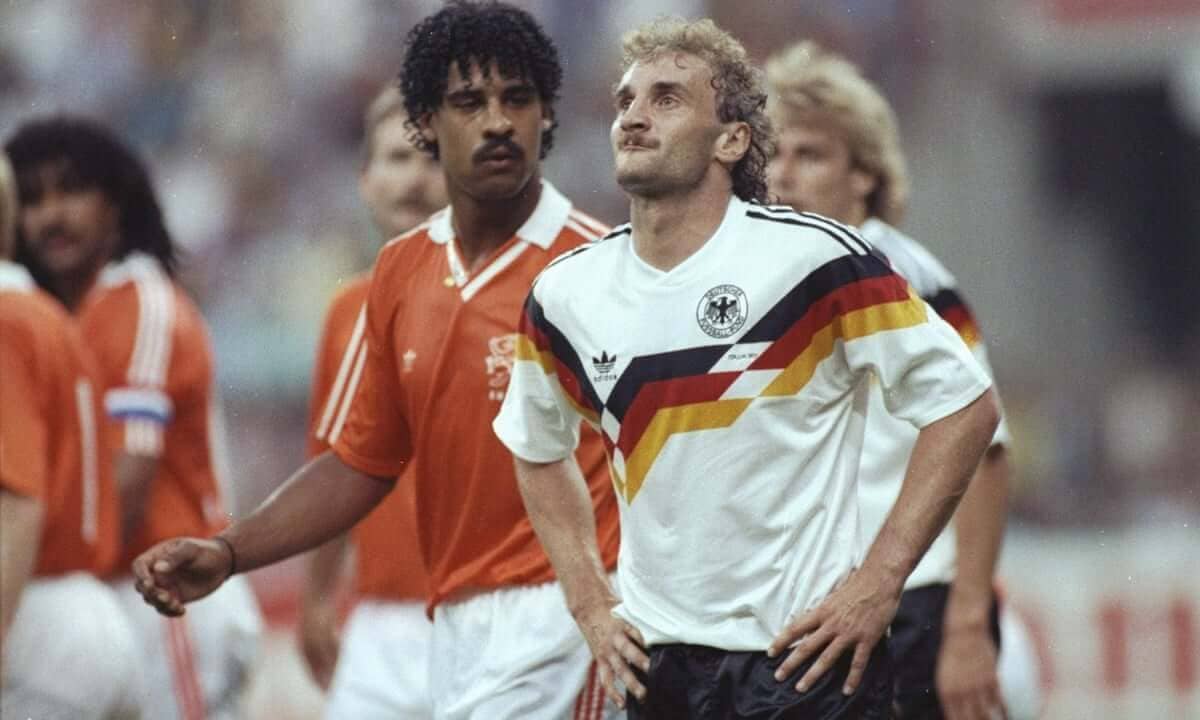
- White base with three bands of black, red and gold forming a dynamic diagonal motif across the chest
- Adidas Trefoil logo embroidered on the right chest
- West Germany crest (DFB eagle) embroidered on the left chest
- Polyester fabric typical of late 80s–early 90s kits, providing a slightly glossy finish
- Slim, athletic cut compared with some earlier looser jerseys
The Tournament
The shirt first appeared in competitive action at the 1990 World Cup in Italy. Under manager Franz Beckenbauer, West Germany arrived as favourites yet carried the pressure of a generation. Their campaign began with a commanding 4‑1 win over Yugoslavia and a 5‑1 rout of the United Arab Emirates, both in that striking white shirt. As the tournament progressed, the kit became a familiar sight on television screens across the world.
West Germany’s quarter‑final against Czechoslovakia and semi‑final versus England were tight contests defined by discipline and nerve. In each match, the white jersey and its colourful chest band seemed to glow under the floodlights. Then came the final in Rome, where West Germany faced Argentina. Andreas Brehme’s late penalty sealed a 1‑0 victory, and when captain Lothar Matthäus lifted the trophy, he did so wearing that shirt. For German fans, it has come to symbolise not just victory but also a sense of unity at a time when the Berlin Wall had recently fallen and reunification was imminent.
Collector Notes
To serious collectors, the Germany 1990 home shirt is more than just a reminder of a victory; it is an artefact with subtle variations that affect its desirability.
- Early production runs have slightly brighter colours in the chest band than later replicas.
- Player-issue versions feature a softer fabric and a slightly longer cut compared with commercially sold shirts.
- Long-sleeve versions are rarer and often command higher prices, especially when paired with authentic player numbers.
- Match-worn shirts may have sewn-on squad numbers and proper DFB patches, whereas replicas have printed details.
- Condition matters greatly; keep an eye out for fading in the red and gold bands and fraying around the collar.
Showboat Valuation (Estimated 2026)
- Replica short sleeve in very good condition: £180 – £320
- Long-sleeve replica in excellent condition: £300 – £500
- Match-issued or match-worn examples with provenance: £600 – £900 (or higher)
These figures reflect current market trends seen on the Showboat marketplace and other collector platforms. As always, provenance, condition and timing influence actual sale prices.
Why This Shirt Matters
The West Germany 1990 home shirt stands at the intersection of design innovation and football history. Its angled tricolour band set a template for kit designers looking to fuse national identity with graphic flair. The fact that it was worn during a World Cup triumph only adds to its cultural weight. For German supporters, it evokes memories of unity and celebration. For design enthusiasts, it represents a moment when football shirts began to embrace modern aesthetics. And for collectors, it is a piece that connects back to a pivotal year in the sport and in Europe’s political landscape.
Beyond nostalgia, the shirt also demonstrates how a well-designed kit can endure in popularity long after its initial release. Collectors who use a football shirt app or the Showboat platform appreciate how such pieces tell a broader story. Understanding why a shirt matters makes the hunt for it more than a transaction; it becomes a pursuit of connection to a specific time and place.
Currently on Showboat
You can browse a range of vintage German national team shirts on Showboat, including the 1990 home shirt and other iconic jerseys from the 1980s and 1990s. It’s the easiest way to see how different versions vary and to track their market value through our football shirt collector app. Check out the current listings here.
Related Shirts
- Arsenal 1991–93 Away Shirt – A deep dive into the “Bruised Banana” kit that redefined Premier League style
- Newcastle United 1995–96 Home Shirt – Exploring the design and cult following of the Magpies’ Adidas classic