There is an old idea in economics known as the law of diminishing returns. Add more fertiliser to a field and, for a while, the harvest improves. Add more workers to a factory and production increases. Keep adding both indefinitely, however, and something curious happens. The gains become smaller. Eventually they disappear altogether. Push beyond that point and you begin to make things worse.
Human beings are strangely reluctant to believe this applies to themselves. We live in an age that has elevated optimisation into something approaching a moral virtue. Every weakness is an opportunity for improvement and every inefficiency can be removed. We optimise our sleep, our diets, our calendars, our workouts, our attention spans and free time. Listen to enough self-improvement podcasts and you’ll soon encounter the same language repeated in different forms. Become one per cent better every day. Build habits, eliminate waste, never stop improving and drink some Huel.
It is a (mostly) attractive philosophy because it is, up to a point, undeniably true (not the Huel bit). Most of us could sleep a little better, eat a little better and spend our time a little more wisely. Optimisation works. But before long you've entered the Barlettisation of the world and there's only one question to ask: what happens when you don't stop?
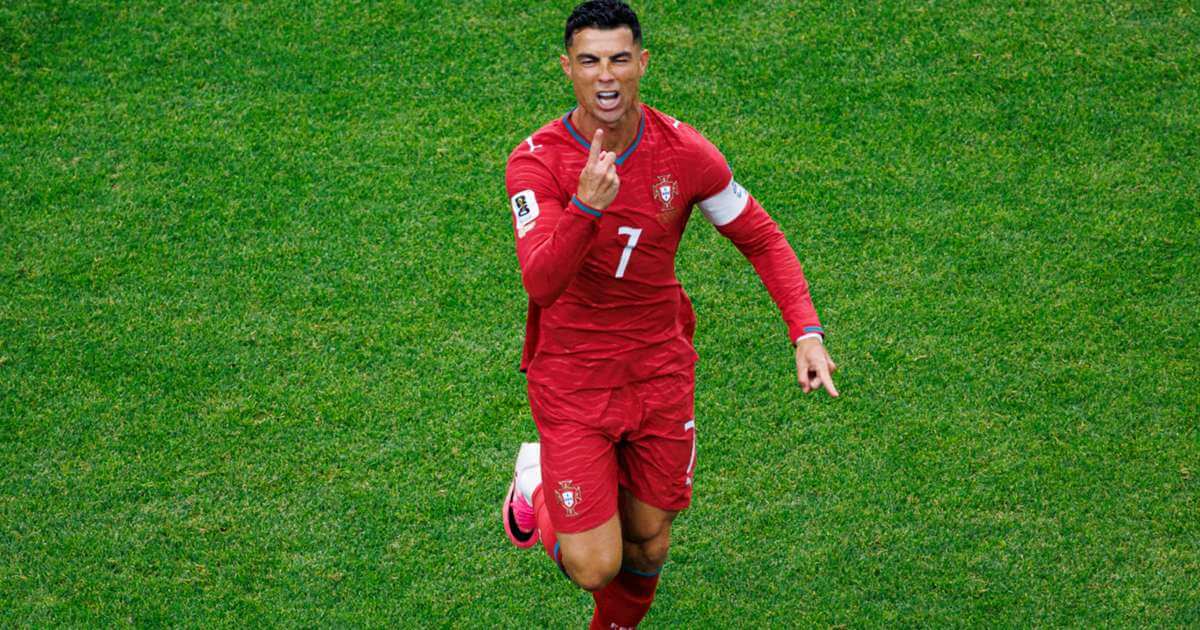
No footballer embodies that question more completely than Cristiano Ronaldo.
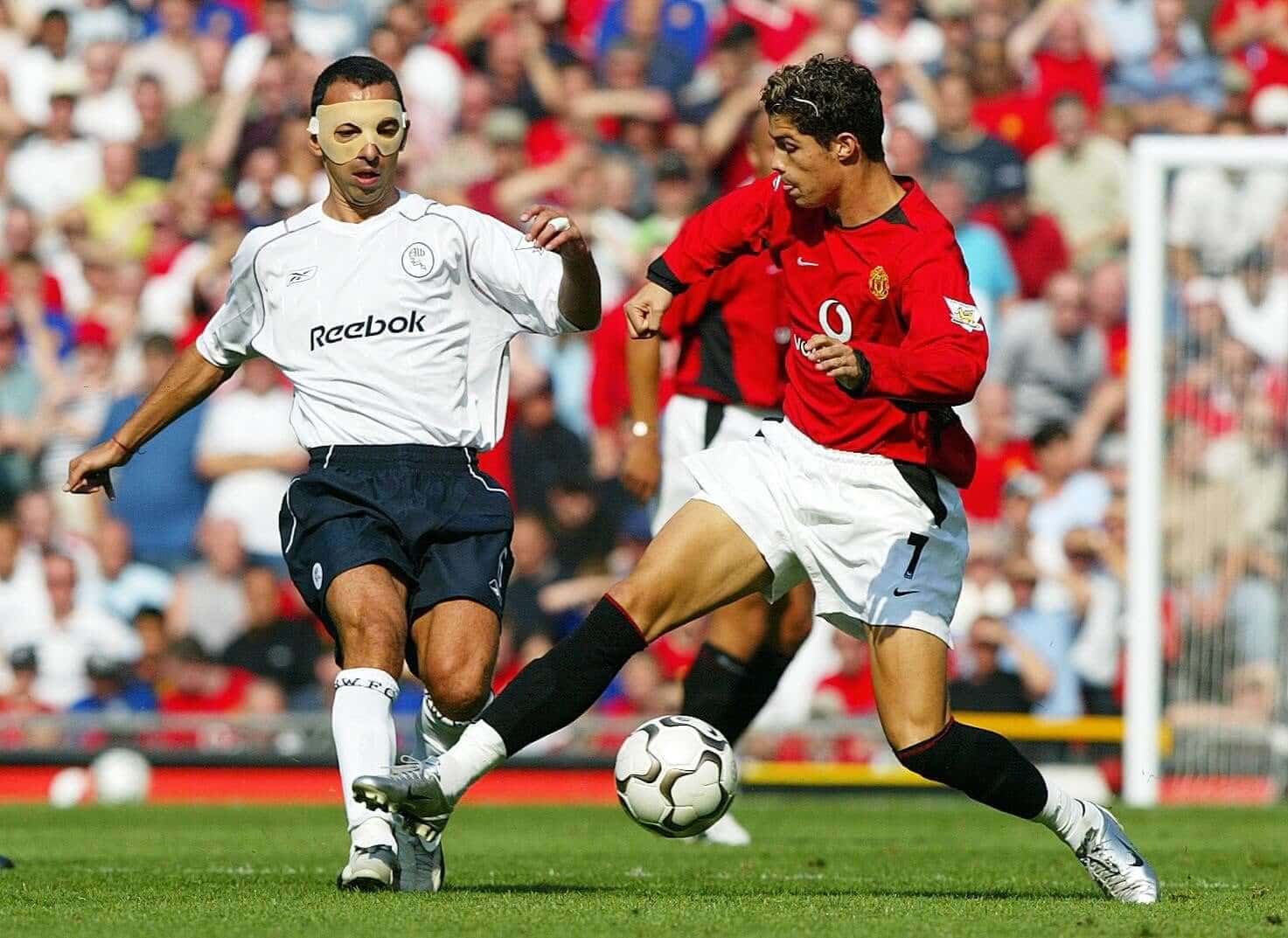
His story is often told as one of extraordinary discipline, and rightly so. When he arrived at Manchester United as an impossibly gifted but occasionally infuriating teenager, nobody doubted his talent. The criticism was directed elsewhere. Too many stepovers, too many shots, too much of a flash sod, basically. Sir Alex Ferguson and his coaches began sanding away the rough edges, but Ronaldo did far more than simply listen. He stayed behind after training. Then he arrived early. He obsessed over his physique. Patrice Evra has laughed about visiting Ronaldo’s house only to be served healthy food before being dragged into an impromptu workout. What looked eccentric at the time would eventually become normal. The remarkable thing is that it worked almost beyond imagination.
He became faster, stronger, more explosive in the air and more clinical in front of goal. Every apparent weakness became another project. Every project became another strength. By the time he left for Real Madrid CF in 2009, he was no longer simply one of the world’s most exciting footballers but its most relentlessly engineered athlete.
Football has always celebrated complete players. We admire the winger who creates as much as he scores, the midfielder who controls a game, the striker who buries himself for teammates. Ronaldo’s career took a different path. In his relentless quest to keep pace with Lionel Messi's breathtaking feats his focus became singular. Gradually, almost imperceptibly, every part of his game became subordinate to one objective: scoring goals.
At first the changes seemed entirely sensible. Why beat a defender twice when once would do? Why cross from the byline if cutting inside produced a better chance? Why begin attacks forty yards from goal when you could receive the ball ten yards closer? Each adjustment only served to make him more efficient.
It is easy, in hindsight, to forget just how extraordinary the results were. Ronaldo entered statistical territory that had previously seemed absurd. Seasons of fifty and sixty goals became almost routine. He won European Cups and Ballon d’Ors with astonishing regularity. Optimisation had produced perhaps the greatest goalscoring machine football had ever seen. The problem was Messi was doing more or less the same but with an implausible finesse.
Like a true optimiser, Ronaldo had only one move to make: double down on what's working. If staying behind after training makes you better, don't just stay longer, move into the training ground. If changing your diet improved performance, why stop refining it? If moving closer to goal produces more goals, why not move closer still? Every individual decision makes perfect sense. To romantics, this was crystal clear as soon as he started doing it. But as the trophies poured in, it was semi-justifiable. The problem occurred when he left Real Madrid and was surrounded by 10 good-not-great players. At Juventus his quest for goals above all else became remarkably transparent, his refusal to do any tracking back whatsoever, comical. Saudi Arabia, tragically, followed. This summer's World Cup has saw this optimisation crystallised.
Football fans instinctively distinguish between different kinds of goals because it's what makes the game memorable and what we pass on down generations. It's why a player like Gabriel Batistuta is remembered how he is, rather than measured on the number of 20+ goal seasons he had. A third-yard thunder-bastard versus a penalty. It's why Tony Yeboah is remembered the way he is and Javier Hernandez is the way he is. My 88 year-old grandad swears that Wilf Mannion is the greatest player England has ever produced. He couldn't care less what the record books say. He cares about what he saw and what it made him feel. An overhead-kick is worth more than a two-yard tap-in. We assign aesthetic value to goals as naturally as we assign emotional value to paintings or songs.
But the optimisation of society gave Ronaldo a way around all of that. Fuelled by an imagined rivalry with Messi and a generation of man-babies with access to Twitter, he continued to cut everything non-essential. If Messi scored a wonder goal then, so what, Ronaldo scored on that weekend top. Messi scored two beauties, Ronaldo scored two tap-ins. Same-same. The stats sheet says they both scored twice so what's the difference? Optimisation doesn't care about such details.
A bicycle kick counts as one. A penalty counts as one. A rebound that ricochets in off your knee counts as one. A goal that you didn't touch but claim you did counts as one. The record books make no distinction. Neither does the Wikipedia stats page.
One is one.
Viewed through that lens, some of the stranger moments of Ronaldo’s later career begin to feel less mysterious. His insistence on taking penalties was often criticised as evidence of ego. Perhaps. But penalties are also football’s highest-probability route to another goal. His determination to claim goals that may have brushed his hair or to apply the final touch to a ball already crossing the line was mocked by many. Yet if your career is measured by numbers, another goal is another goal. The optimiser is not interested in beauty. He is interested in output.
The dazzling winger who once dribbled for the sheer joy of embarrassing defenders slowly disappeared. In his place emerged a penalty-box specialist whose movement bordered on the supernatural. It was an extraordinary evolution. It was also, perhaps inevitably, a narrowing one. More and more of football’s countless possibilities were discarded because they did not maximise the likelihood of scoring.
None of this made Ronaldo a worse player. For years it made him an even better one. But optimisation contains a paradox. The habits that make us exceptional are not always the habits that keep us exceptional forever.
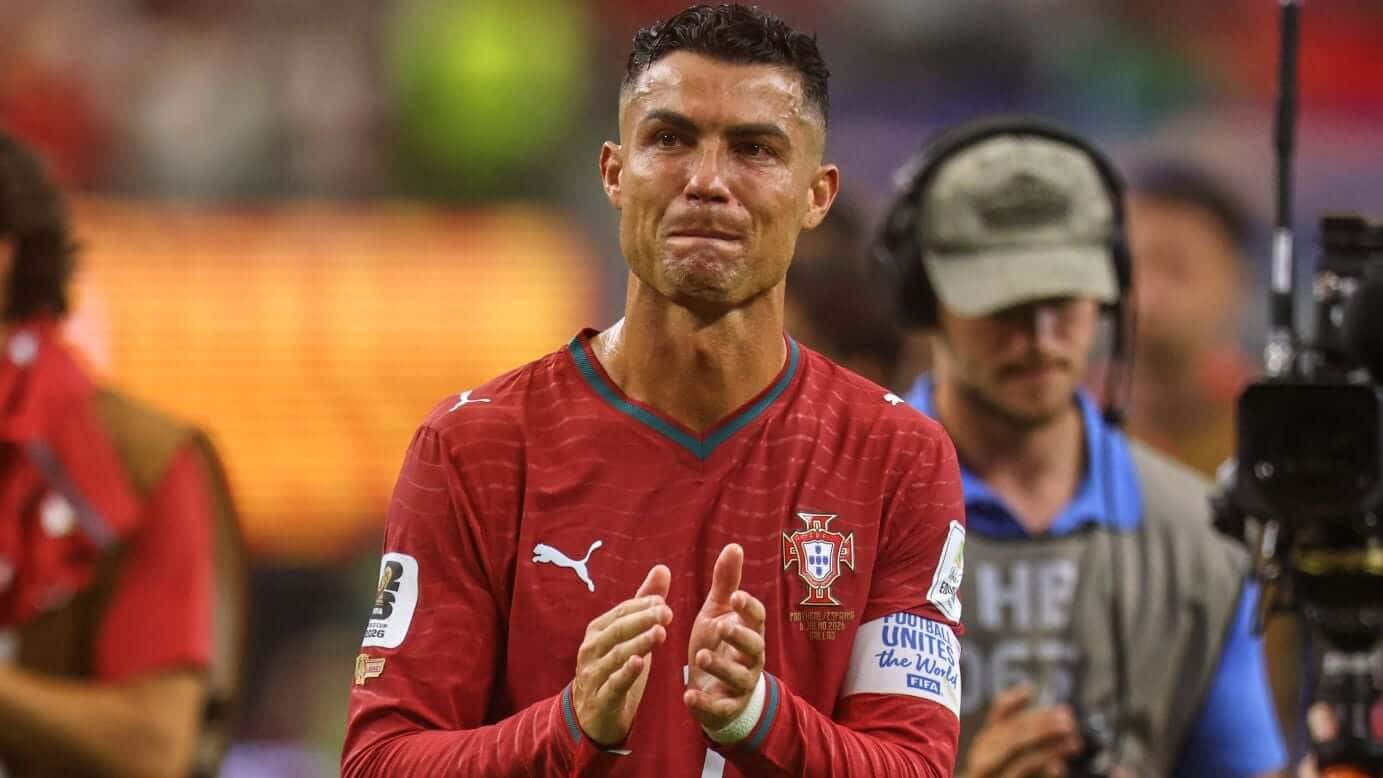
Eventually, the optimisation continued after the gains had begun to diminish. What many people thought they were watching during his final major tournament was simply an ageing footballer refusing to accept the passage of time. I wonder if something more interesting was taking place. What if we were watching optimisation stripped to its essence? The dribbling and acceleration had long gone. Increasingly, all that remained was the shot.
Whenever the ball entered his orbit, the same instinct took over. Shoot. If the chance existed, however improbably, it had to be taken. The game itself had almost disappeared beneath the objective that had defined the previous two decades. Football, in all its richness and unpredictability, had been reduced to its final measurable act.
This is not really an essay about Cristiano Ronaldo. It is an essay about us. Because football merely reached this point first.
Outside the stadium we are busy optimising everything else. We track our sleep without feeling rested. We count our steps without enjoying the walk. We consume books as though finishing them matters more than reading them. We turn holidays into content, hobbies into side businesses and friendships into networking opportunities. Somewhere along the way, optimisation ceased to be a tool and quietly became a philosophy. Its greatest weakness is not that it fails but that it cannot recognise success. It always believes there is another improvement waiting just beyond the horizon.
Perhaps that is why Ronaldo remains such a compelling figure. He went beyond optimising his body and his game to optimising football itself, reducing one of the world’s most gloriously chaotic games into a series of increasingly efficient decisions. For a long time, nobody has ever done it better. That same logic continues to reshape football. Kylian Mbappe is about to become the highest goalscorer in World Cup history. Does that make him the greatest player in World Cup history? Of course it fucking doesn't. But the optimisers will tell you otherwise. And the stats, they'll say, back them up. But is he really great, has he really fulfilled his early devastating promise? Not really. PSG fans couldn't wait to see the back of him. Real Madrid fans now feel broadly the same.
And that's because football has always reserved a special place for those who resist optimisation. Players who slow the game down rather than speed it up or players who give you moments over statistics.
It's why the comparison with Lionel Messi has always felt deeper than a debate about goals or trophies. It is a debate about two ways of understanding greatness. True greatness. One asks, “How can this be done better?” The other asks, “What else is possible?”
Optimisation is a wonderful servant but the moment it forgets where it was supposed to stop, it risks optimising away the very thing it set out to perfect.
It cost Ronaldo the very legacy he buried himself to create. In the end, he didn't end up the greatest footballer of all time. He didn't even end up the best Ronaldo of all time.
Lee Kelleher.