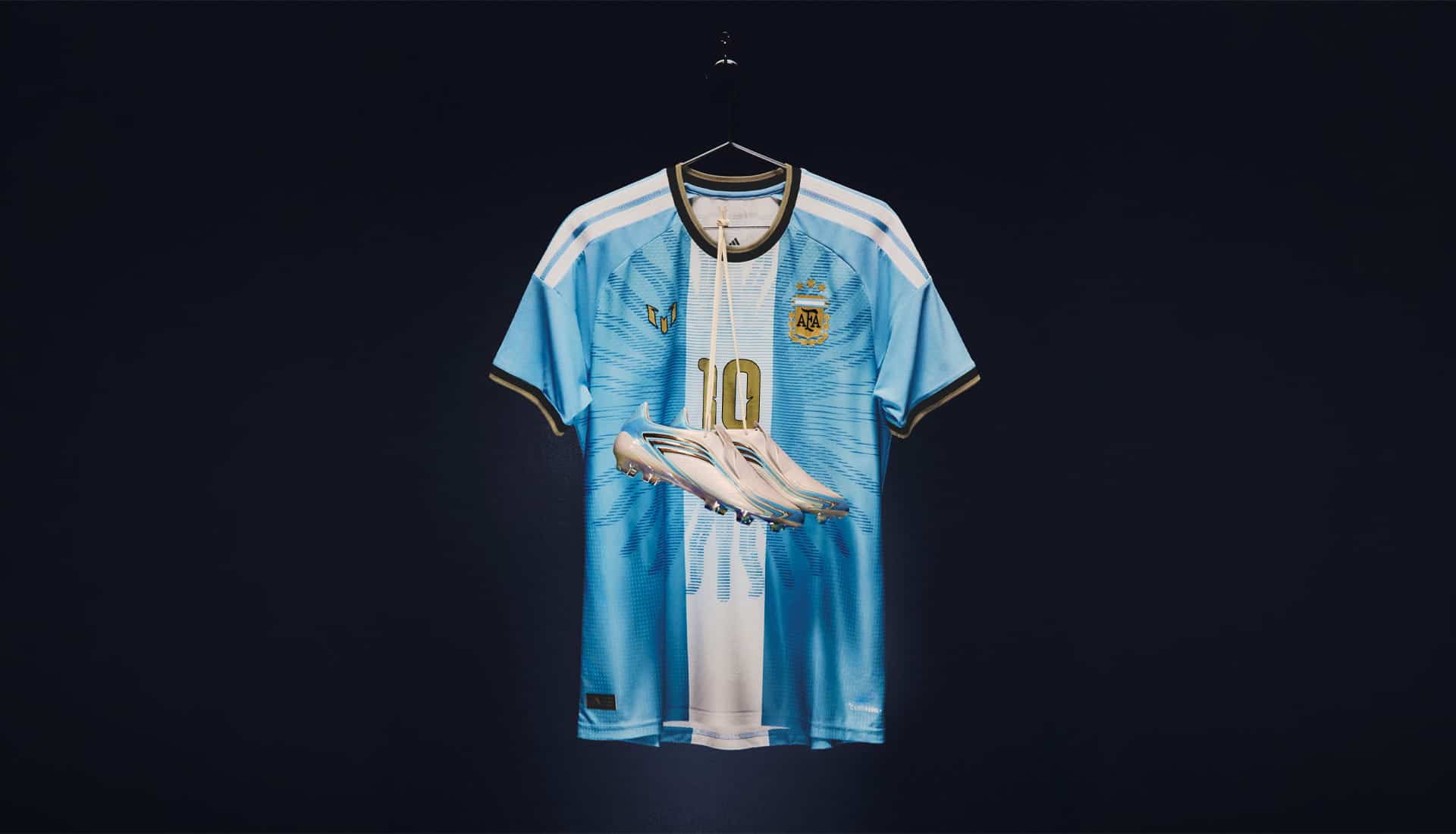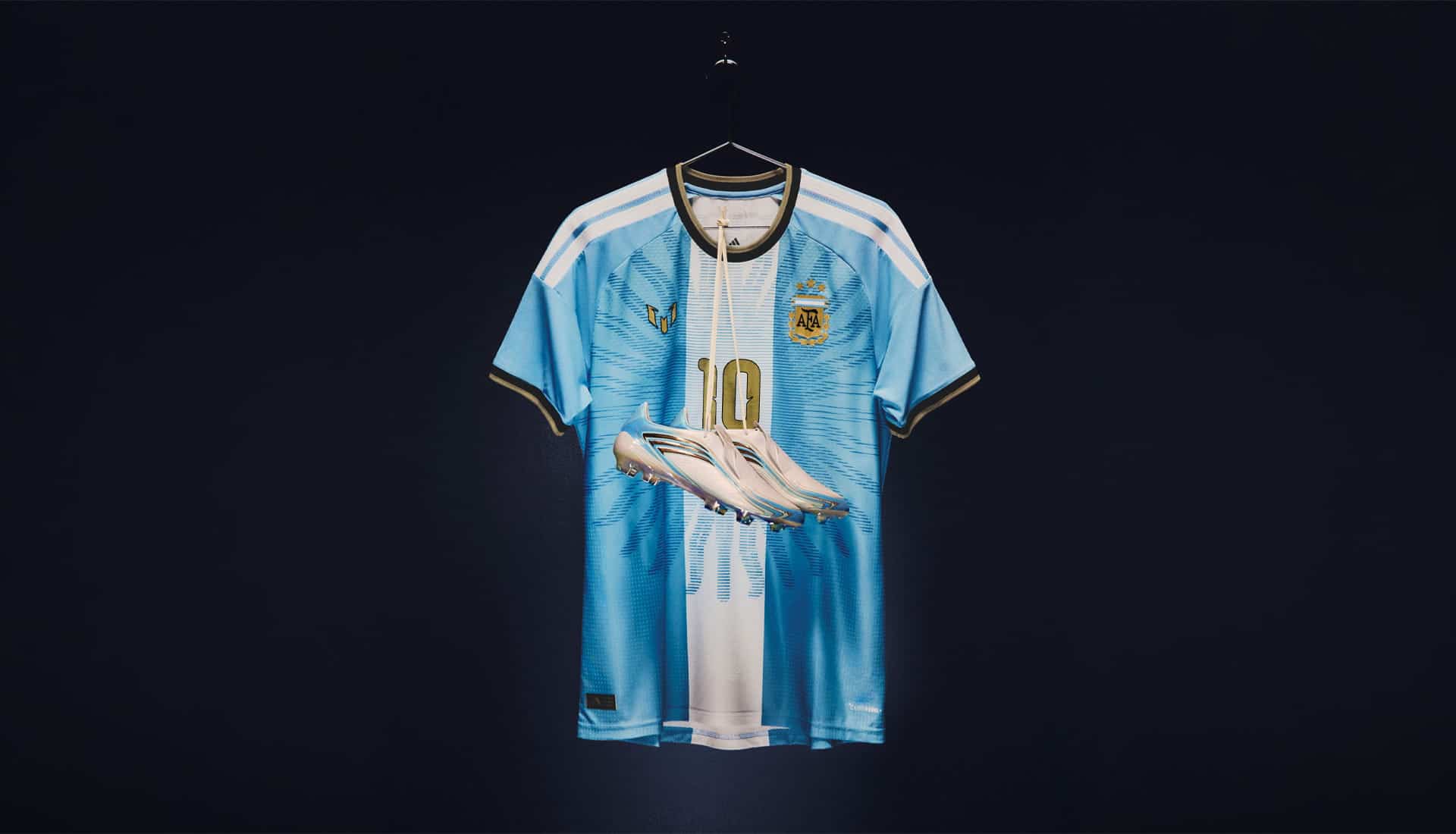
There are tribute shirts, there are farewell shirts, and then there's what Argentina are about to do for Lionel Messi.
On October 6, Messi will make his final international appearance wearing a special-edition Argentina kit created by adidas to mark the end of his career with the national team. It's not really a surprise. Messi has spent two decades in Argentina colours, won the World Cup, two Copa Américas and become inseparable from the number 10 shirt. If anybody has earned one last piece of commemorative polyester, it's probably him.
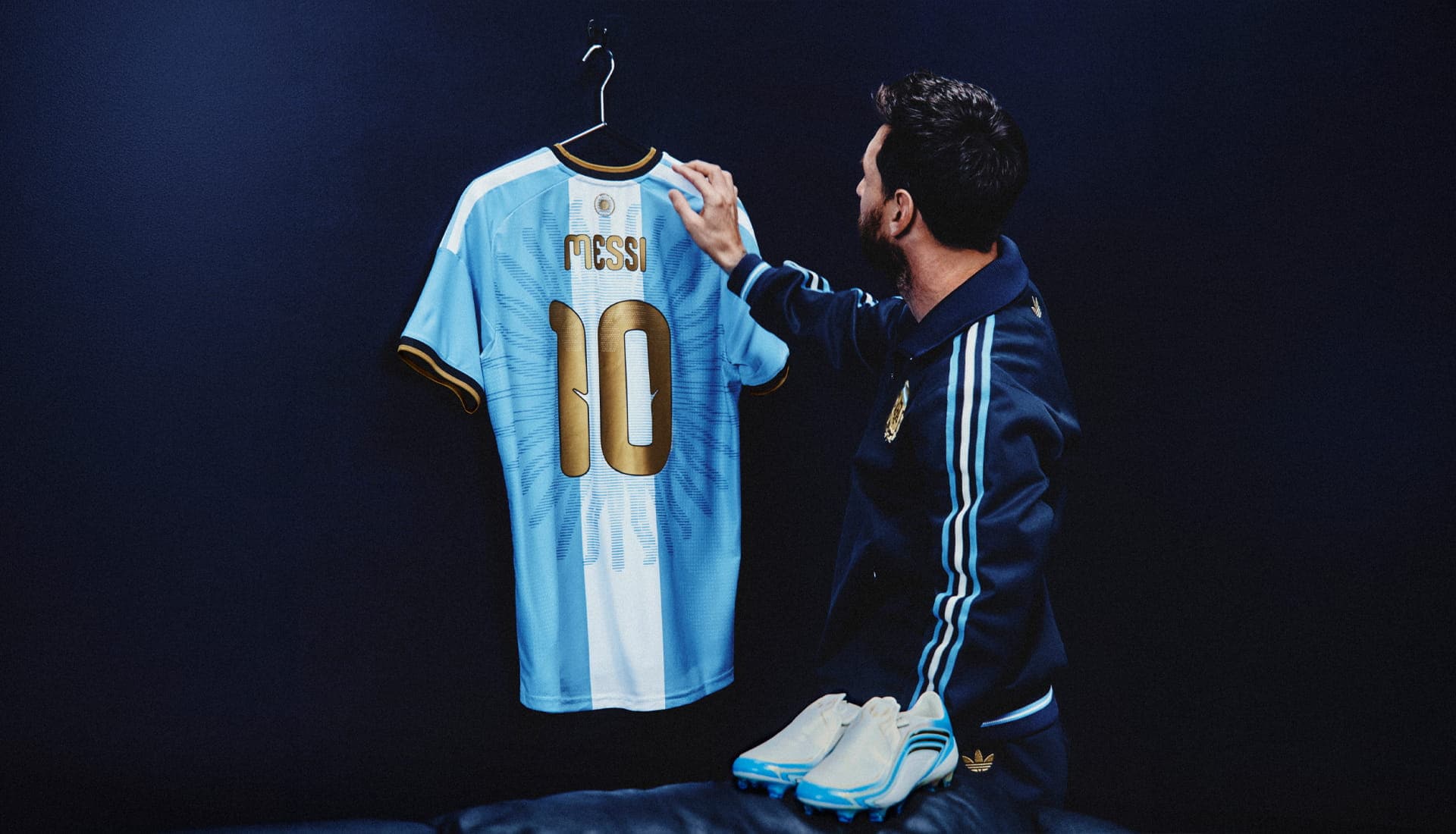
What makes this unusual is this isn’t really a shirt made for Messi; it's a Messi shirt that Argentina are going to wear. When they take the field against Benin, the entire team will take to the pitch in the special kit, a design based on Argentina’s famous stripes but finished with gold detailing, commemorative elements and, significantly, Messi’s own signature ‘M’ logo on the chest. The normal adidas Performance mark is gone. In its place sits the personal identity of one footballer.
Is this a first? Well, football has been saying goodbye to great players for almost as long as it has been producing shirts to sell us. Numbers have been retired, patches added, names embroidered and warm-up tops produced for one night only. Clubs and countries have found increasingly elaborate ways to tell a player that, for an evening at least, everything is about them.
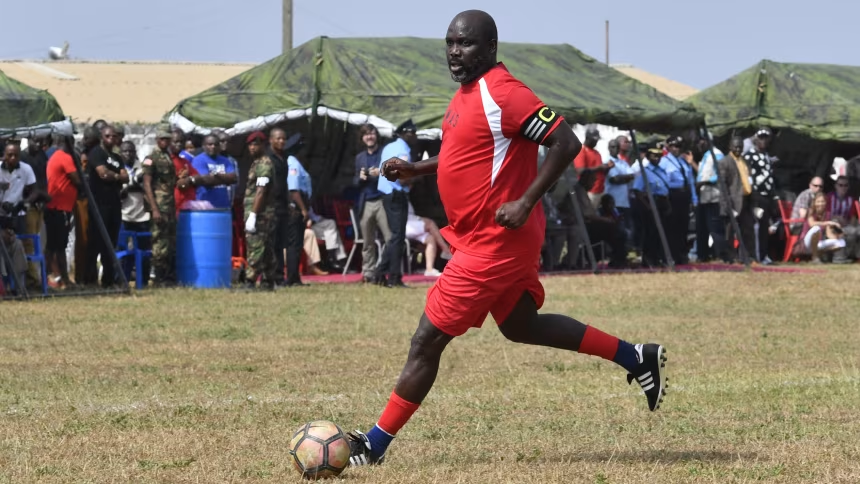
George Weah’s final appearance for Liberia in 2018 is one of the stranger examples. By then the country’s president and 51 years old, Weah pulled the No.14 shirt back on against Nigeria in a match organised partly to retire the number he had made famous. He played 79 minutes. It was a night constructed around one man, but the shirt itself remained Liberia’s.
Argentina have done something similar before, too. Following Diego Maradona’s death, the squad appeared before a World Cup qualifier in shirts carrying his image, with his famous No.10 across the team. It was a powerful visual, but a ceremonial one, the players changing into their normal Argentina shirts before the game began.
Pelé offers a more interesting comparison, particularly because Santos have already pushed this idea much further in 2026.
In April, Santos played Atlético Mineiro wearing a special version of their white home shirt on which Umbro surrendered its traditional position on the chest. In its place appeared the Pelé Brand silhouette, the raised fist celebration now being developed as a visual identity around Pelé’s legacy. This wasn’t a pre-match gesture either, Santos actually played the competitive fixture wearing it.
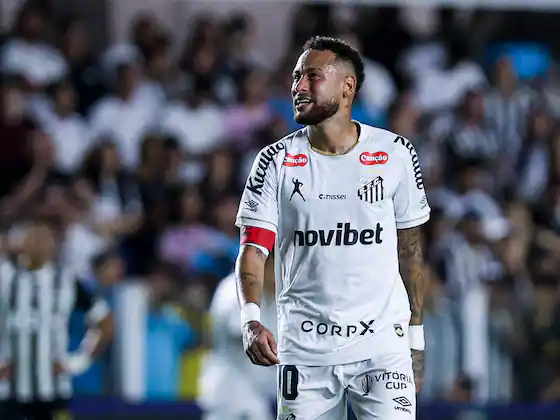
In some ways, then, the Messi shirt is not unprecedented. The manufacturer disappearing so that the identity of an individual footballer can take its place has happened before. But the difference is that Pelé died in 2022 and Messi will be standing there wearing the thing.
That's what makes Argentina’s shirt so fascinating. We are used to players becoming bigger than teams culturally, commercially and sometimes emotionally, but football shirts traditionally resist that idea. However famous the person inside one becomes, the hierarchy on the outside remains relatively clear: country, manufacturer, number, player. Argentina are changing the order.
Adidas are not simply commemorating Messi somewhere within the design, they are giving his personal mark one of the most valuable and recognisable spaces on perhaps the most famous international shirt in world football. His teammates will effectively be wearing his branding while playing alongside him.
There is something slightly surreal about that, but also something inevitable. Modern football has spent the past 20 years moving towards the individual. Ronaldo became CR7, Beckham became a global fashion property, Jordan’s Jumpman eventually found its way from Michael Jordan to Paris Saint-Germain shirts, and players now arrive with logos, companies, content teams and brand identities of their own. Messi has been central to that shift while somehow appearing removed from much of its theatre.
Now, at the very end, the distinction between player and product has almost completely disappeared.
The timing, too, feels perfect. Messi’s career with Argentina has always been unusually bound up with the shirt itself, from the kid carrying impossible expectations in the No.10, through the defeats, retirements and returns, to finally lifting the World Cup wearing those stripes in Qatar. Argentina’s shirt did not simply accompany the story, it became one of its central images.
Perhaps that is why this doesn’t feel quite as cynical as it probably should. Of course it's commercial. There is an entire collection around the farewell, including matchwear, pre-match pieces and lifestyle clothing, and adidas know exactly what happens when the words Messi, Argentina and limited edition occupy the same product page.
But football shirts have always existed somewhere between uniform, merchandise and memory. This one simply pushes that relationship to its logical conclusion.