A black and gold football shirt, a 120-year-old club crest and a little inspiration from Mexico’s national sport. Nike’s latest creation for Chivas Guadalajara is a gorgeous celebration of the country’s cultural heritage.
Somewhere along the way, the humble football shirt became a vehicle for telling stories. These days, barely a week passes without a manufacturer announcing that its latest creation takes inspiration from a famous bridge, a local landmark or, in particularly desperate circumstances, the pattern on the tiles outside the stadium toilets. Occasionally the connection is entirely plausible. Sometimes you suspect somebody has worked backwards from a finished design and gone looking for a story to accompany it.
Then something like this comes along.
Chivas Guadalajara’s new third shirt, unveiled by Nike this week, is inspired by charrería, the traditional Mexican equestrian sport whose elaborately dressed horsemen have become one of the country’s most recognisable cultural symbols. It’s a handsome thing, all black fabric, gold embroidery and a rather lovely historical crest, although the shirt itself is only part of what makes the release interesting.
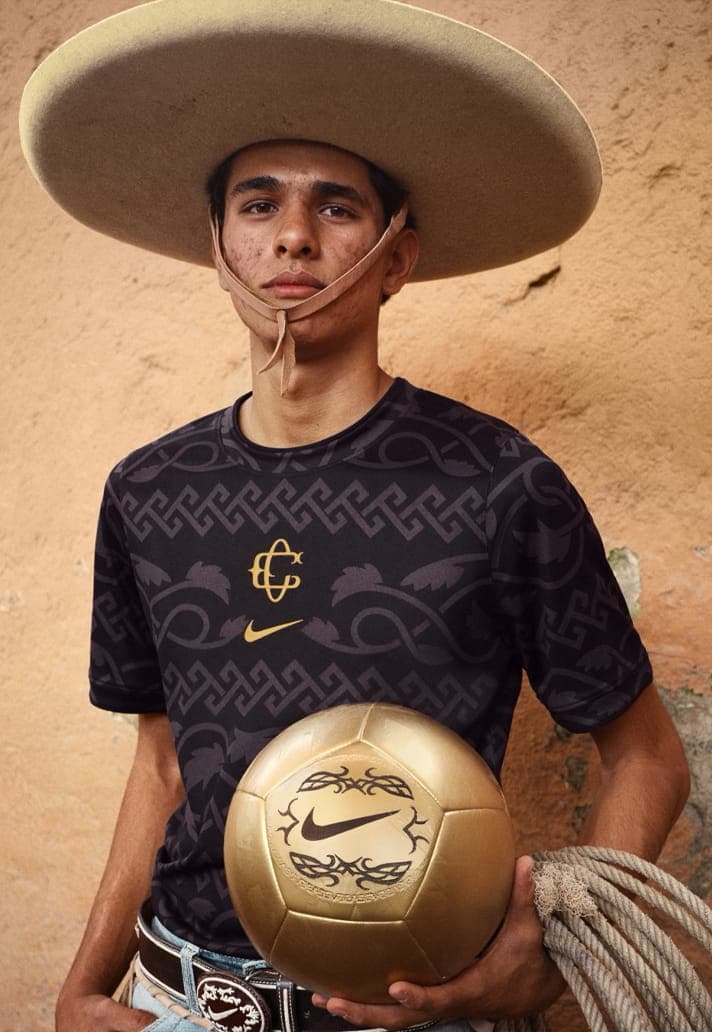
There’s also an extraordinary collection of campaign photographs, featuring enormous sombreros, beautifully worked leather belts, saddles, horses and the sort of dramatic Mexican landscape that makes you want to book a flight immediately. Somewhere in the middle of all this, Nike has found room for a football shirt. And it all makes perfect sense.
From the Saddle to the Stadium
For those unfamiliar with charrería, it’s a traditional Mexican sport that developed from the horsemanship and cattle-handling skills of rural communities. Its origins stretch back to the 16th century, when ranch workers developed increasingly elaborate methods of managing livestock on the country’s great estates. Over time, those practical skills became competitive disciplines, with riders demonstrating their abilities through a series of events involving horses, ropes and cattle.
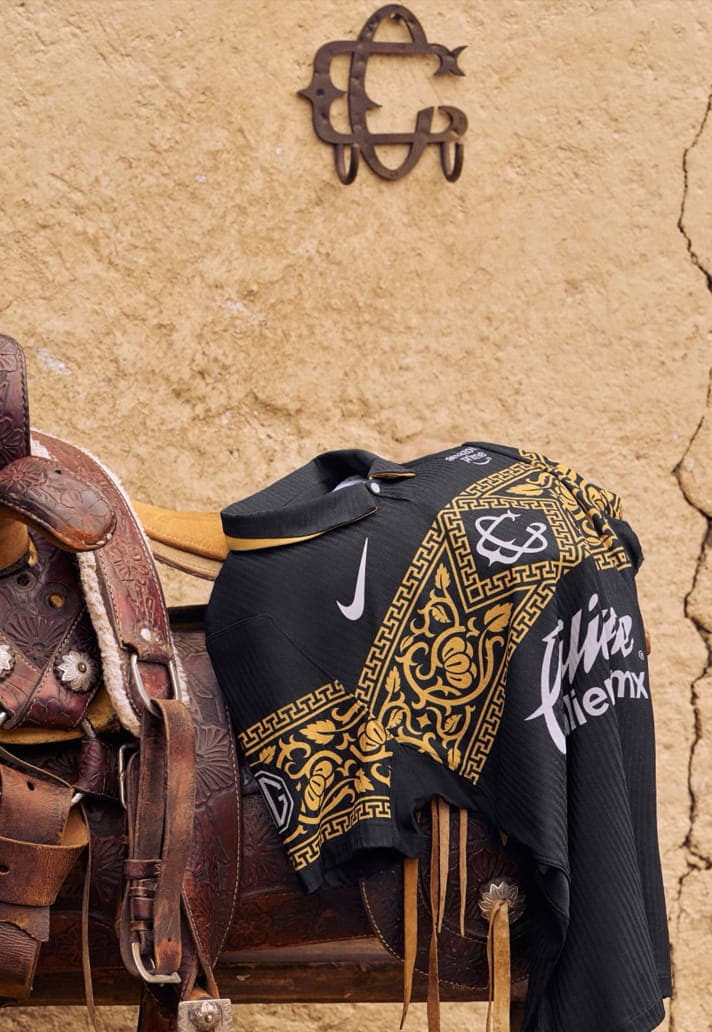
It’s often described as Mexico’s answer to the rodeo, although that comparison doesn’t quite capture its significance. Charrería is a sport, certainly, but it’s also an expression of regional identity, a celebration of craftsmanship and an important part of Mexican cultural life. In 2016, UNESCO recognised it as part of humanity’s Intangible Cultural Heritage, acknowledging the traditions, skills and knowledge passed between generations.
Then there’s the clothing. The traditional charro suit is one of the most distinctive outfits in the world, combining fitted trousers, decorative jackets, intricately worked belts and the enormous wide-brimmed sombrero. Depending on the occasion, it can be relatively restrained or extraordinarily elaborate, with silver ornamentation, embroidery and leatherwork that can take considerable skill to produce.
It’s also a familiar sight beyond the sporting arena. The charro suit has become inseparable from the visual identity of mariachi musicians, helping carry its distinctive appearance around the world. If you’ve ever watched a mariachi band perform, you’ll almost certainly recognise the clothing, even if you’ve never heard of charrería itself.
Nike’s designers have borrowed heavily from this world, and the results are rather lovely.
A Football Shirt With a Little More Embroidery
At first glance, Chivas’ new shirt looks relatively straightforward. Black base, gold detailing, a smart little collar and the sort of restrained colour scheme that has served football shirt designers rather well over the years.
Look a little closer, however, and there’s an enormous amount happening. Across the chest and sleeves runs an intricate gold pattern inspired by piteado, a traditional Mexican leatherworking technique in which decorative designs are stitched into leather using fibres from the pita plant. It’s particularly associated with belts, saddles and other accessories worn by charros, and the resulting patterns can be extraordinarily detailed.
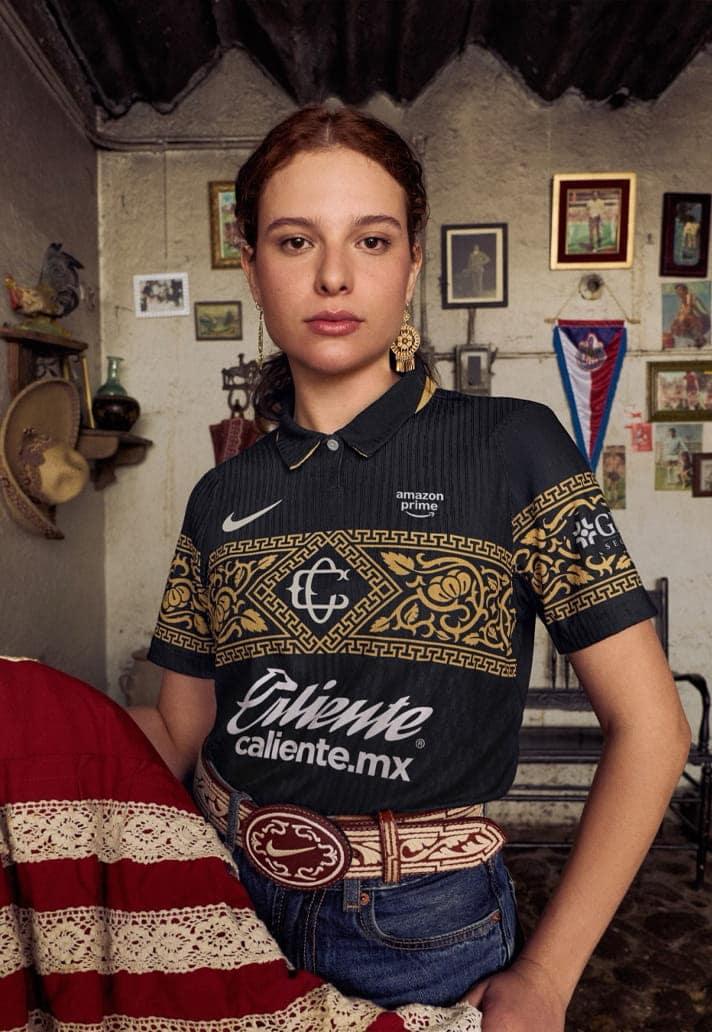
On the shirt, those patterns form a broad decorative band, sitting somewhere between a traditional piece of Mexican craftsmanship and a particularly extravagant piece of 1990s football shirt design. It’s a combination we’re very much in favour of.
There’s also a historical element to the design. Rather than using the familiar Chivas crest, Nike has returned to an emblem worn by the club in 1908, featuring the intertwined letters C and G. It’s positioned centrally, within a diamond-shaped section of the gold pattern, and looks considerably more elegant than many of the enormous modern badges that manufacturers insist on pressing onto football shirts.
That date is important, too. Although the club was founded in 1906, it began life as Unión Football Club before adopting the Guadalajara name in February 1908. The badge is therefore a reference to a particularly formative moment in the club’s history, rather than an arbitrary bit of retro branding discovered in an archive.
Nike has even developed a bespoke typeface for the players’ names and numbers, drawing on the ornamental lettering associated with charro culture. It’s a small detail, but one that suggests the designers have taken the brief rather seriously.
A Club Unlike Most Others
There’s another reason why this particular release feels appropriate for Chivas. Guadalajara are one of the biggest clubs in Mexico, with an enormous following and a history that stretches back 120 years. They are also famous for a policy that makes them rather unusual in modern professional football: the club fields Mexican players rather than recruiting foreign footballers.
It’s a tradition that dates back to their entry into professional football in the 1943-44 season. Before that, Guadalajara had actually fielded Belgian, French and Spanish players alongside Mexicans, a reflection of the club’s origins and the influence of European immigrants on the development of football in the city.
Indeed, the club’s famous red and white stripes owe something to Belgium. Edgar Everaert, one of Guadalajara’s founders, suggested the colours in reference to Bruges, his hometown. It’s a pleasing little historical contradiction that one of Mexican football’s most proudly national institutions should owe such an important part of its visual identity to a Belgian.
That mixture of local pride and international influence makes the new Nike shirt particularly interesting. Here is an American sportswear company producing clothing for a Mexican football club originally influenced by a Belgian, with a design inspired by a traditional Mexican sport whose roots extend back hundreds of years. Globalisation, eh? Occasionally it produces something rather nice.
A Campaign Worth Looking At
As attractive as the shirt is, the photography might be the best thing about the entire release.
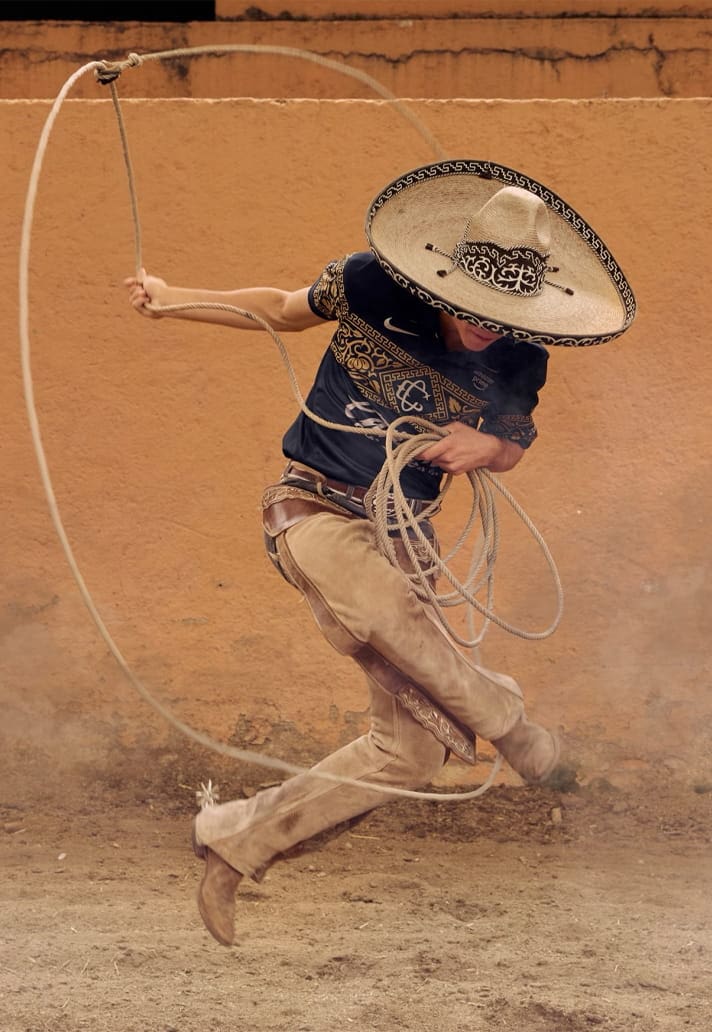
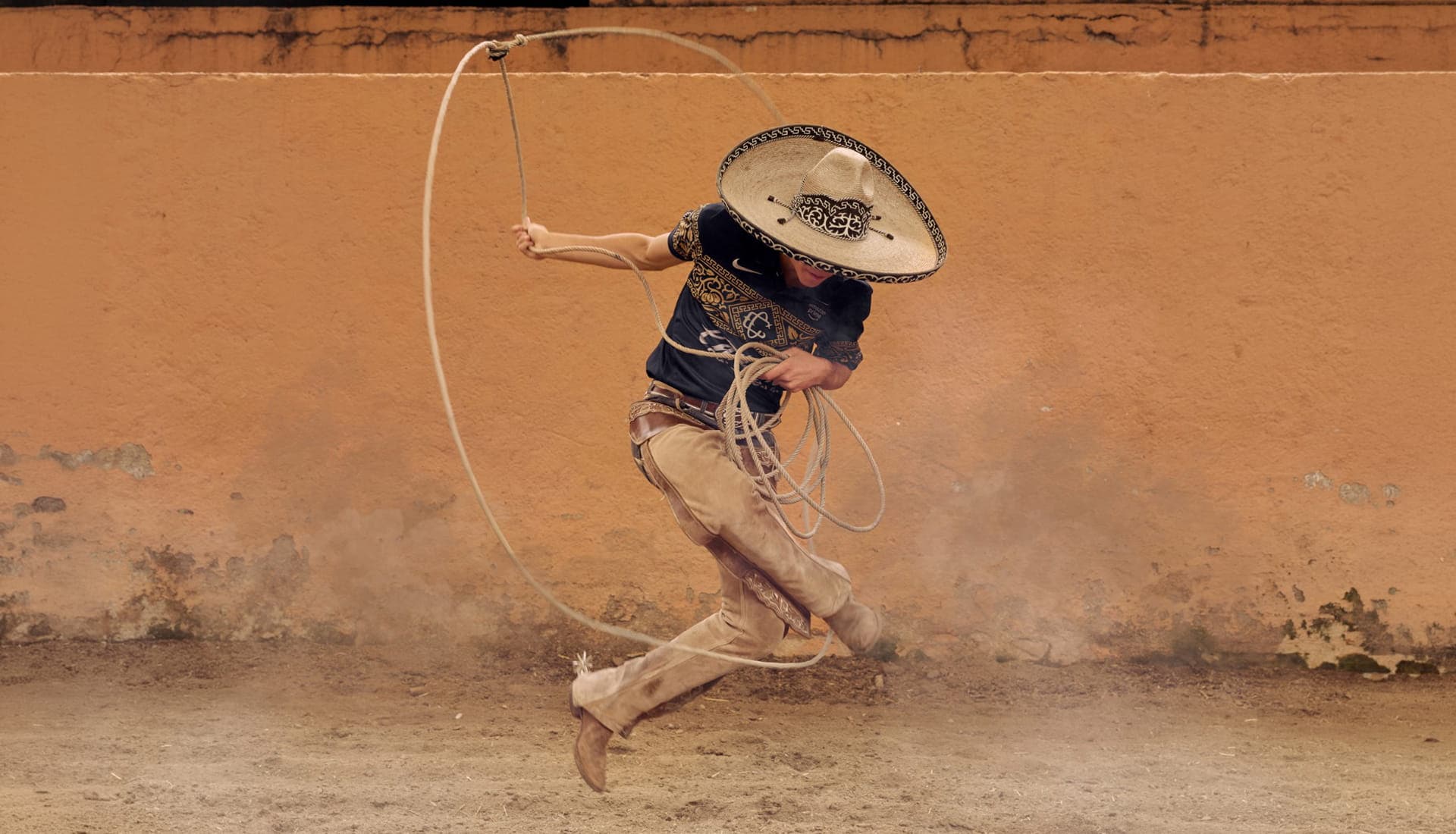
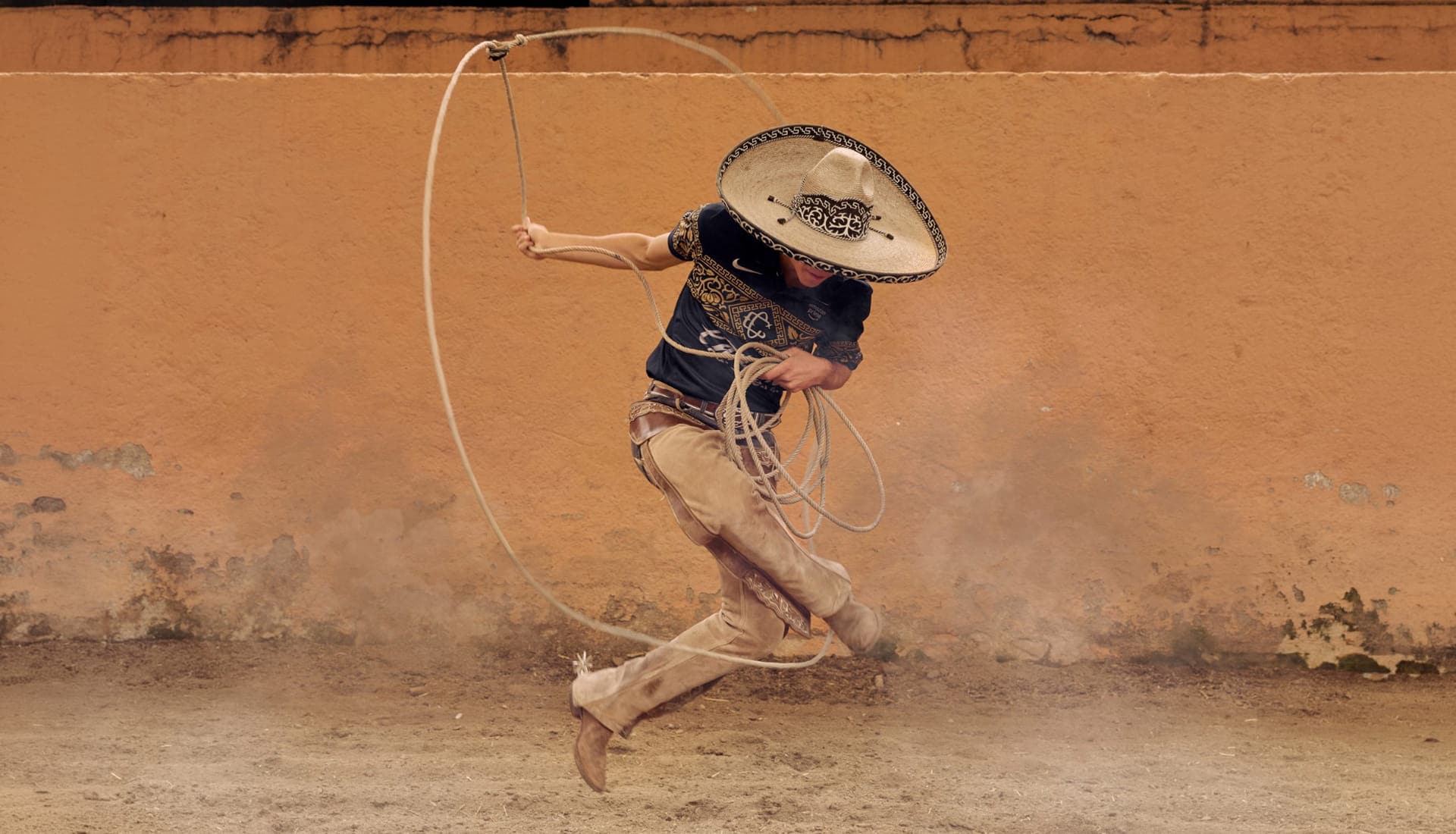
Nike’s campaign features charros and escaramuzas, the female participants in traditional Mexican equestrian events, photographed in surroundings that feel a world away from the usual football shirt launch.
There’s dust, sunlight, weathered walls and traditional clothing, with the shirt appearing alongside all the paraphernalia of charrería. In one image, a rider sends a rope looping through the air. In another, a young woman wearing the new kit stands in a beautifully cluttered interior, surrounded by objects that speak to the sport’s history.
The photographs are full of texture and character, and there’s a pleasing absence of the usual football marketing nonsense. No tunnel filled with artificial smoke, no footballers staring menacingly into the camera and mercifully nobody pretending to be terribly angry about the existence of a new shirt. Instead, Nike has allowed the clothing and the people wearing it to do most of the talking.
Alongside the match shirt, Nike has also produced a rather attractive pre-match top that takes the same influences in a slightly different direction. Predominantly black, with a tonal pattern spreading across the fabric, it’s arguably the more wearable of the two, particularly without the enormous collection of sponsors that tends to accompany football shirts in Mexico.
The new shirt also marks an early chapter in Nike’s relationship with Chivas, having replaced Puma as the club’s kit supplier this summer. If this is an indication of the direction they intend to take, there could be some interesting years ahead.
Football shirts have always borrowed from the world around them, but some places offer a rather richer visual vocabulary than others. Mexico has an extraordinary sporting and cultural history, one that extends far beyond the football pitch, and Nike has found an enjoyable way of bringing a small part of it into the game.
There’s something particularly satisfying about the thought of a craft traditionally associated with leather belts and saddles finding its way onto a football shirt, made using some of the most sophisticated fabric technology available, no less. And while we might not have much use for an enormous sombrero in our everyday lives, we’d certainly make room in the wardrobe for the shirt.
Let's not mention that Prime logo, eh?