
Football's most unique tournament is also its most under appreciated.
AFCON is a tournament that, for many, gets in the way. A hindrance. A competition that distracts from the real thing. Clubs lose players, managers moan, supporters hope their star man doesn’t perform. But they’re getting it all wrong.
AFCON gives far more than it takes. Every international tournament carries weight, but AFCON remains perennially underappreciated. The continent covers 20% of the world’s land mass. By any definition, this is a massive competition.
It’s true that AFCON has, in the past, been blighted by issues - safety fears, corruption, organisational chaos. But which tournament hasn’t? On the pitch, it has consistently delivered iconic moments, reasons to lean forward and doubt what you’ve just seen, reasons to marvel.
Think back to 1992, when Abedi Pele’s Ghana played football so fluid it seemed to dance, only to fall short on penalties to the Ivory Coast after an endless shootout - 11–10, a final that lives in folklore. Or to 2000, when Nigeria came from behind to defeat the same Ivorians in front of a deafening Lagos crowd.
There was 2006, Egypt in full command, hosting and winning with a generation that would dominate the continent - three consecutive titles, a dynasty written in red.
Cameroon have long embodied the spirit of AFCON. From the late, great Roger Milla, whose smile and corner-flag dances in the early ’90s captured the soul of African football, to Samuel Eto’o, who led the Indomitable Lions to back-to-back triumphs. Milla showed the world that African football was not just competitive - it was joyous, expressive, unstoppable. Eto’o carried that same fire, proving dominance could coexist with flair.
Then came Didier Drogba’s tears in 2012, as Ivory Coast fell in the final despite his heroics. The story came full circle in 2015, when his nation lifted the trophy without him. The lesson was simple: greatness outlives the individual.
And who could forget 2019? Riyad Mahrez, standing over a free-kick in the final seconds of a semi-final against Nigeria. One swing of his left foot, one perfect connection, and the ball screamed into the top corner. A nation erupted. That’s AFCON: impossible, emotional, alive.
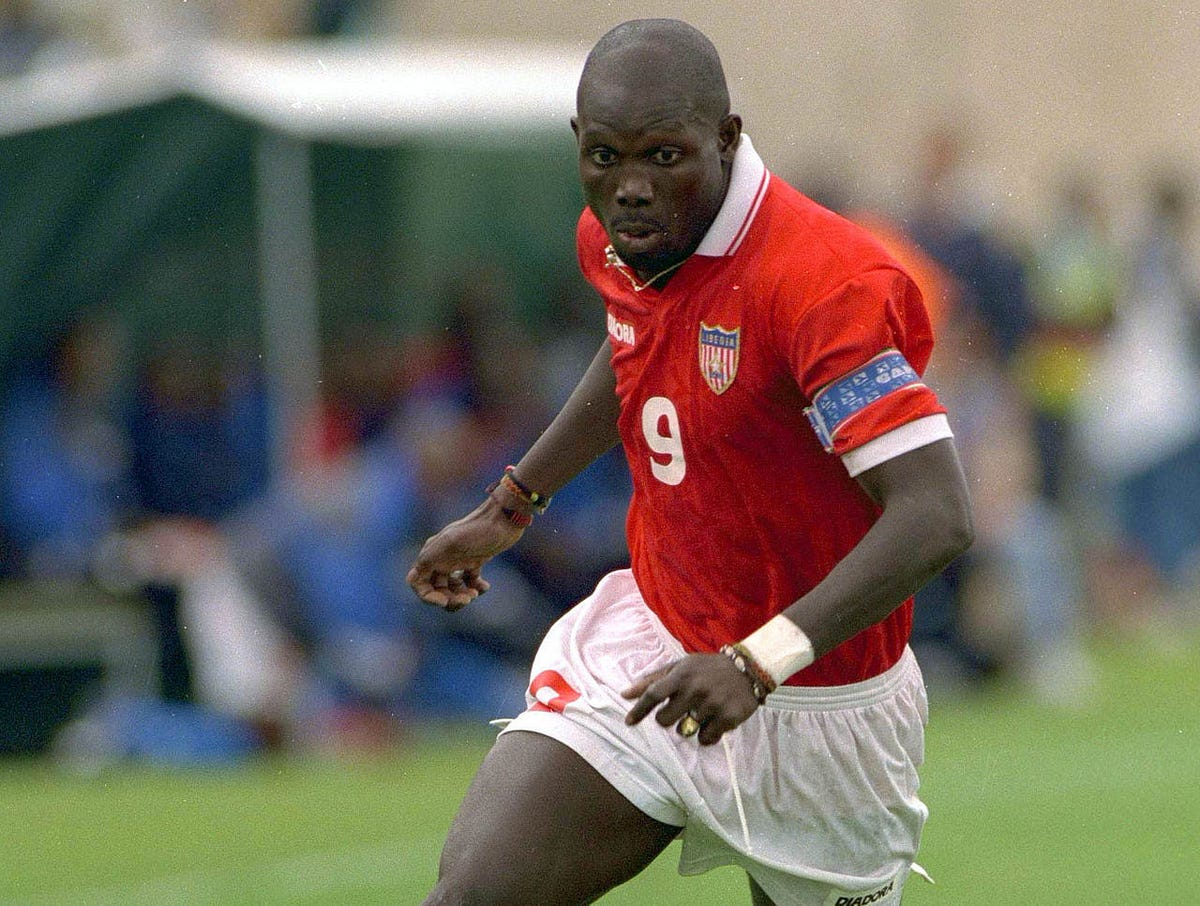
And then there’s George Weah, the only African ever to win the Ballon d’Or. He never lifted AFCON, but his presence defined an era. Weah dragged Liberia to the tournament almost single-handedly, funding travel, paying teammates’ wages, and leading from the front. For him, representing his country wasn’t an obligation, it was an act of love. That’s the spirit of AFCON.
And then Senegal, in 2022. After decades of heartbreak, Sadio Mané stepped up to the spot, the weight of a country on his shoulders. One strike, one roar, one release. A lifetime’s wait was over. You don’t script that. You witness it. You feel it.
For the players, AFCON isn’t an inconvenience. It’s home. It’s the rhythm of drums outside the stadiums, the heat, the pride of the flag, the streets stopping still. Those who see AFCON as an interruption are missing the point. It’s not a sideshow to Europe’s grand theatres, it’s the heartbeat of the world’s most passionate football continent. The stadiums may be smaller, the pitches may not always be perfect, but the emotion is purer, the stakes higher, the meaning greater.
AFCON is its own utterly unique thing. Different, for sure, but then how could it be anything else? It is, without doubt, a pillar of what makes the beautiful game so beautiful.
It starts again this month. We can’t wait.
We also think you'll like...