
Jonathan Jones is MEYBA's main man.
He built a career working with some of the biggest brands in the world before turning his attention to bringing back one of the most iconic manufacturers in the history of football. Our editor, Lee Kelleher, caught up with him recently to discuss MEYBA's storied past, its current positioning in the game, and where it's heading next.
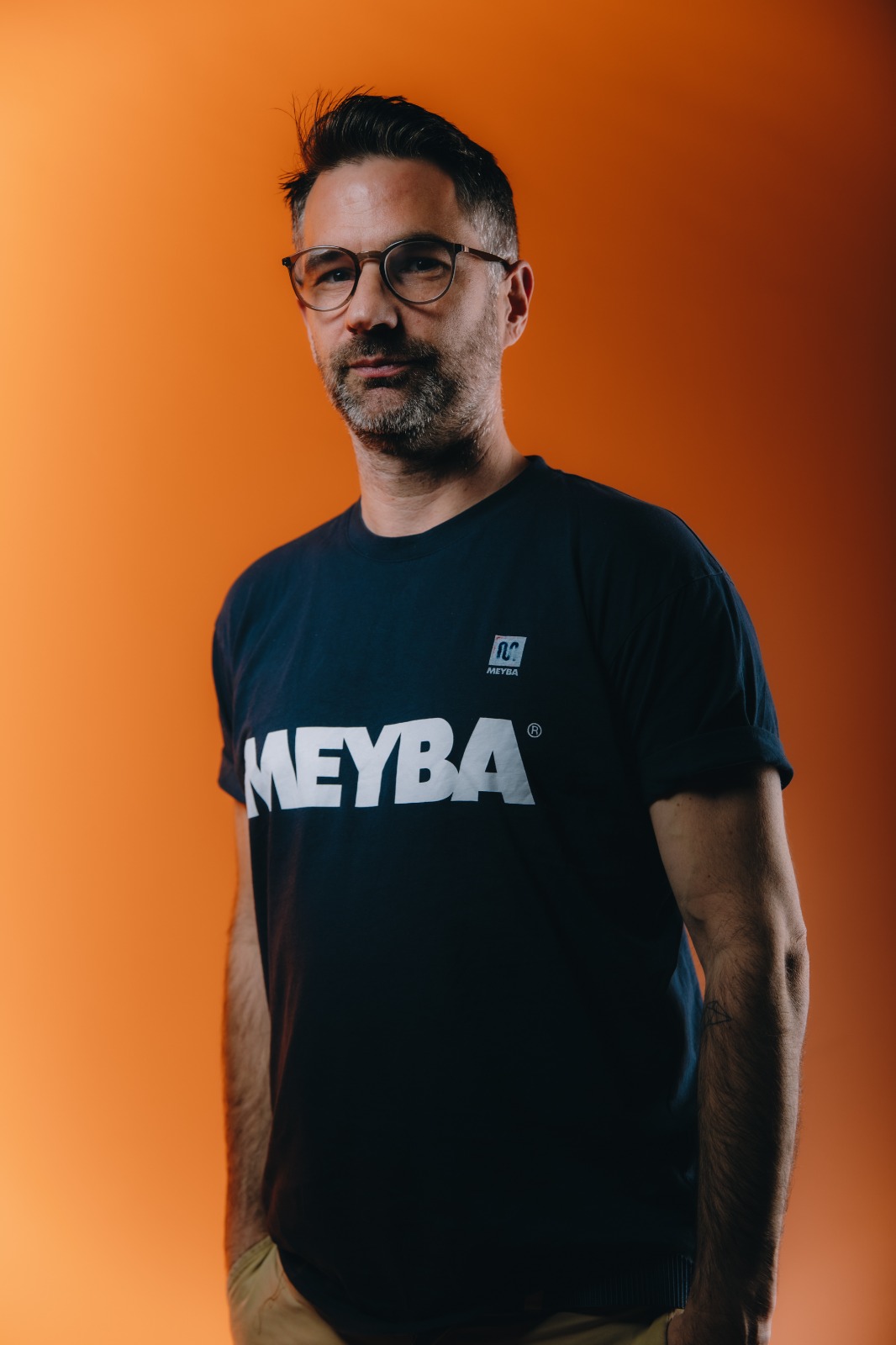
Jonathan, great to see you. Let's start at the beginning. Tell me about MEYBA, its history and its golden period.
MEYBA was formed on the beach in Barcelona as a swimwear brand. So in the ’50s and ’60s, the mums didn’t say, “Don’t forget your swimming shorts,” they said, “Don’t forget your MEYBAs.” MEYBA was swimwear, always swimwear.
Then the two founders walked into Camp Nou in the early ’80s and said, “We’d like to make your football kits.” Barça had never had a branded supplier. Actually, MEYBA had sort of made some of their kits before, but there was never a branded supplier. They signed a ten-year deal there and then.
It was the perfect combination. Barcelona is a Catalan team and MEYBA is a Catalan brand, so putting the two together, being very staunchly Catalan in that part of Spain, was a perfect match.
Now, MEYBA got lucky with the players because it was a golden era for Barça. The first year they supplied the kits, Maradona was in the team. And then throughout that period, Koeman, Lineker, Hughes, Stoichkov and Guardiola. It couldn’t have worked out better. But more than that, Barça won the European Cup for the first time wearing MEYBA, and the kit became tied to that iconic, winning moment. Cruyff was the manager and MEYBA the cult supplier.
Who else were MEYBA supplying at that time?
About 30 different teams, Villarreal and the Catalan national team, but obviously Barça were by far the biggest and a huge portion of the business. You know how it is when you lose the biggest client.
Sure. Lucky Strike in Mad Men.
Exactly.
But MEYBA was never devalued, was it? It didn’t become Slazenger?
They didn’t put it in cheap sports stores. They actually pulled away from it completely. And I think when we relaunched it, it was a lovely brand to bring back. There wasn’t that baggage.
The interesting part of the story is that the IP and all the brand assets were purchased by a company in Holland called Premier Inc. The owner was a close friend of Johan Cruyff’s, so they had that association. Of course, Johan was the Barça manager when MEYBA was the kit supplier, so they brought the brand together.
When Johan passed, the brand was handed to Premium Inc to control, along with the Cruyff Clothing and footwear brands. So they picked up MEYBA and, as I say, locked it away in a freezer until he found the right partner to bring it back with.
So when was the decision made to get back into football?
We’ve been running the brand for just over three years now, and for us it was really important to get back into football. It’s the pillar of our brand. It’s the only sport we do. If you think of some bigger brands who’ve appeared out of nowhere recently, they try to do everything. We didn’t want to start inventing a table tennis backstory to sell ping pong balls. We’re only football.
But we had to go and get clubs. UE Sant Andreu were a big target for us. It’s a great club in a little suburb of Barcelona. We were never going to be able to get an FC Barcelona contract, but this was a way for us to be back in the city. They’re staunchly Catalan as well.
It’s been a bit of a dream partnership, to be honest. The stadium is amazing, about 7,000 people who always go nuts. Flares, all that kind of stuff. It’s been a brilliant association that’s enabled us to go off and get more teams, which has been great.
What makes you different from other manufacturers?
We can’t always write those big cheques that the big brands can, that’s true. But we offer something different. We have to pitch the fact that although we are going to make you shirts, we aren’t going to pay you to wear them. And you’re going to sell more of ours because they’re way cooler than anything else you’ll go with.
We’re so creative in our kit designs. All of our teams have completely bespoke kits. Unless you’re with Nike or adidas, you’re having some sort of template design. We don’t do that.
How do partnerships emerge? Are you approaching teams you want to work with?
I think in an ideal world we’d go and pick and choose the teams we wanted to work with. But for me, it’s a bit lazy to assume you only want to pick “cool” teams. To me, if you’re a fan of whatever team it may be, they’re cool, right? You love them. There are interesting stories. They don’t need to be cool in the hipster sense.
If you take Hartlepool United, they’re called the ‘Monkey Hangers’ for god’s sake. The stories around that team and that town are absolutely amazing, and it’s up to us to project that onto a shirt in an interesting way. We love doing that, and I think it comes across in the work we do.
How collaborative are the partnerships?
Collaborative. Sometimes too collaborative. But it’s really obvious that the more time you put into the design at the start of a project, the sales then take care of themselves.
Non-negotiables?
The tracks that sit on every shirt we do. Our logo, obviously. And it has to look fucking good.
Where does resistance come from these days?
Everyone in every business is focused on growth. An instant reaction from clubs might be, “We want adidas.” I get that. But if you ask them why, it’s ultimately because it’s a big brand who’ll chuck a load of money at you. Fair enough, but it doesn’t mean anything. Create a kit that means something to your fans. That’s where we want to be.
And away from football, you’re not in other sports, but you’re arguably just as well known for your cultural drops as football ones now.
To start with, they were exclusively music. We got approached by a really small festival in Spain called Festival B. They said, “We’d like you to make us a football shirt to sell at the event.” So we did, and they pre-sold 2,500 in a day. And we thought, holy shit. All these kids are wearing old football shirts, all of them wearing sportswear to go to clubs. This is something we’re in. This is something we can do.
We were then lucky enough to do a deal with Live Nation, which covers Download, TRNSMT and a few others. It was a way for us to get the brand exposed without having to sponsor those festivals and events. But we were able to put love into the design. Then you’ve got all these kids wearing football shirts into warehouse projects and festivals, all with the MEYBA logo. It was really important for the growth of the brand and for bringing it into a younger market.
Every gig I’m at lately has a football shirt on the merch stand. Are we in danger of overkill?
I feel like we’ve been successful in it because we were there at the start of it. I took my daughter to a concert recently and they were selling Sabrina Carpenter football shirts for £80. They looked like they’d been made for about two quid. So there’s sort of an apex to it.
Where I believe this market will go is that every festival, every concert, every artist will have a football element as part of their hoodie, jumper or T-shirt range.
But for us, it’s about working with people who love football and picking the right ones. As a brand, you’ll probably start to see us move into other directions.
Within music?
There’s always been a huge connection between football, music and fashion, right? It’s always been there. I think we’ll bring those together in more live spaces. We want to set the trends.
Looking forward to seeing what's next for MEYBA. Thanks for your time, Jonathan.
Likewise with Showboat. Cheers.
We also think you'll like...