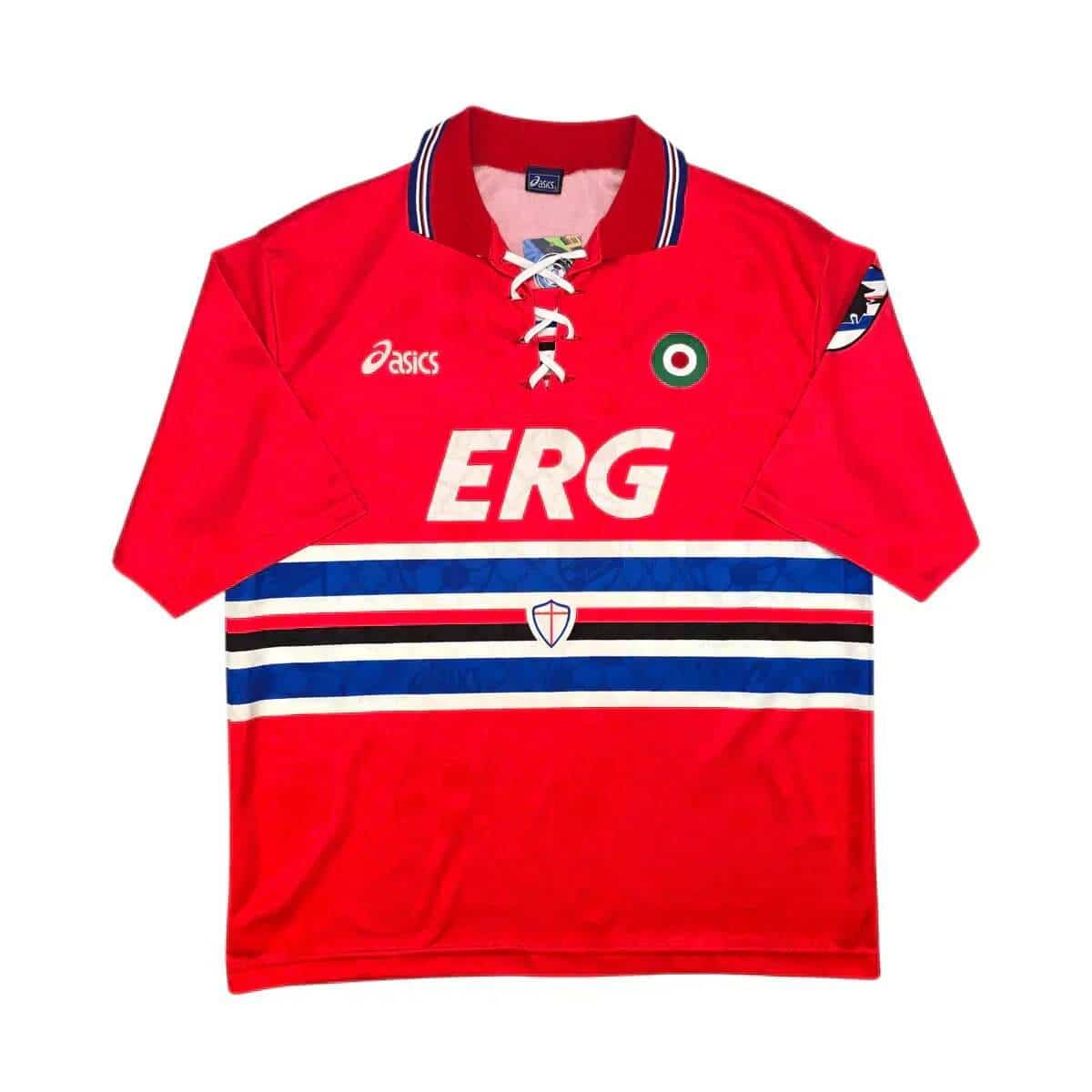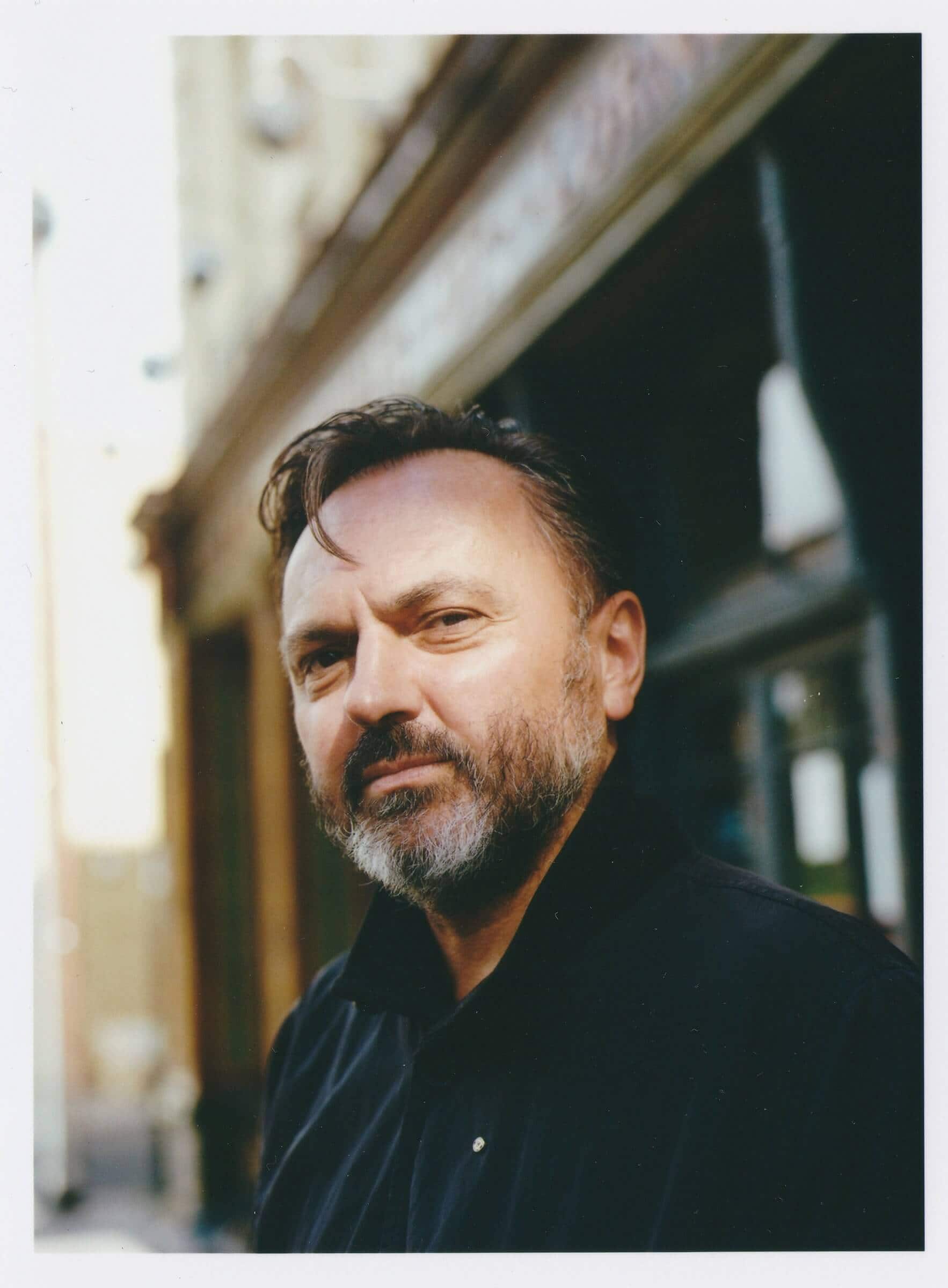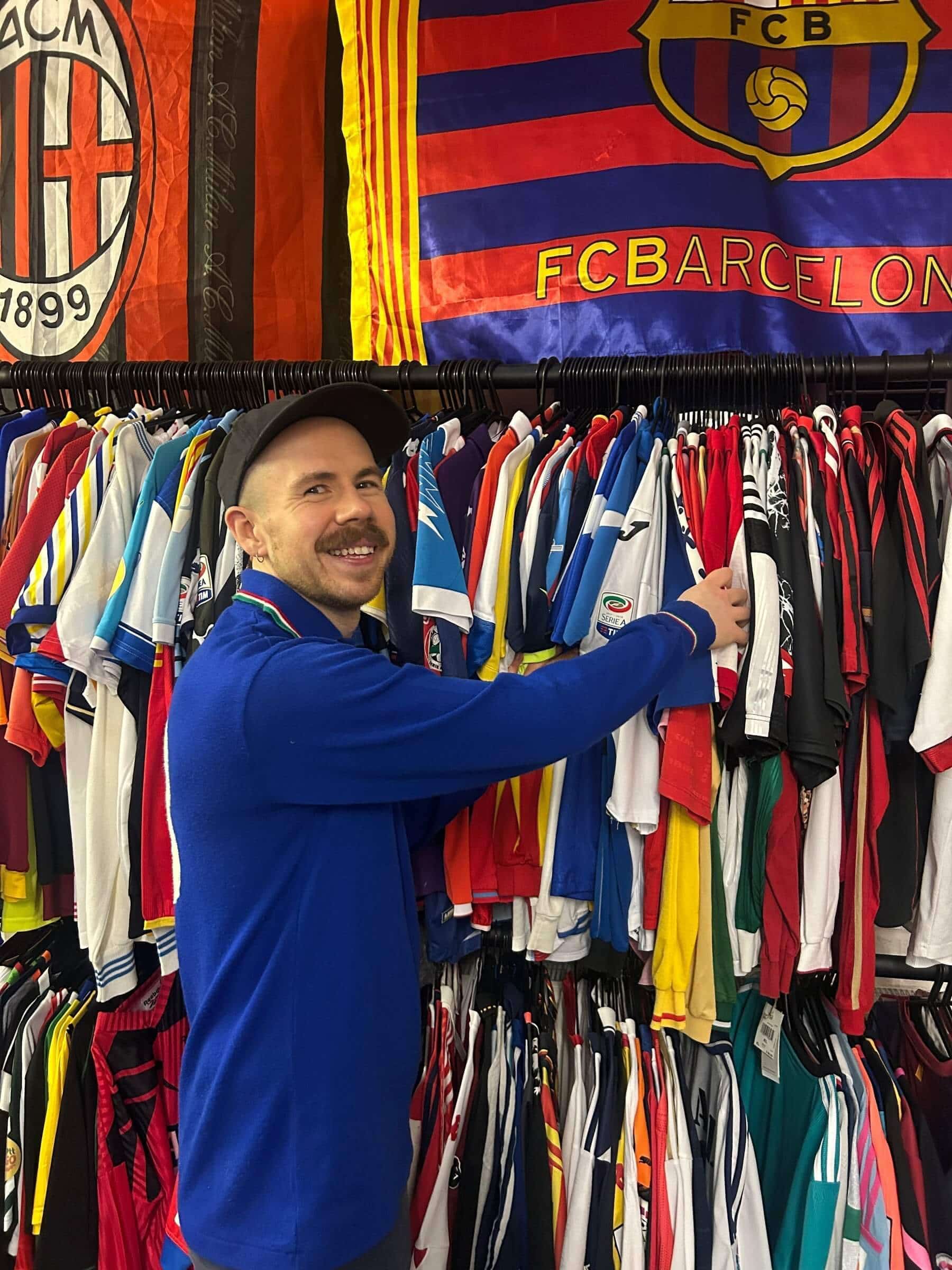
Granny’s Football Store represents everything that’s great about the football shirt space. Their shirts are curated, handpicked gems at prices for everyone. More importantly, their founder, Tom Granville, is someone you can hang your hat on. One of the nicest blokes in the industry, incredibly detail orientated - you can be sure any shirt he sells is authentic. We’re thrilled to have partnered with Tom at Showboat on our football shirt marketplace and spoke to him recently about Granny’s, the future of the shirt game and grails he’s still chasing.
Can you explain how you first got into this world? Granny’s didn’t just appear overnight.
It definitely didn’t. The original version of the business was Granny’s Retro, which most of my mates still call it because they’ve known it for so long. That started when I was about 14 or 15. It was just a way to earn a bit of extra money, but also because I’ve always been fascinated by old things, especially things with a story behind them.
I spent years collecting, archiving pieces, selling bits here and there. I think I’ve been properly selling football shirts and kits for around seven years now. That transition happened pretty naturally. I’d been selling vintage fashion before, but I wasn’t really interested in that anymore. My interest in “looking cool” had gone off the boil a bit.
Football shirts felt different. There’s obviously a fashion element to them, but for me it’s never really been about that. It’s a love of football that’s been there since I was a kid, combined with my interest in fabrics, old garments, and the stories attached to them.
Eventually it got to the point where I realised I didn’t want to do what I was doing before. About four years ago I was working in the corporate world and was offered voluntary redundancy. I took it and decided to commit fully to this. It was a big decision, but I wanted to do something I genuinely loved. Somehow, four years later, I’m still here.
When did you take on a physical space?
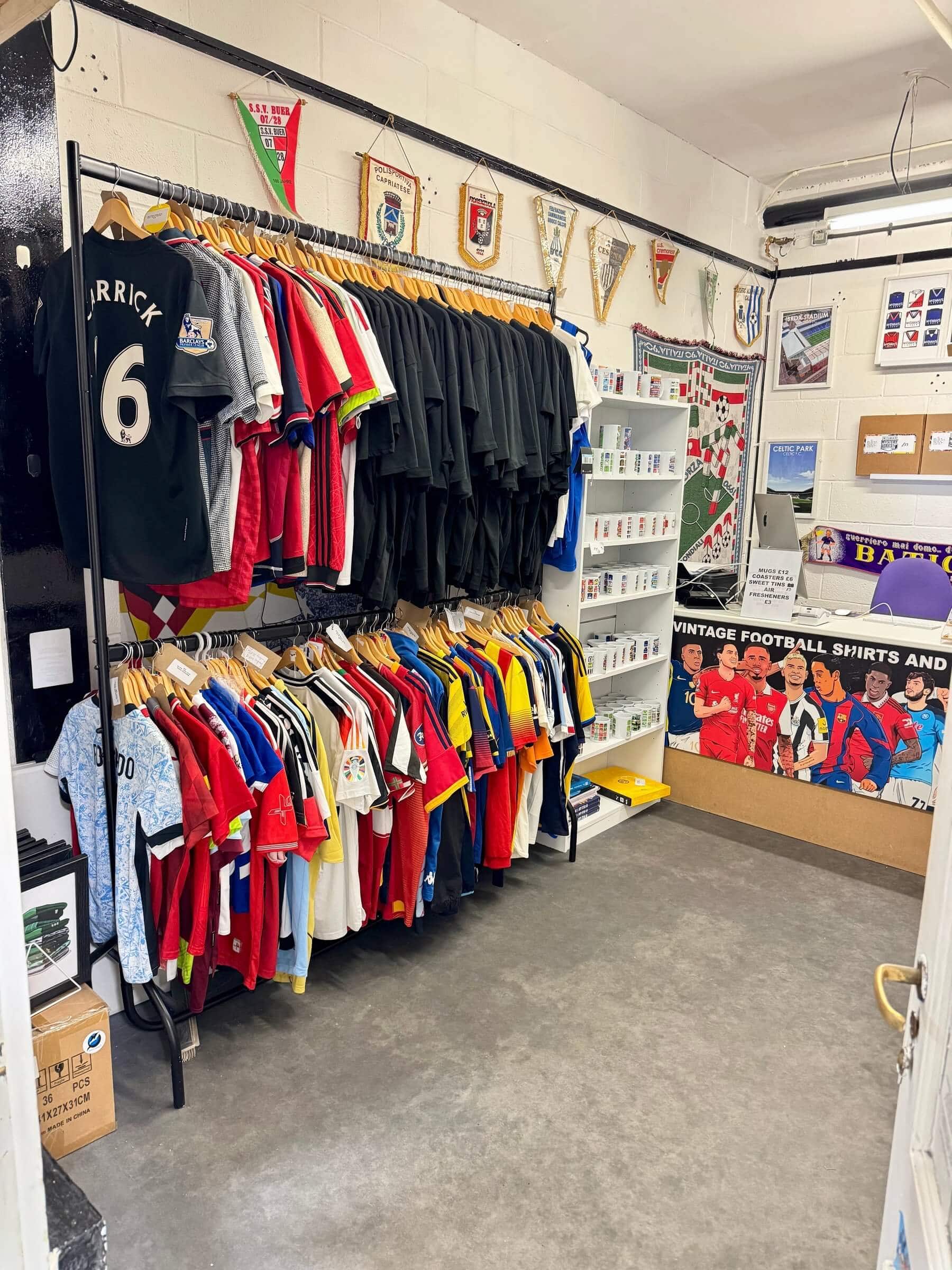
That was about 18 months ago. It felt like the next step, but also a very personal one. I was starting to feel a bit trapped working from home all the time. In my old job I worked from home too, but I was constantly speaking to people. With this, unless I was chatting to customers or collectors, which happened less as I got busier, it could feel quite isolating.
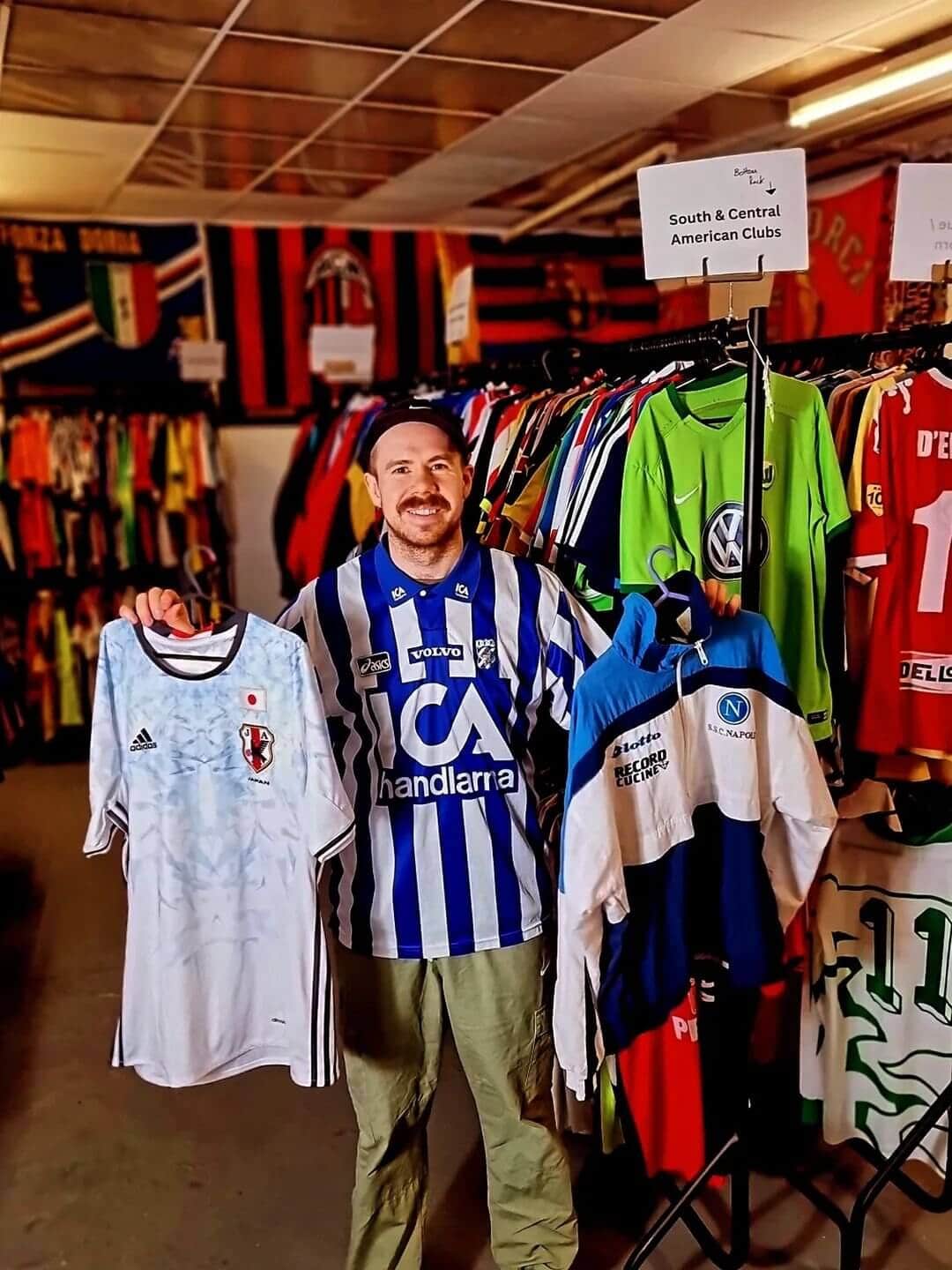
I love in-person stuff. I love fairs and pop-ups because you get to talk to people who care about the same nerdy details I care about - kits, football history, brands, stories. My friends and family will politely nod along when I talk about a 1993 Italian-made kit, but they don’t really care. Having a space where people do care makes a huge difference.
I had the studio for eight or nine months before I properly opened it up to the public. I was honestly anxious about whether anyone would come. Eventually I committed to doing monthly drop-in dates about nine months ago, and they’ve been great.
How much of the business is online versus physical now?
It’s changed a lot. Historically it was probably 95% online, 5% in-person. Now it’s closer to a 70/30 split, which is exactly what I hoped for when I moved into the space.
The pop-up and drop-in days suit me far more than running a full-time shop. I’ll usually have someone with me to answer the door and make it feel welcoming, because I know a studio space can feel intimidating if you’re not sure what you’re walking into.I rely heavily on the online side, so a full shop just wouldn’t work for me time-wise. But those in-person days - chatting to people face to face, seeing shirts in real life - that’s my favourite part of the job.
How do you actually spend your time day-to-day?
Honestly, it’s too many hours. But I’m lucky because I enjoy it. Listing is probably the most boring and time-consuming part. It’s simple but detailed, and I put a lot of effort into accuracy. Being honest and transparent is really important to me. I want people to have all the information before they buy, so photos and descriptions take a long time.
I also do a lot of cleaning and restoration. At least once a week I’ll spend hours at my kitchen table with different stain removers, working through shirts with marks, smudged prints, or general wear. Some of them need proper graft.
Then there’s sourcing, maintaining relationships with suppliers, photography, organising pop-ups, promoting them, and social media — which I’m terrible at. It’s essential, but I don’t enjoy selling myself. I’m not naturally salesy, so that side of it has always been a challenge. There’s no structured schedule. It’s just constantly asking, “What’s the most important thing right now?”
Granny’s feels very curated. Where does that come from?
I think it’s just my taste. My love is vintage - old stuff, full stop. The branding side came from that instinct, but I’m not a designer. A friend of mine, Harry, helped bring it to life. Before Granny’s, the business was called GM Sporting Nostalgia, which was awful. A total mouthful and completely generic. When I rebranded three or four years ago, I wanted to go back to my roots. “Granny’s” comes from my surname - Granville - and it’s what I was called at school.
The branding landed exactly how I imagined it: sepia tones, a bit of humour, daft imagery mixed with iconic footballers. It’s meant to be light-hearted but authentic. That’s the balance I care about. In terms of stock, I genuinely believe football shirts are for everyone. I sell kids’ kits, modern stuff at lower prices, and rare vintage pieces. The stuff that appears most on socials is what I’m passionate about, because I find it hard to tell stories about things I don’t care about. When I’ve spent hours researching a shirt, writing about it, or making a reel, that enthusiasm hopefully comes through.
How did you build a reliable supply network?
A bit of luck, honestly. I already had contacts from the wider vintage world, so I leaned on those early on. But sourcing is always risky. You have to trust people - that kits are authentic, that descriptions are honest, that valuations are fair. I’ve always believed suppliers should be paid properly. I’m not interested in squeezing someone just to maximise my own margin. Early on it was slow, and difficult at times, but I’ve worked with one supplier for almost six years now. I also think it’s important not to rely on one source. Suppliers come and go, and you need variety so one issue doesn’t derail everything. A lot of my suppliers have become friends. We talk about life as much as business, and that helps relationships last.
Is buying instinctive or do you rely on data?
It’s data, but it’s in my head [laughs]. I suppose it’s built from experience. Value in this space is hugely subjective. I need to make a living, so there has to be value, but I also think some kits are undervalued, especially rare match shirts or pristine 90s classics. The market changed massively during Covid. Prices went crazy. Now things have cooled, partly because people’s finances have changed. You also have to factor in form, tournaments, nostalgia cycles. A World Cup can suddenly shift demand for international kits. I usually have a baseline price in mind, then I’ll do some research. Sometimes I realise I’ve overestimated and just take the loss.
How does your personal taste align with what sells?
If I only bought what sold best, I’d probably run a better business. That’s the problem with being an enthusiast: when something special comes in, I don’t want to sell it. I’ve collected shirts since I was a kid, starting with fake market shirts on holiday. Now I spend ridiculous amounts on kits for myself. My taste is eclectic. I’m obsessed with ABM, Italian kits, obscure South American shirts, weird variations. I’m not buying things because I think they’ll be worth loads in ten years. I buy what I think is beautiful, well-made, iconic, or interesting. I think that usually translates into value anyway.
How many shirts are in your personal collection?
Probably just over 200. I’ve got over 60 ABM shirts alone, loads of Sheffield Wednesday kits, and a lot of Italian match shirts.
What’s your favourite?
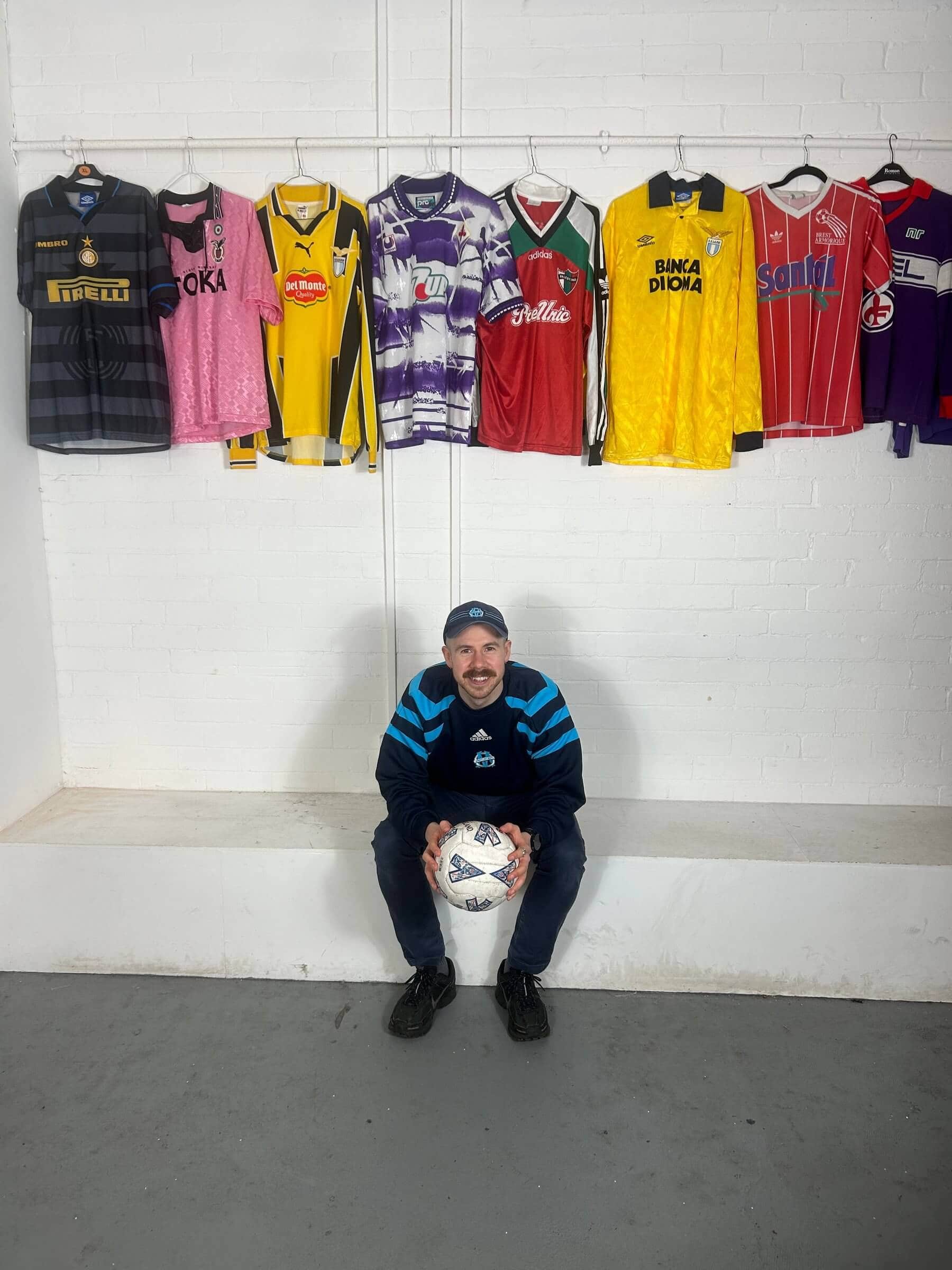
I always give the same answers. One is the Inter 97/98 third shirt - grey and black stripes, Pirelli sponsor. Ronaldo is my favourite player of all time. That shirt is pure nostalgia for me.
Wednesday-wise, it’s the green and white hooped away shirt from 1988–90. I’ve got a match-worn one now. I sold my old replica, signed by David Hirst, to another Wednesday fan recently, which felt right. The most interesting shirt I own is probably a late-80s Morocco goalkeeper shirt. I don’t even like keeper shirts, but this one is incredibly rare - never sold commercially, only match-issued. Grey Adidas template with Moroccan flag detailing and an old crest with Olympic rings. I’ll never sell it.
Is there still a holy grail you’re chasing?
There’s a Morocco shirt from 1988 using the Ipswich / Holland template - deep red, same crest. I’ve only ever seen two in collections. There might be 20 in the world. Probably never going to happen… but I’ve said that before.
Tell us about the event you put on at the Steamworks.
I’m incredibly proud of it. It came about because a retro football fair that was meant to happen there got cancelled. Steamworks is an old steel factory turned event space, and it’s an amazing venue. Louise, who runs it, said: “I know how to run events, but I know nothing about football. Do you want to try something?” We had three weeks. It was chaos. 14-hour days, calling in favours. Yard Ball came down, we had DJs, old games consoles, food trucks, art vendors, shirt sellers. We genuinely didn’t know what to expect. On the day, around 800 people came through. Some stayed for four or five hours. Kids playing games, parents browsing shirts, people eating, drinking, hanging out. It felt like something the space had been missing — an experience, not just buying and selling. That only worked because everyone backed it and pushed it together. It was genuinely collaborative.
Finally…why have you partnered with us at Showboat?
It’s the shared ethos. You guys care about football shirt history, about documenting collections properly, about doing things the right way. I log my own collection in a messy Excel file - the idea of a visual, community-driven platform just makes sense. But it’s also about people. You get a feel for who someone is when you meet them. I trust you both, I like what you’re building, and it feels exciting to be part of something growing rather than transactional.
More from The Supply
→ Read our interview with Retro Football Shirts
→ Read our interview with Squadra
→ Read our interview with Football Finery
→ Read our interview with NI Clasico
→ Explore shirts from the best suppliers in the UK on the Showboat Marketplace.